Last updated:
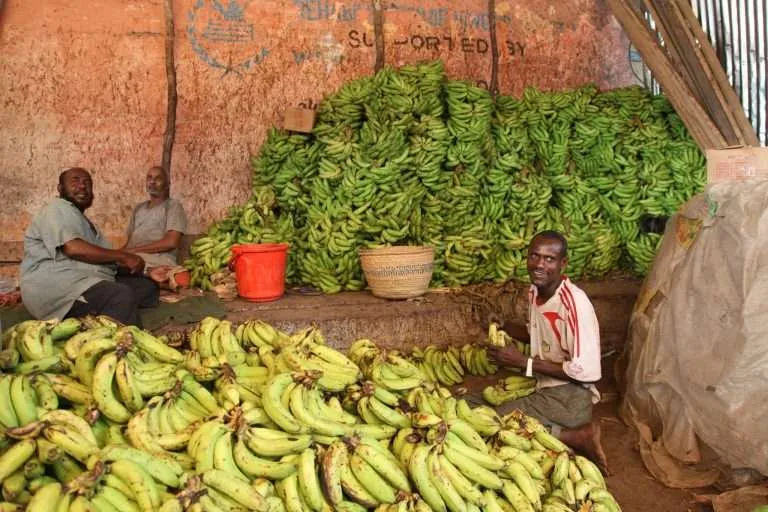
Photo: Sudan Launch | Kwibuka20 - Kwibuka Rwanda
The Sudan ICC investigation is the longest-running International Criminal Court situation, referred to the Court by UN Security Council Resolution 1593 in 2005. The Darfur situation remains open: warrants have been issued for Omar al-Bashir (genocide, crimes against humanity, war crimes) and four others. Furthermore, the ICC Prosecutor Karim Khan has confirmed that the crimes committed since April 2023 — including by the RSF and SAF — fall within the existing Darfur jurisdiction. As a result, the accountability architecture for Sudan already exists; the question is enforcement. This article documents the ICC's jurisdiction, the international response to the 2023-2026 crimes, and the implications for asylum claims.[1]
For wider context on the war, see the Sudan country report.
Referral resolution (2005)
ICC arrest warrants issued (Sudan)
US determination (Jan 2025)
ICC Prosecutor investigation status
ICC Jurisdiction: The Darfur Referral
Sudan is not a party to the Rome Statute. Therefore, the ICC's jurisdiction over Sudan flows entirely from UNSC Resolution 1593 (2005), which referred the "situation in Darfur, Sudan" to the ICC. The Prosecutor opened an investigation in June 2005. Furthermore, the ICC Appeals Chamber confirmed in 2019 that the Darfur referral covers all crimes committed in the situation — not only 2003-2005 events. As a result, crimes committed in Darfur (and arguably broader Sudan) from April 2023 onwards fall within the existing referral. Therefore, no new UNSC referral is needed — though political will to enforce existing warrants remains absent.[2]
Existing arrest warrants
Five individuals are subject to ICC arrest warrants in the Darfur situation. Omar al-Bashir (former president): three counts of genocide, five of crimes against humanity, two of war crimes — the most serious charges issued by the ICC. Ahmad Harun: 42 counts of crimes against humanity and war crimes. Ali Kushayb (Ali Muhammad Ali Abd-al-Rahman): surrendered voluntarily in 2020; trial ongoing. Abd-Al-Rahman Hussein: arrest warrant for crimes against humanity and war crimes. Abdallah Banda: war crimes. Furthermore, Hemedti (RSF chief, now a primary perpetrator of the 2023-2026 crimes) has not yet been indicted, but the Prosecutor has signalled active investigation.[3]
The 2023-2026 Crimes: ICC Prosecutor's Position
In December 2023, ICC Prosecutor Karim Khan visited Chad and the Sudanese border, meeting with survivors and collecting evidence. He stated publicly that crimes committed since April 2023 — including mass atrocities in West Darfur, sexual violence, and attacks on civilians — fall within the Darfur situation jurisdiction. Furthermore, the Prosecutor's office has received thousands of pieces of evidence from survivors and witnesses. In 2024, the Prosecutor called on all states to cooperate with the Court and reiterated that impunity would not be the final answer. As a result, active investigation is ongoing — even if arrest and trial are not imminent.[4]
"Crimes are being committed in Darfur now. The Court has jurisdiction. We are collecting evidence. Those responsible will be held accountable."ICC Prosecutor Karim Khan, December 2023
International Response: Sanctions, Statements, Actions
The international response to Sudan's war crimes has been fragmented but not absent. Key actions include: US genocide determination (January 2025); UN Human Rights Council establishment of the Sudan Fact-Finding Mission (October 2023); UN Panel of Experts on Sudan reporting on violations and sanctions; targeted sanctions by the US, UK, EU, and Canada against individual RSF and SAF commanders. Furthermore, the UN General Assembly adopted a resolution calling for accountability in Sudan (2024). However, UNSC action has been blocked by Russia and China, which have used or threatened to use their veto power. As a result, structural international accountability remains elusive.[5]
| Actor | Action | Date |
|---|---|---|
| UNSC | Resolution 1593 — Darfur ICC referral | 2005 |
| HRC | Fact-Finding Mission established | Oct 2023 |
| ICC Prosecutor | Evidence collection; jurisdiction confirmed | Dec 2023 |
| US State Department | Genocide determination | Jan 2025 |
| US/EU/UK/Canada | Targeted sanctions on commanders | 2024-2025 |
| UNGA | Resolution calling for accountability | 2024 |
Obstacles to Accountability
Several structural obstacles impede accountability. First, Sudan is not an ICC member state and the Burhan government has explicitly rejected ICC jurisdiction, refusing to surrender individuals. Second, Russia and China have protected Sudan from binding UNSC action (ceasefire demands and arms embargoes blocked). Third, both warring parties (RSF and SAF) have incentives to prevent accountability — making domestic transitional justice processes unlikely while either side holds power. Fourth, evidence collection in an active war zone is difficult and dangerous. Furthermore, key witnesses and survivors are dispersed across refugee populations in Chad, Egypt, Ethiopia, and Europe. As a result, accountability will be a long-term project.[6]
Universal Jurisdiction: Alternative Accountability Routes
Where ICC enforcement stalls, universal jurisdiction offers an alternative. Several European states (Germany, France, Sweden, Netherlands) actively exercise universal jurisdiction over atrocity crimes. Furthermore, survivors in Europe can file criminal complaints naming individuals responsible for genocide, crimes against humanity, and war crimes in Sudan. The International Crimes and Tribunals Mechanism (ICTM) and civil society documentation projects are building evidence bases for future prosecution. As a result, individual RSF and SAF commanders who travel internationally — or who have assets or family connections in signatory states — face potential arrest. Therefore, accountability pressure continues through multiple channels.[7]
Asylum implication: The ICC investigation and international accountability record provide strong country evidence for asylum claims. Furthermore, survivors who have given evidence to the ICC Prosecutor, the Fact-Finding Mission, or civil society organisations may face enhanced risk if returned — strengthening their asylum claims. Therefore, evidence of participation in documentation should be disclosed to legal representatives.
Implications for Asylum Claims
The ICC investigation and international accountability response are directly relevant to asylum claims. First, they document the nature and gravity of crimes — usable as country evidence. Second, the genocide determination provides unusually strong authority for group-based risk claims (particularly Masalit, Fur, Zaghawa). Third, the UN Fact-Finding Mission reports are authoritative sources for country conditions. Fourth, the sanctions lists name individual commanders responsible for atrocities — providing evidence of command structures. Furthermore, the failure of accountability inside Sudan confirms that the state cannot or will not protect victims. As a result, all of these sources should be cited in asylum applications.[8]
Witnesses, survivors and others linked to ICC investigations may face added risk on return; our Sudan country expert witness reports address this for individual cases.
Conclusion: Jurisdiction Without Enforcement
Sudan's ICC investigation has jurisdiction, evidence, and determination — but faces serious enforcement challenges. Furthermore, the international community has documented genocide and war crimes without achieving domestic accountability. As a result, perpetrators remain in power while victims seek protection abroad. Therefore, asylum systems must fill the protection gap that international accountability mechanisms cannot yet close.
Footnotes
- UN Security Council Resolution 1593 (2005); ICC Situation in Darfur.
- ICC Appeals Chamber, Jurisdiction of Darfur Referral (2019); Rome Statute Article 13(b).
- ICC Arrest Warrants: Al-Bashir (2009, 2010); Ahmad Harun (2007); Abd-Al-Rahman Hussein (2012); Abdallah Banda (2014); Ali Kushayb (surrendered 2020).
- ICC Prosecutor Karim Khan, Press Statements, December 2023; ICC OTP Updates 2024.
- US State Department Genocide Determination (January 2025); HRC Resolution on Sudan (October 2023); UNGA Resolution on Sudan (2024).
- UNSC Veto Records 2023-2025; Sudan Sanctions Committee Reports.
- Universal jurisdiction frameworks: Germany (VStGB), France, Netherlands, Sweden; International Crimes documentation projects.
- UNHCR Sudan Position Paper (April 2025); UN Fact-Finding Mission Reports.
Sources
- ICC Situation in Darfur
- UNSC Resolution 1593 (2005)
- UN Fact-Finding Mission for Sudan
- UNHCR Refworld — Sudan
Need an expert witness report for your case?
Our country experts provide independent reports for asylum and immigration cases in the UK, US, Canada, and EU.
Order an expert witness report |
Find a country expert witness |
About our expert team