Last updated:
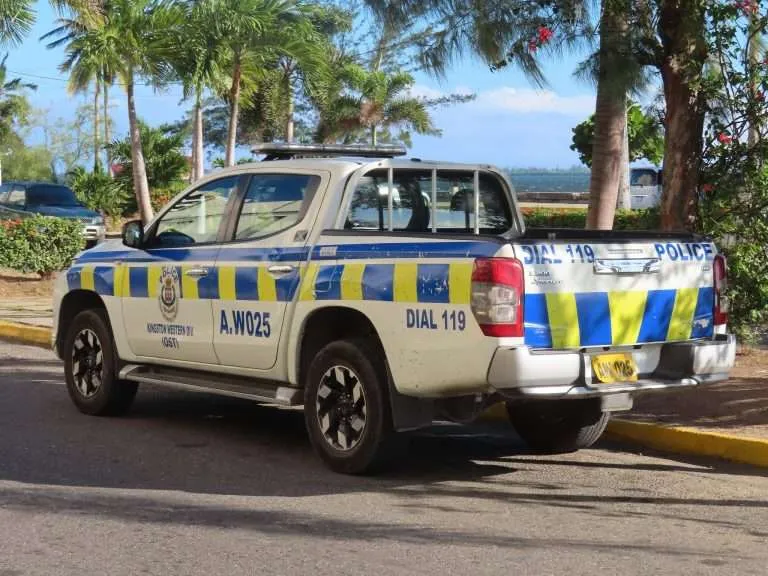
Photo: Venezuela - QueenstownLocal
Venezuela country conditions changed sharply on 3 January 2026, when US forces captured Nicolás Maduro in Caracas. However, the state that persecuted his opponents is still in place. Delcy Rodríguez, Maduro's former vice-president, now leads an interim government. Diosdado Cabello still runs the Interior Ministry, and the intelligence services work under the same structures and rules as before.[1] As a result, the UN Fact-Finding Mission concluded in August 2026 that Venezuelans who fled abroad still need international protection.[1]
This report sets out the 2026 evidence for asylum lawyers in the UK and US. It covers who controls the security apparatus, the role of the colectivos and the amnesty law. It also examines the political prisoners who remain and what happens to people at Maiquetía airport. It closes with risk profiles and the legal points that follow from them.
Political prisoners still held (Foro Penal, 29 Sept 2026)
Political arrests, Sept 2025 to July 2026 (UN FFM)
People still under court restrictions (Foro Penal)
Venezuelans in Latin America and the Caribbean (R4V)
Venezuela country conditions in 2026: what changed
The US operation, named Operation Absolute Resolve, hit airports and military bases across the country on 3 January 2026. Venezuelan authorities reported 83 deaths. US forces flew Maduro and his wife, Cilia Flores, to New York, where they face drug trafficking and weapons charges.[1] Two days later, on 5 January, Rodríguez took office as interim president after the Supreme Court appointed her.[1]
Since then, the new government has changed many faces but few structures. By mid-2026, Rodríguez had appointed or moved the heads of 15 of 33 ministries. Tarek William Saab left the Attorney General's Office, and Venezuela extradited former industry minister Alex Saab to the US on corruption charges.[1] Meanwhile, the US lifted part of its sanctions, and the IMF and World Bank resumed dealings with Caracas in April 2026.[1]
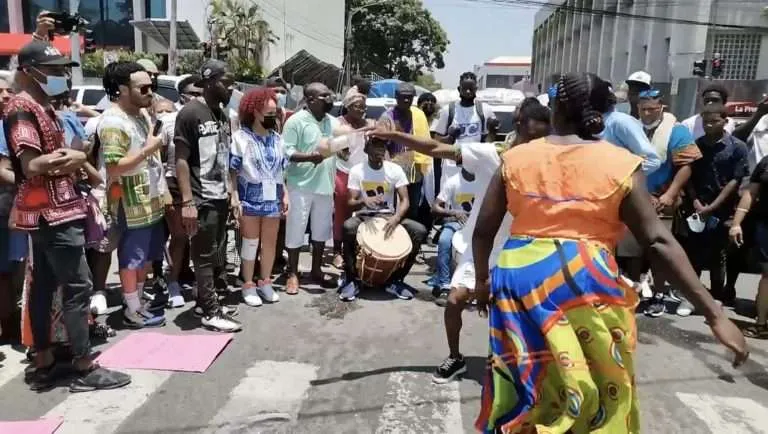
Civic space has opened, at least in part. For example, the Venezuelan Observatory of Social Conflict recorded 1,926 protests in the first quarter of 2026, a 144% rise on the same period in 2025.[2] Some exiled activists have returned through formal channels without problems.[2] Nevertheless, the UN mission describes these changes as "partial, conditional and reversible at best".[1]
Three further events shape the picture in late 2026. First, on 24 June two earthquakes struck La Guaira and Greater Caracas. The official toll stood at 6,125 deaths on 3 August, while media reported 6,509 by late August; the difference reflects later official updates.[1][3] Second, Venezuela formally withdrew from the Rome Statute of the International Criminal Court in July 2026.[1] Third, Rodríguez told the UN General Assembly on 23 September that elections would take place, but she gave no date.[4] Opposition leader María Corina Machado was still barred from entering the country in August, according to the UN mission. On 29 September she announced that she intends to return.[1][5]
Who controls Venezuela's security apparatus
The same people who ran repression under Maduro still control the security forces. The UN mission mapped more than 60 institutions in the repressive apparatus. It found that many officials in government, security and intelligence posts had been named in earlier reports for crimes against humanity.[1] Rodríguez herself formally oversaw the intelligence service SEBIN as executive vice-president from 2018.[1]
| Body | Who controls it in 2026 | Status |
|---|---|---|
| Interior Ministry (police, CICPC) | Diosdado Cabello, minister since August 2024 | Unchanged; the UN links him to crimes against humanity |
| SEBIN (civil intelligence) | Maj. Gen. Alexis Rodríguez Cabello, Cabello's cousin | Same structures and rules; El Helicoide closure announced |
| DGCIM (military counter-intelligence) | New head named March 2026 | Same structures and rules |
| FANB (armed forces) | Defence Minister Gustavo González López since March 2026 | 17 senior commanders replaced; no reform |
| GNB (National Guard) | Part of FANB | No internal review or change in practice |
| DAET (successor to FAES) | PNB | Same methods; former FAES officers in key posts |
The defence portfolio shows how the reshuffle works. In March 2026, Rodríguez removed Vladimir Padrino López, defence minister since 2014. In his place she named Gustavo González López, a former head of SEBIN, DGCIM and the Interior Ministry.[2][6] He remains on the US sanctions list. Padrino, in contrast, faced no investigation and became agriculture minister.[1] Sources give 18 or 19 March for the change, but all agree on the substance.
Above all, the intelligence services are unreformed. The UN mission found that SEBIN and DGCIM still work under the same structures and rules as under Maduro.[1] Similarly, the National Guard has had no internal review or disciplinary process, and the same units and detention sites remain in use. SEBIN's director, Alexis Rodríguez Cabello, is reported to be close to his cousin, the interior minister.[7] Our earlier analysis of how Venezuela's security apparatus survived the transition traces these chains of command in more detail.
Surveillance also continues. State telecoms company CANTV and regulator CONATEL monitor communications, and a network of "cooperating patriots" informs on neighbours.[2] Security agents have detained people to search their phones, photos and private chats.[2]
Colectivos and armed groups after Maduro
Colectivos are armed pro-government civilian groups that act alongside, and often for, the state. The UN mission's 2026 investigation found that state bodies do far more than tolerate them. The links include payroll jobs, weapons, motorcycles, radios and control of food and fuel distribution.[1] Consequently, where colectivos act on state instructions, the mission holds that their conduct is legally attributable to Venezuela.[1]
After 3 January, colectivos patrolled the streets to stop celebrations of Maduro's capture.[2] They are widely reported to answer to Cabello. In addition, they run informal checkpoints in their neighbourhoods, where they stop passers-by and search phones for content critical of the government.[2] The strongest groups operate in the 23 de Enero district of Caracas, near the presidential palace.[2]
Colectivos also have access to official databases and lists of people who receive state benefits. Through these, they identify residents seen as politically disloyal and cut their access to food, fuel and services.[1] They helped security forces find targets during Operation Tun Tun, the 2024 post-election crackdown. Moreover, the mission lists the 2026 kidnapping of opposition leader Juan Pablo Guanipa among the colectivo cases it investigated.[1] For an asylum claim, this matters directly. A threat from a colectivo is, in most cases, a threat from the state.
Criminal groups add a second layer of risk. Venezuela has about 19 "megabandas" (large armed gangs), as well as the Colombian ELN, FARC dissident factions and thousands of smaller gangs.[2] On 12 June 2026, a US air strike killed Héctor "Niño" Guerrero, leader of the Tren de Aragua, in an operation with Venezuelan forces in Bolívar state.[1] However, the group's networks have not disappeared.
Political prisoners, the amnesty law and torture
The number of political prisoners has fallen, but hundreds remain and the courts still control thousands more. Foro Penal counted 324 political prisoners on 29 September 2026: 184 civilians and 140 military personnel. Of these, 178 have never been convicted.[8] Since 2014, the group has recorded 19,242 politically motivated detentions. Furthermore, 11,472 people remain subject to restrictive court measures.[8]
The National Assembly passed the Amnesty Law for Democratic Coexistence on 19 February 2026.[2] It covers protest-related acts in listed years from 2002 to 2025. Yet it excludes anyone convicted of "military rebellion", people charged with online "incitement to hatred", labour activists, and anyone accused of "armed or forceful actions" against the state.[2][9] Human Rights Watch found that courts missed the 15-day deadline, withheld written decisions and denied amnesty to figures such as Perkins Rocha and Javier Tarazona.[9] Then, on 23 April, Rodríguez declared the amnesty process finished, although the law stays in force.[1]
Release figures conflict. Rodríguez claims up to 1,521 people have left detention since December 2025, while an NGO source verified 1,099 since September 2025.[1] The authorities say 8,740 people won "full freedom" under the law, mostly people already outside prison. The government has never published names, citing privacy.[1] We prefer the NGO figures because Foro Penal verifies each case individually. Read the full critique in Human Rights Watch's May 2026 analysis.
Release is not freedom. Most released detainees still face open criminal cases. Many cannot name a private lawyer or see their case file.[2] Juan Pablo Guanipa was freed on 8 February and rearrested the same day by unidentified men for speaking to the media.[1] A client who was "released" in 2026 may still be under prosecution, and therefore at risk on return.
Torture continues in the prisons that hold most political detainees. In El Rodeo I and Fuerte Guaicaipuro, the UN mission documented beatings, electric shocks, suffocation with plastic bags and suspension by the wrists.[1] It also identified new methods. Guards force-fed hunger strikers through tubes and confined groups of naked men in a sealed underground cistern, known as the "time machine", for up to three months.[1] At least three political detainees died in custody in the reporting period, including former governor Alfredo Díaz in El Helicoide on 6 December 2025.[1] In May 2026, the authorities admitted that street vendor Víctor Hugo Quero, held by DGCIM, had died in July 2025 and been buried without telling his family.[1]
Who is at risk on return to Venezuela
Under current Venezuela country conditions, risk depends on profile more than before. Long-term detentions have fallen, but the UN mission found a new pattern of short-term arrests and intimidation of perceived opponents. These arrests often target people who were detained before.[1] In the mission's view, they remind activists that the apparatus is still available. The table below summarises the evidence for each group.
| Profile | Key 2026 evidence | Risk level |
|---|---|---|
| Opposition activists (Vente Venezuela, Machado allies) | Amnesty often refused to Machado allies; Cabello's weekly TV attacks; short-term arrests | High |
| Military defectors and deserters | Excluded from amnesty; 140 military still held; relatives detained as leverage | Very high |
| 2024 protesters, election witnesses, comanditos | 2,220+ detained in 2024; many released with cases still open | High if case open or named |
| Journalists | 36 press freedom violations Jan to Apr 2026 (IPYS); 4 radio stations closed | Moderate to high |
| Human rights defenders | 122 attacks Jan to Mar 2026 (CDJ); anti-NGO law in force | Moderate to high |
| Critics with a social media profile | Anti-hate law prosecutions; returnees detained for posts | Moderate to high |
| Public employees who criticised the vote | Dismissals and transfers; posts screenshotted to HR | Moderate |
| LGBT people | Not criminalised; abuse in detention where politically linked | Elevated if also political |
Military personnel face the clearest risk. The amnesty law excludes "military rebellion", and Foro Penal still counts 140 soldiers as political prisoners.[2][8] The security forces also detain relatives of wanted officers. For instance, the pregnant partner of an exiled lieutenant was arrested in January 2025 and gave birth in prison.[2] In February 2024, gunmen killed former officer Ronald Ojeda in Chile, and Chile's prosecutors said they had evidence that the Venezuelan state ordered the killing.[2]
Journalists and online critics remain exposed through the 2017 Law Against Hatred. Between 3 January and 27 March 2026, CONATEL shut four independent radio stations.[2] Of 28 media workers released under the amnesty, eight still had open files in April.[2] In addition, after 3 January the state arrested people who celebrated Maduro's capture or posted about it, under an emergency decree.[1][2] Most were held briefly, questioned about their views and released.
LGBT claimants need careful framing. Same-sex acts are legal, and Belgian asylum authorities found no prosecutions based solely on orientation.[2] However, the UN mission documented homophobic abuse of LGBT detainees during the 2024 protests, and there is no legal gender recognition.[2] The strongest claims combine sexual orientation or gender identity with a political profile.
By contrast, people with no political, military or public profile face lower state risk. Their claims usually turn on gangs, extortion or humanitarian grounds. An expert should say so plainly, because an honest assessment carries more weight with a tribunal.
Watch it on our YouTube channel: our short film explains why people flee Venezuela and Nicaragua for asylum.
Return risk at Maiquetía airport and for deportees
Every US removal flight lands at Simón Bolívar International Airport in Maiquetía. There, returnees go through interviews with five agencies, including SEBIN and DGCIM.[2] Human Rights First recorded 76 removal flights carrying 14,310 people between February and December 2025. In March 2026 alone, 11 flights returned 1,726 people, running three times a week from Phoenix.[2] After the earthquakes, flights paused. They resumed on 3 August 2026 with more than 100 deportees.[10]
The screening is a records check. Officers run criminal background checks and register each returnee.[2] Most of the men returned from El Salvador's CECOT prison whom Human Rights Watch interviewed in 2025 reported no persecution. Nonetheless, two former detainees said SEBIN agents visited their homes, filmed them and asked whether they had links to US agencies.[2] Separately, Provea reported that the state detained some exiles on return because of their social media posts. In August 2025, four TikTok users deported from the US were charged with "incitement to hatred".[2]
Evidence on the airport in 2026 is mixed. One Venezuelan expert told the EU Asylum Agency that some people with open cases have recently passed through Maiquetía without incident. In his view, the airport is no longer the "black hole" it once was.[2] The same source stressed that the risk has not gone. Two people who entered by land from Colombia were briefly detained.[2] In our view, a person whose name sits in a SEBIN or DGCIM file, or in an open court case, still faces a real risk at the border. The airport is where the state checks its lists. Our report on what awaits Venezuelan deportees at home covers reception and reintegration in more depth.
Documents create a further hurdle. Since October 2024, Venezuelans abroad with no passport or an expired one must apply for a safe-conduct letter (salvoconducto) at a consulate before they can return.[2] This rule is not in the official gazette. It also conflicts with Article 50 of the Constitution, which guarantees citizens the right to enter. For some claimants, the application itself can alert the authorities.
State protection and internal relocation
State protection is not available where the state is the persecutor. The agents of risk for political profiles are SEBIN, DGCIM, the police and colectivos linked to the state. The judiciary gives no independent check. In April 2026, eight Supreme Court judges were made to retire, and in May the Assembly expanded the court from 20 to 32 judges.[1] The UN mission says this increases the risk of political influence. It also found no step towards accountability for past crimes.[1]
Internal relocation is rarely a realistic answer for state-targeted claimants. The intelligence services work nationwide, and colectivos share information with local authorities in every region.[2] Travel itself carries risk. Police and military checkpoints line the main roads, and experts told the EU Asylum Agency that people now fear the security forces more than criminals when they travel.[2] As a result, a person who moves must pass through repeated identity checks.
For non-state risks, such as gang extortion, the analysis differs. Relocation may be possible in principle. Even so, the June earthquakes caused widespread displacement around Caracas and La Guaira. Fuel and power shortages also limit where people can live and work.[1][2] These conditions bear on whether relocation would be unduly harsh in the UK or reasonable in the US.
Implications for asylum claims in the UK and US
The main legal question for Venezuela country conditions in 2026 is whether Maduro's removal amounts to a fundamental change. Under Article 1C(5) of the Refugee Convention, cessation needs a significant and durable change. The current evidence does not support that. The UN mission is not confident that the reforms are a real break with repression rather than a tactical shift.[1] Our return risk methodology explains how experts test claims of change against the evidence.
United Kingdom
The Home Office's collection of Country Policy and Information Notes did not include a Venezuela note in October 2026.[11] Decision-makers will therefore rely on general sources. The most detailed is the EU Asylum Agency's July 2026 Country Focus, together with the UN mission's August 2026 report. Political opinion, actual or imputed, is the usual Convention ground. Under RT (Zimbabwe) v SSHD [2012] UKSC 38, a claimant cannot be expected to hide political views, or fake loyalty, to avoid harm. This applies directly to people who would have to pass colectivo phone checks or explain their time abroad to SEBIN.
United States
Temporary Protected Status no longer shields most Venezuelans. DHS ended the 2023 designation in April 2025 and the 2021 designation in November 2025. A narrow group kept work permits only until 2 October 2026.[12] The government's petition in Mullin v. National TPS Alliance (No. 26-48) was set for the Supreme Court's 28 September 2026 conference.[12] Many former TPS holders now need asylum, withholding of removal or Convention Against Torture protection. Where a client missed the one-year filing deadline, the 2026 events may support the "changed circumstances" exception under 8 CFR 208.4(a)(4). At the same time, DHS may argue that conditions have improved. A country expert report should meet that argument with specific, dated evidence.
In both systems, a strong expert report should cover four points. It should name the agency likely to target the client, show whether the client's file or case remains open, and assess screening at Maiquetía. It should also explain why the 2026 changes do not remove the risk. If you need this evidence for a case, you can find a country expert witness with Venezuela experience.
Whether conditions have changed for a particular client is a question of evidence, and our Venezuela country expert witness reports address security and return risk case by case.
Conclusion
Venezuela country conditions in October 2026 are less violent toward dissent than in 2024, but the country is not safe for the people the state has already marked. Rodríguez leads the government, Cabello runs the police and colectivos, and González López commands the military. SEBIN and DGCIM work under the same rules as before, and the National Guard has not changed its practices. Foro Penal still counts 324 political prisoners, and 11,472 people live under court restrictions. Torture continues in El Rodeo I and Fuerte Guaicaipuro.
For asylum purposes, the strongest claims involve military personnel, opposition activists, people with open cases, journalists and visible online critics. Lawyers should expect the government side to argue that conditions have changed. The UN mission's findings, backed by Foro Penal and the EU Asylum Agency, answer that argument. So far the change is partial and reversible, and the state's capacity to persecute remains intact.
Footnotes
- UN Human Rights Council, 'Report of the independent international fact-finding mission on the Bolivarian Republic of Venezuela' A/HRC/63/57 (advance edited version, 17 August 2026), paras 14-23, 25, 31-51, 54-80, 85-109
- European Union Agency for Asylum, 'Venezuela: Country Focus' (COI Report, July 2026), sections 1.4.1, 1.6, 1.7, 1.8, 2.1, 3.1-3.5, 4.1-4.2
- CP24, 'Venezuela quake death toll surpasses 6,500' (25 August 2026)
- US News/Reuters, 'Venezuela's Rodriguez Promises Elections in Transition to "Full Democracy"' (23 September 2026)
- NTN24, 'María Corina Machado se pronuncia sobre retorno a Venezuela' (29 September 2026)
- Colombia One, 'Venezuela's Delcy Rodriguez Dismisses Vladimir Padrino and Announces Cabinet Change' (18 March 2026)
- Recorded Future, 'Understanding and Anticipating Venezuelan Government Actions' (2026)
- El Diario, 'Foro Penal contabilizó 324 presos políticos en Venezuela' (29 September 2026); El Diario, 'Foro Penal contabilizó 344 presos políticos al 14 de septiembre' (18 September 2026)
- Human Rights Watch, 'Venezuela: Exclusions, Procedures Mar Amnesty Law' (13 May 2026)
- CNN, 'US deports Venezuelans for the first time since deadly earthquakes in June' (4 August 2026)
- UK Home Office, 'Country policy and information notes' (GOV.UK collection, accessed 5 October 2026)
- SCOTUSblog, 'Mullin v. National TPS Alliance' (case file, 2026); Littler, 'Supreme Court Order Ends TPS Benefits for Venezuelan Nationals' (October 2025)
Sources
- UN Fact-Finding Mission on Venezuela, Report A/HRC/63/57, 17 August 2026
- OHCHR, Venezuela: Amidst limited political changes, country's repressive apparatus remains intact, September 2026
- EUAA, COI Report: Venezuela Country Focus, July 2026
- Human Rights Watch, Venezuela: Exclusions, Procedures Mar Amnesty Law, 13 May 2026
- El Diario, Foro Penal contabilizó 324 presos políticos en Venezuela, 29 September 2026
- Foro Penal, Situation of Political Prisoners in Venezuela, January-February 2026, March 2026
- R4V, Refugees and Migrants from Venezuela, August 2026
- US News/Reuters, Venezuela's Rodriguez Promises Elections, 23 September 2026
- CNN, US deports Venezuelans for the first time since deadly earthquakes, 4 August 2026
- Colombia One, Delcy Rodriguez Dismisses Vladimir Padrino, 18 March 2026
- Recorded Future, Understanding and Anticipating Venezuelan Government Actions, 2026
- SCOTUSblog, Mullin v. National TPS Alliance, 2026
- CP24, Venezuela quake death toll surpasses 6,500, 25 August 2026
- NTN24, María Corina Machado se pronuncia sobre retorno a Venezuela, 29 September 2026
Need an expert witness report for your case?
Our country experts provide independent reports for asylum and immigration cases in the UK, US, Canada, and EU.
Order an expert witness report |
Find a country expert witness |
About our expert team