Last updated:
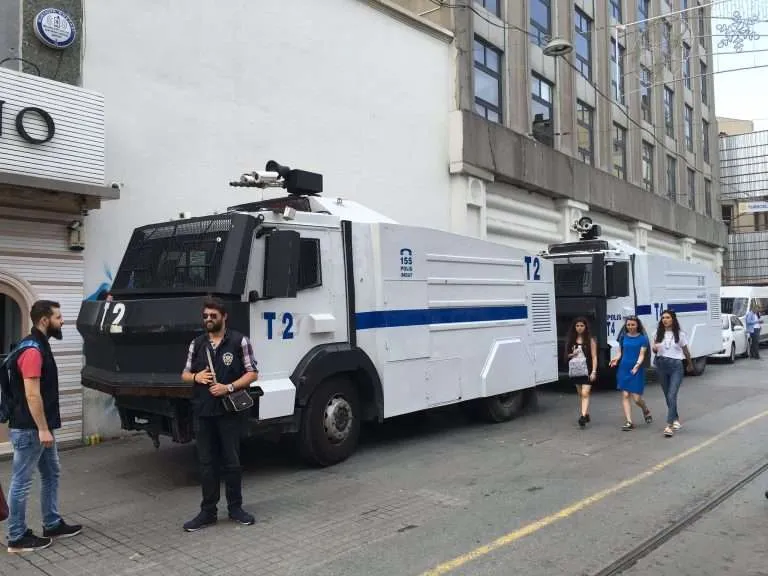
Photo: #Turkey - Hyeong Seok Kim
Three long-running conflicts between the state and its critics shape country conditions in Turkey in 2026. Prosecutors are trying Istanbul's elected mayor, Ekrem İmamoğlu, with more than 400 others, while a court has removed the leadership of the main opposition party. The state still treats the Gülen movement as a terrorist group and has dismissed 125,678 public servants by decree since 2016.[1] At the same time, the PKK has dissolved and parliament has passed a law to bring its members back into society. However, Kurdish politicians remain in prison despite rulings from the European Court of Human Rights.
This report covers events up to October 2026 for UK and US asylum lawyers. It looks at politics, the PKK process, Kurds, the Gülen movement, journalists, torture, LGBT people, women, refugees and Alevis. It then sets out the law in both countries, internal relocation and return risk. Every figure is dated and footnoted. Where sources disagree, we give both figures and say which one we prefer.
125,678
Public servants dismissed by emergency decree after July 2016 (State of Emergency Inquiry Commission)
32/100
Freedom House score in 2026, Not Free
294
Women killed by men in 2025, plus 297 suspicious deaths (We Will Stop Femicide Platform)
163rd
Turkey's rank of 180 in the RSF World Press Freedom Index 2026
Turkey country conditions in 2026: executive summary
Six findings shape country conditions in Turkey for most asylum claims in late 2026. First, the state is using the courts against the main opposition. İmamoğlu has been in Silivri prison since March 2025. His corruption trial opened on 9 March 2026, and he also faces an espionage case.[2] In May 2026, an appeal court annulled the CHP's 2023 congress and removed its leader, Özgür Özel.[3]
Second, the PKK peace process has moved faster than many expected. The PKK announced its dissolution in May 2025, and parliament passed Law No. 7595 in August 2026.[4] Even so, the law only takes effect after the National Security Council confirms disarmament. Third, Kurdish politicians still face trustees, trials and long sentences. Selahattin Demirtaş and Osman Kavala remain in prison despite final Strasbourg judgments.
Fourth, the Gülen movement remains the largest single target of criminal law. The Justice Ministry has counted more than 700,000 people investigated since 2016.[5] Arrests continued through 2025 and 2026. Fifth, journalists face prosecution under a disinformation offence, while regulators block websites and broadcasters. Finally, Turkey hosts about 2.3 million Syrians, and rights groups say many returns are not truly voluntary.[6]
For practitioners, the main lesson is that prosecution in Turkey often works as persecution. The Home Office accepts this for some Gülen and Kurdish profiles. Therefore, a strong claim links the client's profile to dated, sourced evidence of how the state treats people like them.
Political context: Erdoğan, İmamoğlu and the CHP
The arrest of Ekrem İmamoğlu
Recep Tayyip Erdoğan has led Turkey since 2003, first as prime minister and then as president. His main rival in recent years has been İmamoğlu, who won Istanbul in 2019 and again in 2024. On 18 March 2025, Istanbul University annulled İmamoğlu's degree. A university degree is a legal condition for running for president. Reports differ on the scope of the decision. Al Jazeera reported that the university cited 38 irregular transfers in 1990, while Bianet reported 28 diplomas revoked.[7]
The next morning, 19 March 2025, police detained İmamoğlu at his home. Prosecutors issued around 100 warrants in the same operation.[8] On 23 March, a court ordered his arrest on corruption charges, and the Interior Ministry suspended him from office. On the same day, the CHP held a primary that named him its presidential candidate.
Mass protests followed in Istanbul and other cities. Interior Minister Ali Yerlikaya said police had detained 1,879 people by 27 March 2025. Of these, courts sent 260 to pretrial detention.[9] Moreover, the authorities throttled internet access for 42 hours after the arrest.[10] Amnesty International later said police force against protesters "may amount to torture".[11]
The corruption and espionage trials
On 11 November 2025, Istanbul prosecutors filed an indictment against 402 defendants. It accuses İmamoğlu of founding and leading a criminal organisation, bribery, money laundering and fraud. Bianet reported that prosecutors sought between 828 and 2,352 years in prison for him.[12] However, Diken later gave the demand as 849 to 2,430.5 years. We use the Bianet figure because it reports the indictment on the day it was filed.
The trial opened at Silivri on 9 March 2026.[2] By October 2026, the case had 436 defendants, of whom 53 were in detention. İmamoğlu gave his defence from 14 October 2026, and a prosecutor then opened a new inquiry into his remarks in court.[13] There was no verdict at the time of writing. Separately, prosecutors indicted him and three others for espionage on 4 February 2026, seeking 15 to 20 years each. That trial opened in May 2026.[14]
The CHP congress case and the New Party
The courts have also moved against the party itself. In September 2025, an Istanbul court removed the CHP's Istanbul provincial chair, Özgür Çelik, and appointed Gürsel Tekin as interim head. Tekin entered the party building with a police escort on 8 September.[15] The CHP then expelled Tekin and re-elected Çelik at a special congress.
The national case went further. On 21 May 2026, the Ankara Regional Court of Appeal annulled the CHP's November 2023 congress on grounds of "absolute nullity". As a result, it removed Özel and restored the former leader, Kemal Kılıçdaroğlu.[3] Police cleared the party headquarters three days later. In July 2026, Özel and 91 MPs left to form the New Party, and Bianet reports that more than 230 CHP mayors have joined it.[16]
Mayors face particular risk. Turkish Minute counted 40 opposition mayors detained since the 2024 local elections, including some later released. Freedom House recorded 16 CHP mayors in jail in late October 2025, and Turkish Minute counted 23 in pretrial detention in July 2026.[17] The figures differ because they measure different things on different dates. All of them, however, show a pattern of repeated arrests.
Erdoğan and the next election
Freedom House lowered Turkey's score to 32 out of 100 in its 2026 report, which covers 2025. It rates Turkey Not Free and gave it the lowest possible score for due process.[18] Meanwhile, in September 2026 a presidential adviser said Erdoğan would run again in an early election. Under the Constitution, an early vote called by parliament would let him stand despite the two-term limit. It needs 360 of 600 MPs, and the governing alliance holds about 326 to 331 seats.[19] However, the ruling AKP has said no election is on its agenda.
The PKK peace process in 2025 and 2026
The PKK (Kurdistan Workers' Party) fought the Turkish state from 1984. The EU, the UK and the US list it as a terrorist organisation. On 27 February 2025, its jailed founder Abdullah Öcalan called on the group to lay down its arms and dissolve. The PKK announced its dissolution on 12 May 2025.[20] Then, on 11 July 2025, a group of fighters burned their weapons at a ceremony near Sulaymaniyah in northern Iraq. On 26 October 2025, the PKK said it was withdrawing all its forces from Turkey.[21]
Parliament set up the National Solidarity, Brotherhood and Democracy Commission, which began work on 5 August 2025. On 18 February 2026, it adopted a 60-page report by 47 votes to 2. The report proposed a temporary legal framework tied to verified disarmament and reintegration, with no general amnesty.[22] In addition, the DEM Party signed the report but added a dissenting note.
Parliament then passed Law No. 7595 on Strengthening National Solidarity and Social Integration on 10 August 2026, by 468 votes to 88.[4] It appeared in the Official Gazette on 18 August 2026. The law allows some sentences to be suspended or deferred for members not convicted of violent crimes. AP estimated that it could affect about 4,000 people.[23] However, the law only takes effect after security bodies certify the PKK's disarmament and the National Security Council confirms this. We found no such confirmation by October 2026.
For asylum claims, this part of Turkey country conditions has two sides. On one hand, the Home Office may argue that the risk to Kurdish activists has fallen. On the other hand, the law has not yet taken effect, and terrorism prosecutions continue under the Anti-Terror Law and Penal Code article 314 (membership of an armed organisation). A ceasefire with the PKK also does not protect people whom the state accuses of PKK links but who reject violence.
Kurds, the DEM Party and trustee mayors
Kurds are the largest minority in Turkey, and the Home Office treats them as a large and diverse group.[24] The main pro-Kurdish party is now the DEM Party, which replaced the HDP after the HDP faced a closure case. Our separate analysis of terrorism charges against Kurdish activists and trustee mayors covers prosecutions in detail. Here we set out the main facts for a country report.
Trustees replacing elected mayors
Since 2016, the Interior Ministry has removed elected mayors and appointed state trustees, known as kayyum, in their place. Anka news agency counted 160 trustee appointments between 2016 and June 2026. By contrast, a Medyascope count from 2024 gave 164 municipalities, 159 of them run by the Kurdish movement.[25] The two counts use different methods, so we treat 160 as a minimum.
The practice continued after the March 2024 local elections. Counts of new trustees since then range from 11 to 13, and most of them replaced DEM mayors. The list includes Mardin, Batman and Halfeti in November 2024, as well as CHP-run Esenyurt in Istanbul.[25] We found no reinstatement of a removed mayor in 2025 or 2026. For a Kurdish client who worked for a municipality, the removal of their mayor is often the start of the risk.
Demirtaş and the Kobani trial
Selahattin Demirtaş, a former HDP co-chair, has been in prison since November 2016. In December 2020, the Grand Chamber of the European Court of Human Rights found that his detention aimed to stifle pluralism and breached Article 18 of the Convention.[26] On 8 July 2025, the Court found further violations over his detention from 2019, and that judgment became final on 3 November 2025.[27]
Turkey has not released him. Instead, on 16 May 2024, the Ankara 22nd Heavy Penal Court convicted many defendants in the Kobani trial over the October 2014 protests. It gave Demirtaş 42 years in prison. Reports differ on the sentence for former co-chair Figen Yüksekdağ, from 30 years and 3 months to 32 years and 9 months.[28] The appeal is still pending. In October 2026, DEM Party leaders again called for both to be released.
Kavala and non-implementation
The case of civil society figure Osman Kavala shows the limits of Turkish compliance with Strasbourg. The European Court found his detention unlawful in 2019. In July 2022, it held that Turkey had failed to obey that judgment, which was only the second ruling of this kind in the Court's history.[29] On 25 August 2026, the Grand Chamber found that his conviction for the 2013 Gezi protests breached the Convention and ordered his release.[30]
Nevertheless, on about 13 October 2026, an Istanbul court refused to release him or order a retrial. It said his application to the Constitutional Court was still pending.[31] Human Rights Watch described the Grand Chamber ruling as an order for his immediate release. For asylum purposes, these cases matter because they show that the Turkish courts do not give effective protection, even against final international rulings.
The Gülen movement: purge, ByLock and Yalçınkaya
The Gülen movement is a religious network inspired by the preacher Fethullah Gülen. It ran schools, media and businesses, and its members held posts in the police and courts. The government designated it a terrorist organisation, which it calls FETÖ, in May 2016.[32] After the coup attempt of 15 July 2016, which killed about 250 people, the government blamed the movement and began a large purge. Gülen died in Pennsylvania on 20 October 2024.[33] His death has not changed Turkey country conditions for alleged followers, and the prosecutions continue.
The scale of the purge
These figures are high, and they come from the Turkish government itself. Table 1 sets out the main ones.
Measure
Figure
Date and source
Public servants dismissed by emergency decree
125,678
State of Emergency Inquiry Commission, 2020
People investigated since 2016
705,172
Justice Minister, July 2024
People in prison for alleged Gülen links
13,251
Justice Minister, July 2024
Judges and prosecutors dismissed
4,006
Justice Minister, July 2024
People convicted since 2016
126,000+
Justice Ministry data as reported by SCF, November 2025
Passports cancelled
230,000+
Home Office CPIN, August 2025
Table 1: Main measures against alleged Gülen supporters since 2016 (official Turkish figures as reported)
Some sources disagree on these numbers. For example, Amnesty International speaks of more than 130,000 people dismissed, which includes people removed by other measures.[1] Similarly, the prison figure fell from 13,251 in July 2024 to 11,085 in later ministry data.[5][34] We prefer the official figures above because each one has a date and an official source. The later data come through the Stockholm Center for Freedom, a group close to the movement, so we give them less weight.
ByLock and the Yalçınkaya judgment
Turkish courts have convicted many people mainly because they used ByLock, an encrypted messaging app. Prosecutors say only Gülen members used it. Other evidence often includes an account at Bank Asya, a subscription to the Zaman newspaper or a child's place at a Gülen school.
On 26 September 2023, the Grand Chamber gave judgment in Yüksel Yalçınkaya v Türkiye (application no. 15669/20). The judgment on HUDOC found violations of Article 7 (no punishment without law), Article 6 (fair trial) and Article 11 (freedom of association).[35] The Court said Turkish courts had treated ByLock use as proof of membership in a way that no one could have foreseen. It also noted about 8,000 similar applications pending, and some sources give 8,500.
Turkey has not followed the ruling. The Justice Minister said the Court had exceeded its authority. In September 2024, a court in Kayseri convicted Yalçınkaya again and gave him the same sentence of six years and three months.[36] In June 2025, the Committee of Ministers called for a fair retrial and kept the case under enhanced supervision.[37] Meanwhile, the Court continues to rule in follow-up cases. On 16 December 2025 alone, it found violations for 2,420 applicants in three judgments.[38]
Arrests in 2025 and 2026
The police operations have not stopped. Interior Minister Yerlikaya said that in 2025 police arrested 1,601 people for alleged Gülen links and placed 1,524 under judicial control.[39] In 2026, the ministry announced regular raids. For example, on 24 June 2026 it reported 237 people detained in 42 provinces over two weeks, of whom courts arrested 128.[40]
The state also pursues alleged members abroad. In its 2022 annual report, the intelligence agency MİT said it had brought back more than 100 people from other countries. In October 2024, men abducted four Turkish refugees registered with UNHCR in Nairobi, and Kenya confirmed their return to Turkey. UNHCR said it was "deeply concerned" by the refoulement.[41] As a result, people with a Gülen profile may face risk even in third countries.
Journalists, the disinformation law and internet blocking
Press freedom is one of the weakest parts of Turkey country conditions. Reporters Without Borders ranked Turkey 158th of 180 in 2024, 159th in 2025 and 163rd in 2026.[42] Most national media are close to the government, so the few critical outlets left face fines, bans and prosecutions.
Article 217/A and other charges
Law No. 7418 of October 2022 added article 217/A to the Penal Code. It punishes "publicly disseminating misleading information" with one to three years in prison. Counts of its use differ. BirGün, as reported by Turkish Minute, found at least 70 journalists investigated under the offence since 2022.[43] By contrast, the Journalists' Union of Turkey counted at least 88 journalists in 113 investigations.[44] We prefer the union's figure because it covers the full press freedom year to April 2026. Our report on journalist İsmail Arı, jailed under the disinformation law, shows how one such case unfolds.
Prosecutors also use terrorism and insult charges against journalists. During the March 2025 protests, police detained several journalists in dawn raids, including an AFP photographer. Counts range from eight to ten.[45] The Committee to Protect Journalists counted 11 journalists in prison on 1 December 2024 and 8 on 1 December 2025.[46] However, the Turkish monitor P24 counts many more because it uses a wider definition of journalist. Therefore, an expert should state which count they use.
Blocking and broadcast bans
The Free Expression Association (İFÖD) runs the EngelliWeb project. It found that Turkey had blocked 1,264,506 websites and domains by the end of 2024. In 2025, it recorded more than 232,000 new blocks.[47][10] In addition, the authorities blocked hundreds of accounts on X during the 2025 protests.
The broadcast regulator RTÜK also punishes critical channels. On 27 March 2025, it gave Sözcü TV a 10-day blackout over its protest coverage. It also suspended programmes on Halk TV and Tele1 and fined Now TV.[48] These measures affect people who work for opposition media, as well as people who post critical content online.
Torture and ill-treatment in custody
Turkey bans torture in article 94 of its Penal Code. However, rights groups still document abuse. The Human Rights Association (İHD) recorded at least 3,254 people subjected to torture or ill-treatment in 2024. Of these, 2,651 were at protests. For 2025, it recorded at least 1,842 people.[49] The Human Rights Foundation of Turkey (TİHV) received 722 applications from people reporting ill-treatment in 2024.[50] The two groups count different things, so the figures do not contradict each other.
Human Rights Watch reported ill-treatment of young protesters in police custody after March 2025 and said impunity was widespread.[51] The State Department's 2024 human rights report also found credible reports of torture and arbitrary arrest, and it said the government took only "limited steps" to punish officials.[52] Furthermore, the Council of Europe's anti-torture committee made a special visit to look at police custody after the March 2025 arrests. For claims, this part of Turkey country conditions supports a real risk of ill-treatment for anyone the police detain on political or terrorism grounds.
LGBT people and women
LGBT people
Same-sex relations are legal, but Turkey country conditions for LGBT people have worsened since 2015. The state has banned Istanbul Pride every year since 2015. On 29 June 2025, police detained more than 50 people, including lawyers and journalists. Counts range from 30 to at least 55.[53] ILGA-Europe ranked Turkey 47th of 49 countries on its Rainbow Map 2026, with a score of 5%.[54]
The government has also turned family policy against LGBT people. Erdoğan declared 2025 the "Year of the Family", and in May 2026 a presidential circular named 2026 to 2035 the "Family and Population Decade".[55] In October 2025, a leaked draft of the 11th Judicial Package proposed up to three years in prison for behaviour "contrary to biological sex". The government dropped these clauses before it sent the bill to parliament.[56] Some of the measures came back in a draft of the 12th package in June 2026. However, reports indicate that the law passed in July 2026 left them out.[57] Lawyers should still check the final text, because the government may bring these proposals back.
Women
Turkey left the Istanbul Convention, the Council of Europe treaty on violence against women, by presidential decree on 20 March 2021. The withdrawal took effect on 1 July 2021. For women, Turkey country conditions are hard to measure, because the state publishes no full femicide statistics. Most lawyers therefore use data from the We Will Stop Femicide Platform.
Women killed by men, by year (We Will Stop Femicide Platform)
2023
315
315
2024
394
394
2025
294
294
2026 H1
150
150
Figure 1: Women killed by men in Turkey each year; 2026 covers January to June only (We Will Stop Femicide Platform annual reports and press reports)
The fall in 2025 is not good news on its own. The platform counted 297 suspicious deaths of women in 2025, the first year that this number was higher than the number of killings.[58] In 2024, it counted 394 killings, the highest figure since 2010.[59] Of the women killed in 2025, 23 died despite a protection order. Other groups give different totals. For example, the Federation of Women's Associations of Turkey counted at least 424 killings in 2023.[60] We prefer the platform's series because it uses the same method every year.
Syrians, other refugees and Alevis
Syrians and deportations
The number of Syrians under temporary protection fell from about 2.9 million in December 2024 to 2,255,031 by mid-2026.[6] Most of the fall came after the Assad government collapsed on 8 December 2024. Return figures differ. In May 2026, the Interior Ministry counted 667,565 returns since that date, while UNHCR counted about 640,000.[61] We prefer the UNHCR figure because it uses an independent method.
Not every return is voluntary. Human Rights Watch has documented Syrians forced to sign "voluntary return" forms and deported, and its World Reports for 2025 and 2026 say the practice continued.[62] In addition, the Interior Minister said Turkey deported about 105,000 irregular migrants in the first 11 months of 2025.[63] Afghans were the largest group of migrants caught in 2024. For a non-Turkish client who passed through Turkey, this evidence goes to whether Turkey is a safe third country.
Alevis
Alevis are a large religious minority, often estimated at several million people. The state still does not recognise cemevis, their houses of worship, as places of worship. Instead, it set up a presidency for Alevi-Bektashi culture under the Ministry of Culture in 2022.[64] Moreover, the compulsory religion classes that the European Court criticised in Hasan and Eylem Zengin (2007) and Mansur Yalçın (2014) remain largely unchanged. Alevi identity alone rarely founds a claim, but it adds weight when combined with Kurdish or political activity.
Legal framework: UK and US asylum law on Turkey
UK: Home Office notes
The Home Office has six current notes on Turkey, listed on its Turkey CPIN collection page. It withdrew the notes on journalists in 2018 and on Alevis and sexual orientation in 2021.[65]
Note
Version and date
Home Office position (summary)
Gülenist movement
v5.0, August 2025
Risk depends on the person's profile; a person who fears the state is unlikely to get protection or to relocate
Peoples' Democratic Party (HDP)
v5.0, October 2023
Ordinary members not generally at risk; senior figures, activists and people suspected of PKK links may be
Kurds
v5.0, July 2025
Kurdish ethnicity alone does not amount to persecution
PKK
v6.0, July 2025
Prosecution of members is not in general persecution; exclusion may apply
Military service
v4.0, July 2025
Punishment for draft evasion is not persecution
Women fearing gender-based violence
v3.0, July 2025
Protection and relocation depend on the facts
Table 2: Current Home Office CPINs on Turkey, October 2026 (gov.uk)
Two gaps stand out. First, the HDP note dates from October 2023 and does not mention the DEM Party. As a result, it predates the 2024 trustee appointments and the PKK process.[66] Second, the Gülenist note relies mainly on information up to August 2023. Even so, it accepts that ByLock use, Bank Asya accounts and certain professions can raise the risk. It also says a refusal is unlikely to be certifiable as clearly unfounded.[67]
UK: country guidance and case law
Two old country guidance cases still apply. IA HC KD RO HG (Risk, Guidelines, Separatist) Turkey CG [2003] UKIAT 00034 lists risk factors for Kurds suspected of separatist links. IK (Returnees, Records, IFA) Turkey CG [2004] UKIAT 00312 explains how the GBT police database works at the airport.[68] The Home Office says the principles of IA remain relevant, although the case is more than 20 years old.[69] For military service, GS [2004] UKIAT 00041 still applies, and the House of Lords in Sepet and Bulbul [2003] UKHL 15 held that punishment for draft evasion is not in general persecution.
There is no country guidance case on the Gülen movement. Therefore, each Gülen case turns on the CPIN and expert evidence. A tribunal may depart from country guidance only where there is very strong and cogent evidence. A report that sets out Turkey country conditions from 2024 to 2026 is the way to meet that test for Kurdish claims.
UK grant rates have fallen. In the year to June 2025, Turkish nationals made 2,488 claims, and the initial grant rate fell from 51% to 19%.[70] Across the EU, the recognition rate for Turkish applicants fell from 54% in 2019 to 13% in 2025.[71] These numbers suggest that decision-makers now expect more specific evidence of individual risk.
US: asylum, withholding and the terrorism bars
In the United States, an applicant must show a well-founded fear of persecution on a protected ground, and the ground must be "at least one central reason" for the harm.[72] Prosecution under a law of general application is not usually persecution. However, it can be, where the state uses the law as a pretext to punish political opinion or punishes a person more harshly for that reason.[73] This point is central for Gülen cases. The ECtHR's findings in Yalçınkaya and its follow-up cases give strong evidence that ByLock convictions do not meet basic fair trial standards. We found no published federal appeals court ruling on a Gülen asylum claim, so practitioners should rely on these general principles.
Kurdish claims face a different problem. The US designated the PKK as a Foreign Terrorist Organization in October 1997. Under INA section 212(a)(3)(B), even small help to such a group can bar asylum. In Ay v Holder, 743 F 3d 317 (2d Cir 2014), the court applied the material support bar to a Turkish Kurd who gave food and clothing to suspected PKK members.[74] The BIA has also held that there is no implied duress exception to the bar.[75] Therefore, counsel must screen every Kurdish client for contact with the PKK before filing. However, deferral of removal under the Convention against Torture remains open to a barred applicant where torture by officials is likely.
Internal relocation and state protection
Turkey country conditions make internal relocation unrealistic where the state is the persecutor. The Home Office itself accepts that a person who fears the Turkish state is unlikely to be able to relocate.[67] Our wider analysis of internal relocation arguments in the tribunals explains the legal test.
The reason is practical. Turkey has one national police database, the GBT (General Information Gathering) system. It records arrest warrants, past arrests, travel bans and draft evasion.[68] The UYAP system links all courts and prosecutors. As a result, a person with an open warrant in Diyarbakır is also on record in Istanbul or Izmir.
For non-state actors, such as a violent family, the Home Office says protection and relocation are generally available.[76] The evidence on femicide points the other way for many women. In 2025, the We Will Stop Femicide Platform found that 23 women died despite a protection order.[58] These facts go to the Horvath test, which asks whether the state gives a reasonable level of protection in practice.
Return risk: airport checks, GBT and passports
Return risk is often the decisive issue in Turkish claims. In IK, the tribunal found that border police at Istanbul airport can see GBT records. Questioning by airport police alone is not ill-treatment, but transfer to the anti-terror police or MİT carries a real risk.[68] People returning on emergency travel documents are more likely to face questioning.
More recent evidence adds detail. The Home Office PKK note quotes an İHD official who says police check several databases on entry, including GBT, UYAP and a system linked to Gülen records. A flagged person goes into custody and then before a prosecutor.[69] By contrast, a 2024 review for the UK's independent chief inspector found no concrete evidence of widespread misuse of these databases. We give weight to both, but the İHD account matches the Home Office's own acceptance that people with warrants face detention.
Our video on how we assess return risk explains the method an expert uses to link these database checks to a client's profile.
Passports and profiles at risk
Passport records also matter. Decree-Law 667 of July 2016 required the cancellation of passports of people under investigation for Gülen links. The Home Office says the authorities cancelled more than 230,000 passports and lifted about 155,000 restrictions in 2018.[67] A cancelled passport therefore shows that the state has a file on the person. Furthermore, Turkish citizens were the largest group returned from the EU in 2025, with 13,405 returns.[77] The table below gives our summary assessment of Turkey country conditions for the main profiles.
Profile
Risk level
Main source of harm
Relocation
Alleged Gülen member with ByLock record, warrant or past charge
High
Police, courts, MİT
Not viable
DEM official, former mayor or active Kurdish organiser
High
Anti-terror police, courts
Not viable
Person accused of PKK links
High (check exclusion)
Anti-terror police, courts
Not viable
Journalist or social media critic facing charges
High
Courts, Article 217/A and terrorism laws
Not viable
Protester detained in 2025 with an open case
Moderate to high
Police, courts
Unlikely
Woman fleeing family violence
Moderate to high (fact-specific)
Family, weak protection orders
Depends on support and reach
Gay, bisexual or trans person
Moderate
Family, police at public events
Sometimes viable
Ordinary DEM supporter or Kurd with no profile
Low
Discrimination
Often viable
Table 3: Summary return risk by profile, October 2026 (our assessment based on the sources cited in this report)
Several facts raise the risk on return. These include an open warrant, a past detention, a family member already prosecuted, or social media posts the police can link to the person. For an expert report on a specific client, see our Turkey country expert witness service. For the wider regional picture, our article on Kurdish persecution in Turkey, Iraq, Iran and Syria compares the four states.
Conclusion
Turkey country conditions in 2026 show a state that uses criminal law as its main tool against opponents. The İmamoğlu trials and the CHP case show that even the largest opposition party has no safe space. The PKK process may change the picture for some Kurds, but Law No. 7595 has not yet taken effect. Meanwhile, Demirtaş and Kavala remain in prison against final judgments of the European Court. The Gülen purge continues with new arrests each month, and ByLock evidence still decides cases.
For practitioners, the task is to show how the client's profile fits this evidence. The Home Office notes accept much of the risk for Gülen profiles, but they are dated, and the HDP note does not cover the DEM Party. Strong claims therefore rely on recent, dated sources such as Strasbourg judgments, İHD and femicide data, and official Turkish figures. Human Rights Watch's World Report 2026 chapter on Türkiye is a good starting point for an up-to-date bundle.
Footnotes
- Anadolu Agency, 'Turkey's emergency state body concludes 83% of appeals' (2020), reporting State of Emergency Inquiry Commission figures of 125,678 dismissals; Amnesty International uses 'more than 130,000'
- AP via Africanews, 'Corruption trial of Erdogan opponent and 400 others opens in Turkey' (9 March 2026)
- Al-Monitor, 'Turkey court annuls main opposition party's 2023 congress in latest blow' (May 2026), on the Ankara Regional Court of Appeal, 36th Civil Chamber, decision of 21 May 2026
- Balkan Insight, 'Turkish parliament overwhelmingly approves PKK disarmament law' (11 August 2026)
- Turkish Minute, 'Turkey investigated more than 700K people over Gülen links since failed coup: minister' (12 July 2024), citing Justice Minister Yılmaz Tunç via Anadolu Agency
- Presidency of Migration Management figures as reported by ekonomim.com (mid-2026); Human Rights Watch, 'World Report 2025: Türkiye' (January 2025) for about 2.9 million in December 2024
- Al Jazeera, 'Türkiye's Istanbul University annuls Mayor Ekrem Imamoglu's diploma' (18 March 2025); Bianet, 'Istanbul mayor's university diploma revoked, blocking potential presidential bid' (18 March 2025)
- Euronews, 'Police arrest Istanbul mayor and key Erdoğan rival amid crackdown' (19 March 2025)
- Reuters via Geo.tv, 'Türkiye detains nearly 1,900 people in protests over jailed mayor, rejects international criticism' (27 March 2025)
- Stockholm Center for Freedom, 'Turkey blocked 232,000 websites in 2025 as digital censorship expanded: report' (23 June 2026), summarising İFÖD, 'EngelliWeb 2025'
- Amnesty International, 'Türkiye: Unlawful use of force by police against protesters in March may amount to torture' (June 2025)
- Bianet, 'Indictment seeks up to 2,352 years in prison for İmamoğlu' (11 November 2025); Diken gives 849 to 2,430.5 years (October 2026)
- Turkish Minute, 'Jailed Istanbul mayor accuses Erdoğan govt of shielding corruption in trial defense' (14 October 2026)
- Turkish Minute, 'Jailed Istanbul mayor indicted in political espionage case' (4 February 2026); Turkish Minute, 'Jailed Erdoğan rival faces 3 hearings in one day' (6 July 2026)
- Bianet, 'Court halts CHP Istanbul congress, removes provincial leadership in critical verdict' (September 2025). Sources date the order to 3 or 4 September 2025
- Reuters, 'Factbox: Court ruling adds to crackdown on Turkey's main opposition CHP' (21 July 2026); Bianet, 'More than 230 CHP mayors join Özel's new party' (2026)
- Turkish Minute, 'Opposition mayor in southwestern Turkey among 29 detained in corruption probe' (20 October 2026); Freedom House, 'Freedom in the World 2026: Turkey' (March 2026)
- Freedom House, 'Freedom in the World 2026: Turkey' (March 2026), score 32/100, Political Rights 16/40, Civil Liberties 16/60
- France 24, 'Turkey's Erdogan to run in early 2028 vote, sidestepping constitutional term limit' (17 September 2026); Constitution of the Republic of Turkey, art 116(3). Reported seat totals for the governing alliance vary from 326 to 331
- Al-Monitor, 'Kurdish PKK says withdrawing all forces from Turkey to north Iraq' (October 2025), recounting the 27 February 2025 call, the 12 May 2025 dissolution and the 11 July 2025 ceremony
- Al-Monitor, 'Kurdish PKK says withdrawing all forces from Turkey to north Iraq' (26 October 2025)
- Medyascope, 'Çözüm komisyonunun mesaisi bitiyor: ortak rapor oy çokluğuyla kabul edildi' (18 February 2026)
- Stockholm Center for Freedom, 'Turkey's landmark PKK peace process law takes effect after publication in Official Gazette' (18 August 2026); AP estimate of about 4,000 people as reported there
- Home Office, 'Country policy and information note: Kurds, Turkey' (version 5.0, July 2025)
- Anka Haber, 'Türkiye'de belediyeler üstündeki kayyum sopası: 2016'dan bu yana 160 kez kayyum atandı' (1 June 2026); Medyascope trustee infographic (2024); Kurdistan24 and Duvar counts of 12 to 13 trustees since March 2024 (2025)
- Selahattin Demirtaş v Turkey (No 2) App no 14305/17 (ECtHR, Grand Chamber, 22 December 2020)
- Strasbourg Observers, 'The ECtHR judgment in Selahattin Demirtaş v Türkiye (No 4)' (20 August 2025); Euronews Türkçe, report on the rejection of Turkey's referral request (3 November 2025)
- Yetkin Report, '42 years prison sentence for Demirtaş in Kobani case' (16 May 2024); Bianet gives 32 years and 9 months for Yüksekdağ
- Proceedings under Article 46 § 4 in the case of Kavala v Turkey App no 28749/18 (ECtHR, Grand Chamber, 11 July 2022); Kavala v Turkey (ECtHR, 10 December 2019)
- Human Rights Watch, 'Türkiye: European Court orders rights defender's immediate release' (25 August 2026); Bianet, 'A comprehensive legal summary of the ECtHR Grand Chamber's judgment in Kavala v Türkiye (No 2)' (August 2026)
- Turkish Minute, 'Turkish court rejects Kavala's release and retrial despite ECtHR ruling' (14 October 2026)
- Turkish Minute, 'ECtHR found rights violations affecting over 8,000 people in Turkey's post-coup crackdown: report' (20 July 2026), on the May 2016 designation; about 250 people died in the coup attempt, excluding the plotters
- PBS NewsHour (AP), 'Fethullah Gülen, Turkish spiritual leader who self-exiled in the U.S., has died' (21 October 2024)
- Stockholm Center for Freedom, report on Justice Ministry figures (4 November 2025): more than 126,000 convicted and 11,085 in prison. We could not see the ministry's own release
- Yüksel Yalçınkaya v Türkiye App no 15669/20 (ECtHR, Grand Chamber, 26 September 2023)
- Stockholm Center for Freedom, 'Turkish court again convicts teacher of terrorism in defiance of landmark ECtHR ruling' (September 2024)
- Committee of Ministers of the Council of Europe, 1531st meeting (10 to 12 June 2025), decision in Yüksel Yalçınkaya v Türkiye
- Stockholm Center for Freedom, 'ECtHR faults Turkey for convictions of 2,420 applicants over Gülen links' (16 December 2025), on Bozyokuş and Others, Karslı and Others and Seyhan and Others
- Stockholm Center for Freedom, '1,601 arrested in 2025 over alleged Gülen links, interior minister says' (22 December 2025)
- Daily Sabah, 'Nationwide raids against FETÖ net 237 suspects in Türkiye' (24 June 2026)
- Stockholm Center for Freedom, 'UN-protected Turkish refugees deported to Turkey by Kenya held at Ankara police station' (October 2024), citing UNHCR's statement; MİT annual report 2022 as reported in Home Office, 'CPIN: Gülenist movement' (version 5.0, August 2025)
- Reporters Without Borders, 'World Press Freedom Index' (2024, 2025 and 2026 editions), as reported by Bianet (3 May 2024) and Turkish Minute (30 April 2026)
- Turkish Minute, 'Turkey has investigated at least 70 journalists under controversial disinformation law since 2022' (24 March 2026), citing BirGün
- Journalists' Union of Turkey (TGS), 'Press Freedom Report 2025-2026' (2026)
- Committee to Protect Journalists, 'Several journalists hurt, detained by police amid Turkey protests' (March 2025); BTA, report on dawn raids (24 March 2025)
- Committee to Protect Journalists, '2025 prison census' (21 January 2026) and 2024 prison census (January 2025); P24 counts 27 journalists behind bars
- Free Expression Association (İFÖD), 'EngelliWeb 2024' (2025)
- Turkish Minute, 'Watchdog imposes 10-day broadcast ban on network over coverage of protests in Turkey' (27 March 2025)
- Turkish Minute, 'Turkey logged more than 3,200 torture or ill-treatment cases in 2024: report' (15 November 2025), citing İHD; Stockholm Center for Freedom on İHD's 2025 figures (2026)
- Stockholm Center for Freedom, 'Turkish human rights group reports 722 mistreatment-related applications in 2024' (2025), citing TİHV
- Human Rights Watch, 'World Report 2026: Türkiye' (January 2026)
- US Department of State, '2024 Country Reports on Human Rights Practices: Türkiye' (August 2025)
- Bianet, 'Police block Istanbul Pride march, detain dozens including journalists' (29 June 2025); Kaos GL counted 54 and AP more than 50
- ILGA-Europe, 'Rainbow Map 2026' (12 May 2026)
- Presidential Circular 2026/4, Official Gazette no 33241 (2 May 2026), as reported by CNBC-e and BirGün
- Medyascope, report on the leaked 11th Judicial Package draft (15 October 2025); Bianet, report on the removal of the LGBTI provisions (6 November 2025)
- Kaos GL, report on the 12th Judicial Package draft (2 June 2026); Law No 7589, Official Gazette no 33326 (31 July 2026), as summarised by Turkish law firms. We have not checked the final text clause by clause
- We Will Stop Femicide Platform, '2025 Annual Report on Femicides and Suspicious Deaths of Women' (January 2026)
- We Will Stop Femicide Platform, '2024 Annual Report' (January 2025)
- Cumhuriyet, report on the We Will Stop Femicide Platform's 2023 figures (2 January 2024); Federation of Women's Associations of Turkey, 2023 figures
- Enab Baladi, report on Interior Ministry return figures (May 2026); UNHCR return figures cited there
- Human Rights Watch, 'Protected No More: Uyghurs in Türkiye' (12 November 2025); Human Rights Watch, 'World Report 2026: Türkiye' (January 2026)
- NTV, report on Interior Minister Yerlikaya's statement (December 2025); Asylum Information Database (AIDA), 'Country Report: Türkiye' (2025 update), on apprehensions of Afghans
- US Commission on International Religious Freedom, '2025 Annual Report: Türkiye' (March 2025); IPC-Mercator, Sabancı University, commentary on religion classes (June 2026)
- Home Office, 'Turkey: country policy and information notes' (collection page, last updated 8 August 2025)
- Home Office, 'Country policy and information note: Peoples' Democratic Party (HDP), Turkey' (version 5.0, October 2023)
- Home Office, 'Country policy and information note: Gülenist movement, Turkey' (version 5.0, August 2025)
- IK (Returnees, Records, IFA) Turkey CG [2004] UKIAT 00312 (2 December 2004)
- Home Office, 'Country policy and information note: Kurdistan Workers' Party (PKK), Turkey' (version 6.0, July 2025), paras 7.6.2 and 7.6.3
- Electronic Immigration Network, 'Grant rate for asylum claims falls below 50%, number of claims reaches record high of 111,000' (22 August 2025), reporting Home Office statistics for the year ending June 2025
- European Union Agency for Asylum, 'Latest Asylum Trends: Annual Analysis, recognition rates' (2026)
- Immigration and Nationality Act s 208(b)(1)(B)(i), 8 USC 1158(b)(1)(B)(i)
- Matter of S-P-, 21 I&N Dec 486 (BIA 1996)
- Ay v Holder, 743 F 3d 317 (2d Cir 2014); 8 USC 1182(a)(3)(B)(iv)(VI)
- Matter of M-H-Z-, 26 I&N Dec 757 (BIA 2016)
- Home Office, 'Country policy and information note: Women fearing gender-based violence, Turkey' (version 3.0, July 2025)
- Stockholm Center for Freedom, 'Turkish citizens top EU deportation list, raising safety concerns for political returnees' (13 May 2026), citing Eurostat
Sources
- Home Office, Turkey: country policy and information notes, updated August 2025
- Home Office, Country policy and information note: Gülenist movement, Turkey (v5.0), August 2025
- Home Office, Country policy and information note: Peoples' Democratic Party (HDP), Turkey (v5.0), October 2023
- Home Office, Country policy and information note: Kurdistan Workers' Party (PKK), Turkey (v6.0), July 2025
- Upper Tribunal (IAC), IK (Returnees, Records, IFA) Turkey CG [2004] UKIAT 00312, December 2004
- European Court of Human Rights, Yüksel Yalçınkaya v Türkiye, App no 15669/20 (Grand Chamber), 26 September 2023
- Human Rights Watch, World Report 2026: Türkiye, January 2026
- Human Rights Watch, Türkiye: European Court orders rights defender's immediate release, 25 August 2026
- Freedom House, Freedom in the World 2026: Turkey (via ecoi.net), March 2026
- Amnesty International, Türkiye: Unlawful use of force by police against protesters in March may amount to torture, June 2025
- Committee to Protect Journalists, 2025 prison census, January 2026
- Journalists' Union of Turkey, Press Freedom Report 2025-2026, 2026
- We Will Stop Femicide Platform, 2025 Annual Report on Femicides and Suspicious Deaths of Women, January 2026
- ILGA-Europe, Rainbow Map 2026, May 2026
- Human Rights Watch, Protected No More: Uyghurs in Türkiye, November 2025
- European Union Agency for Asylum, Latest Asylum Trends: Annual Analysis, 2026
- Balkan Insight, Turkish parliament overwhelmingly approves PKK disarmament law, 11 August 2026
- US Court of Appeals for the Second Circuit, Ay v Holder, 743 F 3d 317 (2d Cir 2014), 20 February 2014
Need an expert witness report for your case?
Our country experts provide independent reports for asylum and immigration cases in the UK, US, Canada, and EU.
Order an expert witness report |
Find a country expert witness |
About our expert team