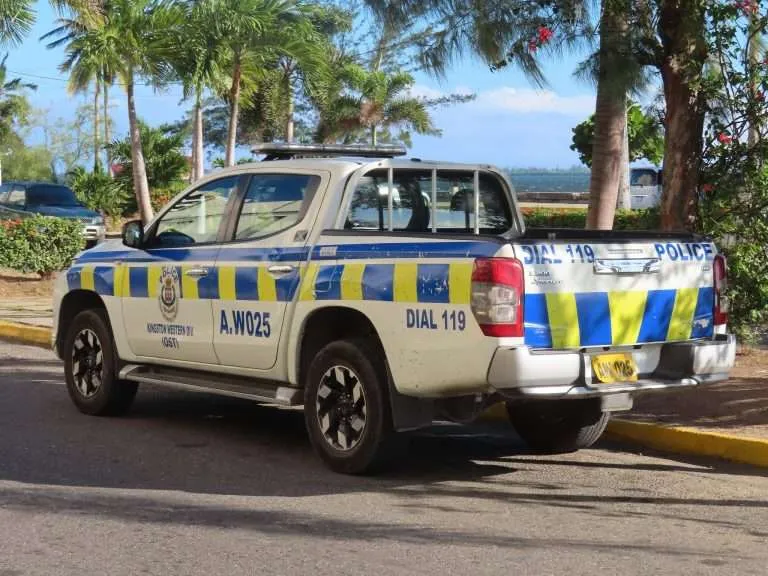
Photo: HXP in 2016 (2) - Kurdishstruggle
On 15 December 2024, one week after Bashar al-Assad fell, Ahmad al-Sharaa said compulsory military service in Syria would end, except in a national emergency linked to war.[1] For a decade, Syria conscription was the main reason young men left the country and the main basis of their asylum claims. As of November 2026, the new army recruits only volunteers, and UNHCR reports no forced conscription by the government.[2]
Military service still matters, though, as a record of the past. A former conscript may carry an old military ID or a settlement (taswiya) card. His name may sit in an old database as a deserter, or he may have served a year in the Kurdish-led "self-defence duty". Each of these can shape how a Syrian man is treated at a checkpoint. This article deals only with that question: how service, evasion and desertion affect risk after December 2024, and how UK and US law treats such claims. Our Syria country conditions report covers the wider picture of return, sectarian violence and property.
Former Syrian army personnel arrested, Dec 2024 to Jan 2026 (government figure)
Former soldiers and conscripts who settled status in Latakia and Tartous (UN COI, 2026)
Assad-era travel bans, many for draft evasion, lifted by November 2025
People, 151 of them children, arrested by the SDF Jan 2024 to Jan 2026, many sent to recruitment camps
Syria conscription after December 2024: what changed
Syria conscription under Assad rested on the Military Service Law, Legislative Decree No. 30 of 2007. Men aged 18 to 42 had to serve 18 to 21 months, and many were kept as reservists for years. In June 2024, the old Syrian government began a phased discharge of reservists. Then, in September 2024, Assad issued a general amnesty for deserters.[1]
After the fall of Damascus, the new authorities went further. Al-Sharaa announced the end of mandatory service on 15 December 2024. A member of the military command confirmed on 11 January 2025 that forced conscription no longer existed and that the army would be made up of volunteers.[1] On 29 January 2025, the old army and security agencies were formally abolished at the "Revolution Victory Conference".[2]
The legal form of this change is less clear than the practice. The EUAA and the US State Department both describe compulsory service as formally abolished.[3][5] However, we have not found a published decree that repeals Legislative Decree No. 30 of 2007. In addition, the December 2024 statement kept open the option of a call-up in a national emergency. The EUAA therefore notes that new conscription campaigns "cannot be excluded" in an emergency.[4]
How the new Syrian army recruits
As of June 2026, recruitment to the army is voluntary. The EUAA found no reports of forced recruitment or of social pressure to enlist. Most recruits join for the salary, which is high by Syrian standards. Volunteers must meet set criteria, such as a ninth-grade education, the ability to read and physical fitness. Former rebel fighters, however, joined regardless of these criteria.[3]
The new army prefers officers who defected from Assad's forces. In November 2025, the Ministry of Defence reactivated more than 2,000 defected officers after interviewing over 3,100. In contrast, the army excludes thousands of personnel who stayed with the old forces until December 2024. The force is mainly Sunni Arab, and few members of minority groups have joined.[3]
One gap remains. The 2026 US Trafficking in Persons report states that it is "unclear whether all conscripts have been demobilized". It also says local police units still used Assad-era databases that flagged people for "desertion" or "terrorism".[5] That last point matters for return, and we return to it below.
Three systems of military service in Syria and their status
Lawyers often treat Syrian military service as one issue. In fact, three different systems produced claims, and each now has a different status. The table below sets out the position as of November 2026.
| System | Legal basis | Who it covered | Status, November 2026 |
|---|---|---|---|
| Syrian Arab Army (Assad) | Legislative Decree No. 30 of 2007 | Men 18 to 42; 18 to 21 months plus reserve duty | Army dissolved; conscription ended in practice from December 2024; amnesty for conscripts |
| New Syrian army | Ministry of Defence policy; no conscription decree | Volunteers only | No forced recruitment reported; call-up possible in a national emergency |
| DAANES "self-defence duty" (HXP) | Law on Mandatory Self-Defence Duty, 2019, amended 2024 | Male residents of the north-east from 18; 12 months | Ceased in practice since late January 2026; never formally repealed; SDF dissolved 25 August 2026 |
This split has a practical effect. A claim drafted in 2023 about a Kurdish man from Qamishli was usually about the SDF. A claim from Homs was usually about Assad's army. Both claims must now be re-read against different facts, and against different Home Office notes.
Former Syrian conscripts and the taswiya settlement process
The biggest group with a military past is former conscripts of the Syrian Arab Army (SAA). On 9 December 2024, the new authorities announced an amnesty for soldiers recruited under compulsory service who were not involved in "crimes against humanity".[1] To use it, men went to "settlement centres" across Syria to settle their status, a process known as taswiya.
How taswiya worked
At a settlement centre, a former soldier handed in his weapon and his military ID. He also pledged not to take up arms against the new authorities. In return, he received a temporary card confirming that he was no longer active. Investigators then checked whether he had committed crimes, a check that could take up to three months. Men cleared in this way were meant to receive civilian ID and have their files closed.[3][1] By February 2025, more than 52 centres had opened, including in Damascus and Palmyra.[1]
Turnout was high. In Latakia and Tartous alone, around 120,000 former soldiers and conscripts settled their status, according to the UN Commission of Inquiry.[3] Syria Direct reported several versions of the card in circulation, each valid for only three months. Some conscripts received their old civil ID back instead of a card.[2]
When the taswiya card became a risk
The card was meant to protect its holder on Syrian roads. In practice, it sometimes did the opposite. The International Crisis Group found that checkpoint guards at times read settlement papers as proof of complicity in Assad's crimes. As a result, holders faced arrest, kidnapping or even death. Thousands of former personnel therefore skipped taswiya and stayed in their villages, often keeping their weapons.[2][3]
Religion shaped the outcome for Syrian former soldiers. According to the EUAA, many Sunni card holders went back to civilian life. In contrast, many Alawite former soldiers called their papers "death cards" and stayed close to home.[3] The UN Commission of Inquiry documented torture and ill-treatment in 18 official detention sites and 12 makeshift ones between December 2024 and January 2026. Most victims were Alawite men, including reconciled former personnel. The Commission also recorded eight enforced disappearances, among them former conscripts who had completed taswiya.[3]
From October 2025, the Interior Ministry in Latakia began to replace temporary cards with civilian ID cards.[2] As of April 2026, however, the exchange was slow and limited.[3] A man who still carries only a military ID or a temporary card can be identified on sight as a former soldier. UNHCR says this may expose him to ill-treatment and arrest in Syria.[2]
Arrests and accountability
Between 8 December 2024 and January 2026, the government reported arresting 6,331 former SAA personnel. It later released 1,158 of them for lack of evidence.[3] UNHCR finds that arrests focus mainly on senior officials. Former soldiers who settled their status and other low-level staff have generally not been targeted, or were released after short periods.[2] Location also matters: in Deir ez-Zor, Sunni former soldiers are generally not targeted for past service alone, because tribal retaliation deters it.[3]
On 19 February 2026, al-Sharaa issued an amnesty decree for certain ordinary offences. It expressly excluded anyone accused of "grave violations against the Syrian people".[2] Unidentified gunmen and armed groups such as Saraya Ansar al-Sunna have also killed men linked to the old army or security services.[3] In short, a former rank-and-file conscript is not at general risk from the Syrian state. Yet his religion, his home area, his unit and his taswiya history can change that.
Syrian draft evaders and deserters from Assad's army
Men who evaded the draft or deserted under Assad were, until 2024, the core of Syrian protection claims. Today they are the group least at risk from military service as such. The EUAA found no reports of persecution of these men by the transitional government. It also notes that defectors from Assad's army now serve in the new Ministry of Defence.[4] A New York Times report quoted by the EUAA described being "wanted" under Assad as becoming "a badge of honor".[3]
Travel bans and wanted lists
About 8 million Syrians were on the wanted lists of Assad's security agencies. On 9 March 2025, the Interior Ministry cancelled travel bans that included bans for failing to report for compulsory and reserve service.[1] By November 2025, the authorities said they had lifted more than 5 million of 8 million travel restrictions.[3] Military police warrants for evasion are no longer enforced, according to SNHR and the Syria Justice and Accountability Centre.[3]
Two problems remain. First, the new authorities kept warrants based on criminal charges. The Assad state often charged people who fled with offences such as using a forged passport. Such charges may still stop a returnee from leaving again until a court reviews the case.[3] Second, the US State Department reports that some Syrian police units still use old databases that flag people for "desertion".[5] Neither problem shows persecution on its own. Nevertheless, both explain why a man may be stopped at a checkpoint or at the airport.
Property seized for not serving
Draft evasion in Syria also left a financial trace. Under amendments to the Military Service Law, men who reached the end of conscription age without serving had to pay an exemption fee of 8,000 US dollars. A 2019 change to Article 97 then allowed the Ministry of Finance to seize and sell their property without notice. Human Rights Watch reported that the rule also reached the assets of wives and children.[13]
In May 2025, Presidential Decree No. 16 cancelled "precautionary" seizures issued between 2012 and 2024. However, Enab Baladi reported that the decree covers only orders made under Legislative Decree No. 63 of 2012. It excludes measures already turned into executive seizure or final confiscation.[14] As of November 2026, we have found no measure that clearly reverses Article 97 seizures against draft evaders. This rarely creates a refugee claim. Still, it can matter for Article 8, for humanitarian protection and for whether a man has a home to return to.
Syria's north-east: the SDF "self-defence duty"
The second system of Syrian military service was Kurdish-led. In June 2019, the Autonomous Administration of North and East Syria (DAANES) passed a law on the "Duty of Self-Defence". A 35-article version followed in February 2024, and Enab Baladi described it as similar to Assad's own service law.[2] Conscripts in north-east Syria served in the Self-Defence Duty Forces, known by the Kurdish initials HXP. The Home Office describes the HXP as an auxiliary force that guarded public buildings and was generally not used in combat.[6]
Who the duty covered
Before January 2026, the DAANES required men to serve for 12 months from the age of 18.[3] Sources disagree on the upper age. The EUAA uses 18 to 31, while a 2024 Danish fact-finding report cited by the Home Office gives 18 to 40.[4][6] Women could join the YPJ voluntarily. Exemptions covered medical grounds, disability, only sons and families of "martyrs" with a certificate.[4] Kurds were the main target. The EUAA notes that the DAANES was more cautious in Arab-majority areas, yet arrest campaigns there grew in 2025.[4]
Forced recruitment campaigns in 2025
Conscription in north-east Syria peaked just before it collapsed. In September and October 2025, the SDF ran recruitment campaigns in Raqqa, Deir ez-Zor and Hasakah, detaining more than 500 people in Raqqa alone. The raids and checkpoints targeted men born between 1999 and 2007. According to SNHR, evaders went straight into service once caught, while deserters faced detention, military courts and forced return to their units.[3] Between January 2024 and January 2026, SNHR recorded at least 1,391 arbitrary arrests by the SDF, including 151 children, with many detainees sent to recruitment camps.[2]
Children were a separate problem. In 2024, the UN verified 527 cases of children recruited or used by armed groups in Syria, including SDF-linked forces and SNA factions. The Revolutionary Youth Movement, linked to the PKK, was the main recruiter of children for the SDF.[2]
What happened after January 2026
Government forces took Raqqa, Deir ez-Zor and parts of Hasakah in January 2026, and the SDF lost most of its territory. A ceasefire on 18 January was followed by a comprehensive agreement signed on 30 January (some sources date it 29 January).[2][3] Since late January 2026, conscription under the self-defence law has ceased in practice, according to the EUAA Syria Country Focus of July 2026. No recruitment campaign has been reported since then, including in Hasakah and Kobani, where the SDF stayed present. However, no official act abolished the law. SNHR told the EUAA that the January agreement did not change its legal status.[3]
On 16 February 2026, the Interior Ministry gave former SDF members until the end of that month to hand in weapons and undergo vetting. Settlement centres opened in Aleppo, Idlib, Deir ez-Zor and Raqqa.[2] The process covered HXP conscripts too. Yet SNHR describes the arrangements as informal and inconsistent: some men returned to civilian life, while others were detained for security vetting.[3] Finally, on 25 August 2026, SDF commander Mazloum Abdi announced in Damascus the end of the SDF as an independent military force.[7]
For lawyers: The Home Office note on Kurds in Syria (December 2025) still treats SDF conscription as a live issue. It also finds children likely to face serious harm from forced recruitment.[6] That note predates the January 2026 offensive and the SDF's dissolution. UNHCR's May 2026 view is that the SDF "should no longer be in a position" to continue forced recruitment.[2]
Former SNA factions and recruitment in northern Syria
The Turkish-backed Syrian National Army (SNA) held Afrin, Tal Abyad and Ras al-Ayn until December 2024. UNHCR reports that its factions were formally dissolved and absorbed into the new army. Several units with records of serious abuse moved elsewhere: the 62nd Division now serves in Hama and the 86th Division in Deir ez-Zor. In 2025, remaining former SNA factions in Afrin still carried out attacks, arrests, torture, looting and property seizures, mostly against Kurds.[2]
In northern Syria, the documented recruitment problem with the SNA concerns children. The UN's 2024 figure of 527 recruited children includes SNA factions.[2] We have not found reliable reports of forced adult conscription by former SNA factions after December 2024. For a Kurdish client from Afrin, the stronger ground is usually ethnicity or imputed political opinion, not recruitment. The UK Home Office already accepts that Kurds in areas under de facto SNA control are likely to face a real risk.[6]
Who remains at risk because of military service in Syria
Military service in Syria now raises risk only when it combines with other factors, such as religion, rank or home area. Based on UNHCR, EUAA and Home Office material, the following profiles need close attention in November 2026:
- Alawite former conscripts and officers, especially those who skipped taswiya or still hold only a temporary card. UNHCR lists people perceived as linked to the former government as a risk profile, and notes that affiliation is often assumed from religion alone.[2]
- Former officers, intelligence staff and militia members (such as the National Defence Forces) suspected of abuses in Syria. They face arrest, and also raise exclusion issues.
- Relatives of wanted former officers. UNHCR reports that relatives have been arrested to press wanted men to surrender.[2]
- Former SDF fighters and HXP conscripts who did not complete the 2026 settlement, or whose vetting led to detention.[3]
- Children formerly recruited by SDF-linked groups, whose treatment and rehabilitation remain unclear.[2]
- Men flagged in old databases for desertion, or facing criminal charges linked to flight, such as forged documents.[5][3]
By contrast, a Sunni Arab man who simply evaded Assad's draft and never served has, on current evidence, no military-service risk. His claim needs another basis.
Syrian draft evasion claims in UK law
UK law on Syrian draft evasion starts with Sepet and Bulbul v Secretary of State for the Home Department [2003] UKHL 15. The House of Lords held that states may require military service. Punishment for refusing it is not persecution in itself, and there was then no recognised core right to conscientious objection. The tribunal must look at the reason for the treatment in the mind of the persecutor.[8] In Krotov v Secretary of State for the Home Department [2004] EWCA Civ 69, the Court of Appeal added that punishment for refusing to take part in acts contrary to the "basic rules of human conduct" can amount to persecution.[9] PK and OS (basic rules of human conduct) Ukraine CG [2020] UKUT 314 (IAC) then held that specific international condemnation of a conflict is not required for conduct to fall into that category.[10]
The Home Office test for Syria
The Home Office note on military service in Syria (July 2025, assessment updated 13 May 2025) turns these cases into three questions. Would service involve acts contrary to the basic rules of human conduct? Would conditions of service be so harsh as to be persecution? Is the punishment for evasion or desertion disproportionately harsh?[1]
For Syrians, the note answers "no" to all three in general. The army is not fighting, so (a) fails. The limited evidence shows no harsh conditions, so (b) fails. For (c), the amnesty covers those who served Assad, and service is now voluntary, so evasion "is not relevant".[1] On the Convention reason, the note relies on paragraph 22 of Sepet. It finds that the new government does not view those who fought under Assad as "political", because many fought "out of necessity".[1] Two further points help applicants. Where risk from the state is shown, protection and internal relocation are unlikely, and a refused claim is unlikely to be certifiable under section 94 of the Nationality, Immigration and Asylum Act 2002.[1]
Where the Home Office note is weak
The note is now the oldest of the current Syria notes. Its country information stops at 13 May 2025.[1] It therefore misses the UN findings on reconciled conscripts, the "death card" reporting and the slow exchange of taswiya cards. Equally, the Kurds note of December 2025 applies the same three-part test to the SDF, while stressing that the DAANES is not a state.[6] Since January 2026, that analysis has largely lost its subject.
There is no post-Assad country guidance case on Syria from the Upper Tribunal. As a result, judges rely on the notes, UNHCR's May 2026 guidance and expert evidence. In a strong case, the argument moves away from conscription and toward imputed political opinion as a former regime soldier, or toward religion for Alawite clients. Refugees granted status for draft evasion also face review. For such clients, the cessation test in paragraph 339A of the Immigration Rules applies, which our guide on cessation and revocation of refugee status explains.
Exclusion of former soldiers
Every claim by a former soldier raises Article 1F of the Refugee Convention. The Home Office tells caseworkers to consider exclusion in each case, because abuses under Assad were "systematic and widespread".[1] Evidence of unit, rank, posting and dates is therefore needed twice: to show risk, and to answer exclusion.
Syrian conscription claims in US immigration courts
For Syrian applicants, US law reaches a similar result by a different path. In Matter of A-G-, 19 I&N Dec. 502 (BIA 1987), the Board held that a state may require military service. Prosecution for evasion is persecution only where punishment is disproportionate for a protected reason, or where service would require conduct condemned by the international community.[12] In INS v. Elias-Zacarias, 502 U.S. 478 (1992), the Supreme Court held that forced recruitment by a guerrilla group does not, without more, show persecution on account of political opinion. The motive of the persecutor is what counts.[12]
On 7 July 2026, the Board narrowed the law further. In Matter of R-A-N-, 29 I&N Dec. 739 (BIA 2026), a Russian case, it held that conscription "does not serve as a standalone basis for asylum" without a nexus to a protected ground. It also clarified A-G-: service involving inhuman conduct is persecution only when tied to a protected ground. General condemnation of an army is not enough; the applicant must show that he himself would have to take part in such conduct.[11]
For Syrian clients, these rules have three effects. First, fear of Assad-era conscription no longer supports an asylum claim, because the conscripting army no longer exists. Second, claims about the SDF self-defence duty need evidence that the SDF saw refusal as political opposition, for example detention for pro-government posts. The EUAA accepts that refusal could be perceived as political opinion, depending on the facts.[4] Under Elias-Zacarias, however, US courts need proof of that motive. Third, former SAA soldiers face the persecutor bar in INA § 208(b)(2)(A)(i). The Attorney General held in Matter of Negusie, 28 I&N Dec. 120 (A.G. 2020), that there is no duress exception to that bar.[15] The end of Temporary Protected Status for Syria, covered in our country conditions report, means more Syrians now rely on asylum, withholding and the Convention Against Torture.
Evidence that works in Syrian military service cases
A claim based on past military service now turns on documents and local detail. The following items are the most useful:
- Military ID and service book, showing unit, rank, dates and place of posting. These support both risk and the answer to Article 1F.
- Taswiya papers: the temporary card, its date and issuing centre, and any later civilian ID. If the client did not settle, a clear account of why.
- Proof of religion and home area, such as civil registry extracts (ikhraj qaid) and family records, because risk depends heavily on both.
- Status checks on travel bans and wanted lists, where relatives can obtain them safely inside Syria.
- SDF and HXP documents: service cards, call-up papers, detention records and settlement papers from 2026.
- Property records showing Article 97 seizure, where return or Article 8 is in issue.
- Evidence of events in the home village since March 2025, including arrests of former soldiers known to the family.
Documents from Syria raise questions of form and authenticity, and tribunals often ask how they were obtained. Our article on verifying foreign documents explains the usual approach. In addition, sworn translations should keep key Arabic and Kurdish terms, such as taswiya or HXP, next to the English.
What open sources miss on Syria conscription
Open sources describe the system, but not how a checkpoint treats one man. They confirm that taswiya happened, but they rarely say which version of the card a given centre issued in a given month. Nor do they show how guards in rural Hama read that card today. They report that the self-defence law in north-east Syria stopped working, but not whether a former HXP conscript from Kobani has a file with the new Interior Ministry. Equally, no public source lists which old desertion flags remain live in police databases.
The Home Office notes on Syria also date quickly. The military service note predates almost every development discussed above, and the Kurds note predates the end of the SDF. Meanwhile, the gap between the Home Office and UNHCR on the risk to former regime affiliates often decides an appeal.
A country expert can fill these gaps. For example, an expert can explain how taswiya worked in the client's district, which armed groups control the roads home, and how a former conscript of a named unit is likely to be treated. The expert can also set the client's documents against what is known about the issuing centre and the period. You can find a country expert witness or read about our Syria country expert witness reports.
Watch the video on our YouTube channel for an overview of how these reports are prepared.
Conclusion
Syria conscription, as a source of risk in itself, has ended. Assad's army is gone, the new army takes volunteers, and the SDF's self-defence duty stopped in practice in January 2026. Draft evasion alone will now fail in both the UK and the US. Military service still matters, though, as evidence of who a person was. For Alawite former conscripts, men without settled status, former SDF members and people flagged in old databases, service history can still lead to arrest or worse. Each case therefore needs evidence on the person's unit, religion, home area and taswiya record, set against current conditions rather than a Home Office note from May 2025.
Footnotes
- Home Office, 'Country policy and information note: military service, Syria' (version 1.0, July 2025; assessment updated 13 May 2025; country information to 13 May 2025), paras 1.2, 2.1.2-2.1.3, 3.1.1-3.3.4, 4-6, 8.1-8.2, 9.1, 10.1. https://www.gov.uk/government/publications/syria-country-policy-and-information-notes/country-policy-and-information-note-military-service-syria-july-2025-accessible
- UNHCR, 'International Protection Considerations with Regard to Asylum-Seekers from the Syrian Arab Republic' HCR/PC/SYR/2026/1 (May 2026), sections II.B.1, II.B.4-8, II.C.3, II.C.4-5, II.C.8, III.A.2, III.A.5, III.A.7 and fns 51, 84-90, 103, 244, 401-406, 468, citing among others UN Commission of Inquiry A/HRC/59/CRP.4 (11 August 2025), International Crisis Group (26 November 2025), Syria Direct (7 October 2025), SNHR quarterly report (first quarter of 2026) and Enab Baladi (22 February 2024). https://www.refworld.org/node/151486
- European Union Agency for Asylum, 'Syria: Country Focus' (COI report, July 2026; information to 8 June 2026), sections 1.3.1, 2.1.1, 2.1.3-2.1.4, 2.5.1, 3.1, citing among others UN Commission of Inquiry A/HRC/61/62 (12 March 2026), New Lines Institute (9 March 2026), Al Majalla (28 April 2026), SNHR correspondence (26 May 2026) and The New York Times (20 March 2025). https://www.euaa.europa.eu/sites/default/files/publications/2026-07/2026_07_EUAA_COI_Report_Syria_Country_Focus.pdf
- European Union Agency for Asylum, 'Country Guidance: Syria' (December 2025), sections 4.1.1, 4.3 and 4.4. https://www.euaa.europa.eu/sites/default/files/publications/2025-12/Country_Guidance_Syria-Comprehensive_update_2025.pdf
- US Department of State, '2026 Trafficking in Persons Report: Syria' (2026), country narrative and trafficking profile. https://www.state.gov/reports/2026-trafficking-in-persons-report/syria
- Home Office, 'Country policy and information note: Kurds and Kurdish areas, Syria' (December 2025), paras 3.3.1-3.3.10, 3.4.1 and 16.3. https://www.gov.uk/government/publications/syria-country-policy-and-information-notes/country-policy-and-information-note-kurds-and-kurdish-areas-syria-december-2025-accessible
- Euronews, 'Syria's main Kurdish force SDF ceases to exist after army merger' (26 August 2026). https://www.euronews.com/2026/08/26/syrias-main-kurdish-force-sdf-ceases-to-exist-after-army-merger
- Sepet and Bulbul v Secretary of State for the Home Department [2003] UKHL 15. https://www.bailii.org/uk/cases/UKHL/2003/15.html
- Krotov v Secretary of State for the Home Department [2004] EWCA Civ 69. https://caselaw.nationalarchives.gov.uk/ewca/civ/2004/69
- PK and OS (basic rules of human conduct) Ukraine CG [2020] UKUT 314 (IAC) (promulgated 23 November 2020). https://tribunalsdecisions.service.gov.uk/utiac/2020-ukut-314
- Matter of R-A-N-, 29 I&N Dec. 739 (BIA 2026) (decided 7 July 2026), headnotes (1)-(3). https://www.justice.gov/eoir/media/1451396/dl?inline
- INS v. Elias-Zacarias, 502 U.S. 478 (1992); Matter of A-G-, 19 I&N Dec. 502 (BIA 1987). https://www.govinfo.gov/content/pkg/USREPORTS-502/pdf/USREPORTS-502-478.pdf
- Human Rights Watch, 'Syria: "Military Evaders" Face Unlawful Seizure of Property, Assets' (9 February 2021). https://www.hrw.org/news/2021/02/09/syrian-military-evaders-face-unlawful-seizure-property-assets
- Enab Baladi, 'Presidential decree cancels precautionary asset seizure on Syrians' (May 2025), on Presidential Decree No. 16 of 2025. https://english.enabbaladi.net/archives/2025/05/presidential-decree-cancels-precautionary-asset-seizure-on-syrians/
- Matter of Negusie, 28 I&N Dec. 120 (A.G. 2020); see also Matter of Negusie, 29 I&N Dec. 285 (A.G. 2025). https://www.justice.gov/eoir/media/1416586/dl
Sources
- Home Office, Country policy and information note: military service, Syria, July 2025
- Home Office, Country policy and information note: Kurds and Kurdish areas, Syria, December 2025
- UNHCR, International Protection Considerations with Regard to Asylum-Seekers from the Syrian Arab Republic, May 2026
- European Union Agency for Asylum, Syria: Country Focus, July 2026
- European Union Agency for Asylum, Country Guidance: Syria, December 2025
- US Department of State, 2026 Trafficking in Persons Report: Syria, 2026
- House of Lords, Sepet and Bulbul v SSHD [2003] UKHL 15, 20 March 2003
- Court of Appeal, Krotov v SSHD [2004] EWCA Civ 69, 2004
- Upper Tribunal, PK and OS (basic rules of human conduct) Ukraine CG [2020] UKUT 314 (IAC), November 2020
- Board of Immigration Appeals, Matter of R-A-N-, 29 I&N Dec. 739 (BIA 2026), 7 July 2026
- US Supreme Court, INS v. Elias-Zacarias, 502 U.S. 478, 1992
- Attorney General, Matter of Negusie, 28 I&N Dec. 120 (A.G. 2020), November 2020
- Human Rights Watch, Syria: 'Military Evaders' Face Unlawful Seizure of Property, Assets, February 2021
- Enab Baladi, Presidential decree cancels precautionary asset seizure on Syrians, May 2025
- Euronews, Syria's main Kurdish force SDF ceases to exist after army merger, 26 August 2026
Need an expert witness report for your case?
Our country experts provide independent reports for asylum and immigration cases in the UK, US, Canada, and EU.
Order an expert witness report |
Find a country expert witness |
About our expert team