Last updated:
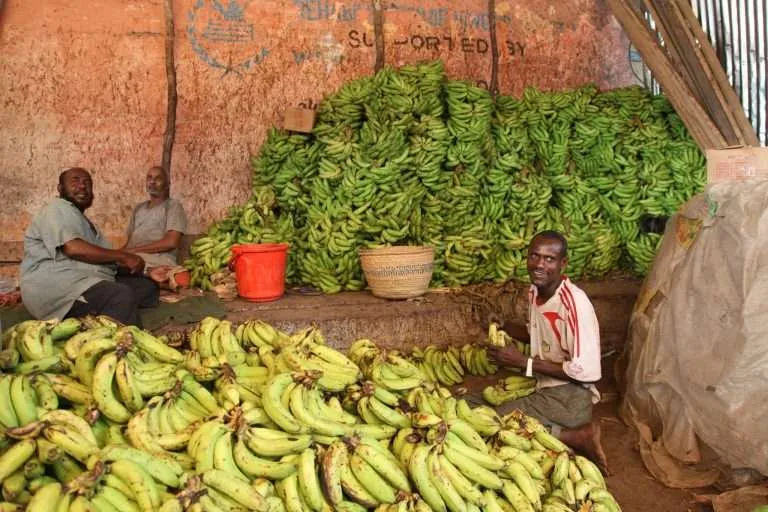
Photo: Somalia - World Humanitarian Summit
The Somalia clan system controls almost every part of life. Your clan decides where you can live, who will protect you, and whether you can access justice. For millions of Somalis, clan identity is the difference between safety and death. This report explains how the Somalia clan system works and why it matters for asylum claims. It is essential for expert witnesses and decision-makers working on Somali cases.
This report draws on research from the Minority Rights Group International, UNHCR, the Danish Immigration Service, the UK Home Office, and academic sources on Somali social structures. It covers the period through early 2026.
Major clan families + minorities
Estimated minority population
Minority share under 4.5 formula
Protection for clanless individuals
The Somalia Clan System Structure
Somali society is built on clans. Almost every Somali person belongs to a clan. The system works like a family tree. At the top are large clan families. These divide into clans, then sub-clans, then smaller groups called lineages. A person's identity comes from their father's line. You belong to your father's clan, and your father belongs to his father's clan, going back many generations.[1]
There are four major clan families in Somalia. Additionally, there are minority groups that fall outside the main clan structure. The political system known as the "4.5 formula" gives equal power to the four major groups and half a share to all minorities combined. This formula was created during peace talks in 2000 and still shapes Somali politics today.
The Four Major Clan Families
The Hawiye clan family is dominant in south-central Somalia, especially around Mogadishu. Major sub-clans include Habr Gedir, Abgaal, and Murosade. The Hawiye have held the presidency several times, including the current president. The Darood clan family is spread across the northeast (Puntland), parts of the south (Jubaland), and into Ethiopia and Kenya. Major sub-clans include Marehan, Ogaden, Majerteen, and Harti.[2]
The Dir clan family is found in the northwest (Somaliland) and parts of Djibouti. The Isaaq sub-clan, dominant in Somaliland, is sometimes counted separately. The Rahanweyn (also called Digil-Mirifle) live mainly in the area between the Jubba and Shabelle rivers. They are agro-pastoralists — meaning they farm and herd animals. Some scholars treat them as two separate groups (Digil and Mirifle).
| Clan Family | Main Territory | Major Sub-Clans | Political Influence |
|---|---|---|---|
| Hawiye | South-central Somalia, Mogadishu | Habr Gedir, Abgaal, Murosade, Hawadle | High — controls presidency often |
| Darood | Puntland, Jubaland, Ogaden region | Marehan, Ogaden, Majerteen, Harti | High — strong in northeast and south |
| Dir (incl. Isaaq) | Somaliland, Djibouti, northwest | Isaaq, Issa, Gadabursi, Biimaal | High in Somaliland; moderate elsewhere |
| Rahanweyn | Bay, Bakool, inter-riverine area | Digil, Mirifle | Moderate — often marginalised |
| Minorities | Scattered, mainly south-central | Bantu, Midgan/Gaboye, Tumal, Yibir, Benadiri | Very low — 0.5 share in 4.5 formula |
How the Somalia Clan System Functions
Protection
In Somalia, the state does not protect people. Your clan does. If someone attacks you, your clan members are expected to defend you. If someone kills a member of your clan, the clan will seek revenge or demand compensation. This system means that a person without a clan — or from a weak clan — has no protection at all.[3]
The Diya System
The diya system is a traditional form of justice. Diya means "blood money" or compensation. When someone is killed or injured, the clans negotiate a payment. For a murdered man, the standard payment is 100 camels. For a woman, it is 50 camels. These amounts can also be paid in money. The diya system works between major clans. However, minority clans often receive much less compensation, or none at all.[4]
Political Representation
The 4.5 formula means that political positions are divided by clan. Each major clan family gets an equal share of seats in parliament, cabinet positions, and government jobs. Minorities share the remaining half portion. In practice, this means that a minority clan member has far less chance of holding political office. Political decisions are made through clan negotiations, not through democratic processes.
Access to Resources
Land, water, and grazing rights are controlled by clans. In rural areas, only members of the dominant local clan can use certain land. If you move to an area where your clan is not present, you may have no right to land or water. In cities, clan networks control access to jobs, business opportunities, and even housing. Without a strong clan, you are shut out of the economy.[5]
Minority Clans and Their Persecution
The Somalia clan system creates a permanent underclass of minority groups. These groups face discrimination, violence, and exclusion that amounts to persecution. International organisations have documented these abuses extensively.[6]
Bantu/Jareer
The Bantu (also known as Jareer, meaning "hard hair") are descended from people who were enslaved and brought to Somalia from other parts of East Africa. They have distinct physical features that make them easily identifiable. The Bantu face the most severe discrimination in Somali society. They are considered the lowest group in the social hierarchy.
Bantu people face violence, land theft, and forced labour. They are excluded from clan protection. In IDP camps, Bantu families receive less food aid and are placed in the most dangerous locations. Bantu women face extremely high rates of sexual violence. The Bantu have no armed militias to protect them, which makes them vulnerable to attack by any other group.[7]
The Bantu of Somalia are one of the most persecuted and marginalised groups in Africa. They face systematic discrimination that pervades every aspect of their lives — from land ownership to marriage to physical safety.
Minority Rights Group International, 'Somalia: Minorities Under Threat' (2024)
Midgan/Gaboye
The Midgan (also called Gaboye, or sometimes Madhiban) are an occupational caste. Caste means a social group that people are born into and cannot leave. The Midgan traditionally worked as leather workers, barbers, and hunters. Mainstream Somali society considers them impure. They cannot marry into major clans. They face social exclusion, verbal abuse, and physical violence.[8]
Tumal and Yibir
The Tumal are traditional metalworkers and blacksmiths. Like the Midgan, they are considered an occupational caste. The Yibir are a very small group believed to have pre-Islamic religious practices. They face severe stigma and superstitious fear from the majority population. Both groups are excluded from political power, clan protection, and economic opportunities.
Benadiri
The Benadiri are urban minorities who traditionally lived in Mogadishu and other coastal towns. They have mixed Arab, Persian, and Somali heritage. During the civil war, many Benadiri were targeted because they had no clan militia to protect them. Large numbers fled to other countries. Those who remain face ongoing discrimination.
Key finding: Minority clan members in Somalia face persecution that is systematic, widespread, and ongoing. They have no access to clan protection, no meaningful political representation, and no legal recourse. This establishes a clear basis for refugee status under the 1951 Refugee Convention on the grounds of membership of a particular social group.
Inter-Clan Conflict
Even among the major clans, violence is common. Clans fight over land, water, livestock, and political power. These conflicts can escalate quickly and kill hundreds of people. The government has little ability to stop them because government soldiers often belong to the same clans involved in the fighting.[9]
Resource Disputes
As climate change makes droughts more frequent, competition for water and grazing land increases. Pastoral clans — those who herd animals — move across large areas looking for water. When they enter territory controlled by another clan, violence often results. These resource conflicts have become more deadly in recent years.
Political Power Struggles
Political positions bring access to money and resources. Different clans compete for control of government positions, especially at the Federal Member State level. Elections often trigger clan violence. In 2023, fighting between rival sub-clans killed dozens in Galmudug state during a dispute over the regional presidency.[10]
Somalia Clan System and Asylum Claims
Clan identity is one of the most important factors in any Somali asylum claim. It determines the level of risk a person faces upon return to Somalia. Decision-makers must understand two key principles about how the Somalia clan system creates danger.[11]
Majority Clan in the Wrong Territory
A person from a major clan can still face danger if they are in an area controlled by a rival clan. For example, a Darood person in a Hawiye-controlled area of Mogadishu may face violence. A Hawiye person in Darood-controlled Kismayo may be at risk. The concept of "majority clan" does not guarantee safety everywhere. Safety depends on whether your specific sub-clan has power in the specific location where you are.[12]
Minority Clan Everywhere
For minority clan members, there is no safe territory. Minorities do not control any area. They are at risk everywhere in Somalia. This is why UNHCR and many courts recognise minority clan membership as a basis for refugee status. A Bantu person cannot relocate within Somalia to find safety, because they face discrimination and violence in every region.
Practice note: In UK case law, AMM and Others (conflict; humanitarian crisis; returnees; FGM) Somalia CG [2011] UKUT 445 established that a person's clan identity is essential to the risk assessment. The tribunal found that a person returning to Mogadishu needs clan connections to survive. Without them, a returnee faces a real risk of destitution and harm. See also our human rights analysis for related legal standards.
Because clan identity decides protection and access to justice, our Somalia country expert witness reports assess the specific clan profile and the claimant's options on return.
How Expert Witnesses Verify Clan Identity
In asylum cases, applicants may claim to belong to a minority clan to strengthen their claim. This means that expert witnesses must verify clan identity. There are several methods used by qualified Somalia experts.[13]
Genealogical Knowledge
Every Somali person is expected to know their "abtirsiinyo" — the recitation of their clan lineage through their father's line. A person can typically name 10-20 generations of male ancestors. An expert can check this lineage against known clan structures. A person who cannot recite their lineage, or who gives incorrect names, may not be who they claim to be.
Linguistic Analysis
Different clans and regions speak different dialects of Somali. The Bantu, for example, may speak a distinct version of Somali influenced by Bantu languages. The Rahanweyn speak a dialect called Maay-Maay, which is different from standard Somali (Maxaa-tiri). An expert can identify a person's likely clan background through their speech patterns.
Cultural and Geographic Knowledge
An expert can also verify clan identity by asking about customs, traditions, geographic features, and local events specific to the claimed clan and area. For example, a person claiming to be from a particular village should know basic facts about that village — its market days, nearby landmarks, and neighbouring communities.
Watch our latest country analysis on our YouTube channel, The Human Rights.
Conclusion
The Somalia clan system is not just a cultural tradition. It is the primary system of governance, protection, and justice in a country where the state barely exists. Understanding the clan system is essential for anyone working on Somali asylum claims. Clan identity determines who is safe, who is at risk, and who faces persecution.
Minority clans — the Bantu, Midgan, Tumal, Yibir, and Benadiri — face systematic persecution that meets the legal standard for refugee status. Major clan members can also face risk if they are in the wrong territory or lack sub-clan connections. The 4.5 formula permanently excludes minorities from political power. The diya system values minority lives at less than those of majority clan members.
For asylum decision-makers, the key lesson is clear. You cannot assess a Somali asylum claim without understanding the claimant's clan identity. For expert witnesses, verifying clan identity requires specialised knowledge of Somali genealogy, linguistics, and geography. The Somalia clan system remains a matter of life and death for millions of people.
Footnotes
- Lewis IM, A Modern History of the Somali: Nation and State in the Horn of Africa (4th edn, Ohio University Press 2002); Lewis IM, A Pastoral Democracy (Oxford University Press 1961, reprinted 1999)
- Heritage Institute for Policy Studies, 'Clan, State and Citizenship in Somalia' (2023); Bertelsmann Stiftung, 'BTI 2024 Country Report: Somalia' (2024)
- Danish Immigration Service, 'South and Central Somalia: Security Situation, Clan-Based Protection, and Minority Groups' (Report, 2024)
- Gundel J, 'The Predicament of the "Oday": The Role of Traditional Structures in Security, Rights, Law and Development in Somalia' (Danish Refugee Council/Novib-Oxfam 2006, updated analysis 2023)
- UNHCR, 'Eligibility Guidelines for Assessing the International Protection Needs of Asylum-Seekers from Somalia' (May 2024), paras 35-52
- Minority Rights Group International, 'World Directory of Minorities and Indigenous Peoples: Somalia' (updated 2024)
- Van Lehman D and Eno O, 'The Somali Bantu: Their History and Culture' (Center for Applied Linguistics, 2003, updated 2023); UNHCR, 'Eligibility Guidelines: Somalia' (May 2024), paras 120-135
- Minority Rights Group International, 'Gaboye of Somalia: Persecution and Discrimination' (2023); Danish Immigration Service, 'Report on Minority Groups in Somalia' (2024)
- ACLED, 'Clan Militia Violence in Somalia: Trends and Patterns 2020-2025' (2025); UNSOM, 'Inter-Clan Conflict: Quarterly Reports' (2023-2025)
- International Crisis Group, 'Somalia's South West and Galmudug States: Clan Politics and Conflict' (Briefing No. 188, 2024)
- UNHCR, 'Eligibility Guidelines: Somalia' (May 2024), paras 153-170; UK Home Office, 'Country Policy and Information Note: Somalia — Majority Clan and Minority Groups' (2024)
- AMM and Others (conflict; humanitarian crisis; returnees; FGM) Somalia CG [2011] UKUT 445 (IAC); MOJ and Others (return to Mogadishu) Somalia CG [2014] UKUT 442 (IAC)
- Sperlazza J, 'Expert Evidence in Somali Asylum Cases: Clan Identification Methods' (2024); Danish Immigration Service, 'Methodological Approaches to Clan Verification' (2023)
Sources
- Lewis IM, A Modern History of the Somali (4th edn, Ohio University Press 2002)
- Minority Rights Group International, World Directory of Minorities: Somalia, 2024
- UNHCR, Eligibility Guidelines: Somalia, May 2024
- Danish Immigration Service, South and Central Somalia: Security and Clan-Based Protection, 2024
- Heritage Institute for Policy Studies, Clan, State and Citizenship in Somalia, 2023
- Bertelsmann Stiftung, BTI 2024 Country Report: Somalia, 2024
- ACLED, Armed Conflict Location & Event Data: Somalia, 2025
- Human Rights Watch, World Report 2025: Somalia, January 2025
- UK Upper Tribunal, AMM and Others Somalia CG [2011] UKUT 445; MOJ and Others Somalia CG [2014] UKUT 442
- UK Home Office, Country Policy and Information Note: Somalia — Clan, 2024
Need an expert witness report for your case?
Our country experts provide independent reports for asylum and immigration cases in the UK, US, Canada, and EU.
Order an expert witness report |
Find a country expert witness |
About our expert team