Last updated:
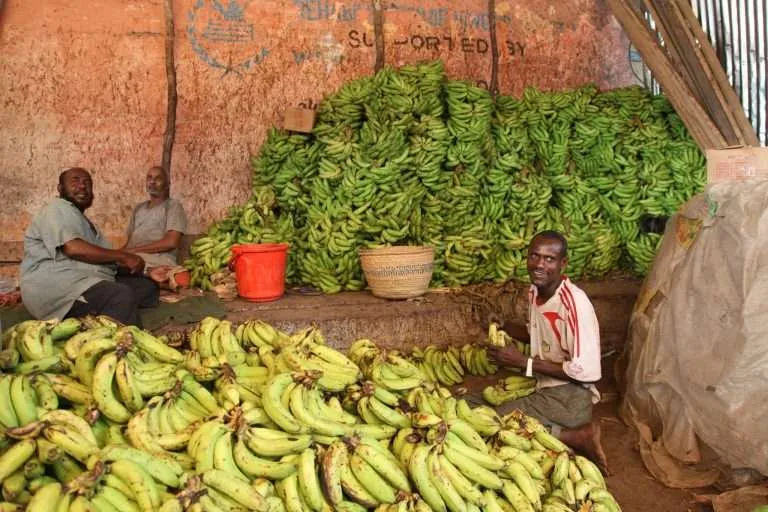
Photo: Solheim i Somalia - Utenriksdepartementet UD
This Somalia return risk assessment examines whether it is safe to send people back to Somalia in 2026. The short answer is no. Somalia remains one of the most dangerous countries in the world. Al-Shabaab controls large areas. The government cannot protect its own citizens. Clan violence continues. For expert witnesses and asylum decision-makers, this assessment provides the evidence needed to evaluate return risks for Somali nationals.
This assessment draws on UNHCR guidance, UK case law, UNSOM reports, and data from ACLED and the Armed Conflict Survey. It covers conditions through early 2026 and addresses the most common arguments used to justify returns to Somalia.
Overall Somalia return risk level
Internally displaced persons
Al-Shabaab attacks in 2025
Safe areas for minorities
The "Mogadishu Is Safe" Argument
Some governments argue that Mogadishu has improved enough to be safe for returns. This argument comes mainly from two UK tribunal cases. These cases are important because they set guidelines that other courts follow. However, the evidence shows that Mogadishu remains extremely dangerous.[1]
UK Case Law
In AMM and Others (conflict; humanitarian crisis; returnees; FGM) Somalia CG [2011] UKUT 445, the tribunal examined conditions in Mogadishu. It found that the general level of violence had decreased enough that not every returnee would face a real risk of serious harm simply by being present in the city. However, the tribunal stressed that individual circumstances matter greatly. People without clan support faced a real risk of destitution and harm.[2]
In MOJ and Others (return to Mogadishu) Somalia CG [2014] UKUT 442, the tribunal went further. It found that a person with no clan connections in Mogadishu could still face serious risk. The tribunal said that returnees need family or clan networks to survive in Mogadishu. Without these connections, a person would likely end up in an IDP camp and face destitution.[3]
Important: Both AMM and MOJ were decided over 10 years ago. While these cases recognised some improvements in Mogadishu, conditions have not continued to improve at the same rate. Al-Shabaab attacks in Mogadishu have increased since 2022. The ATMIS withdrawal creates new security risks. These cases need to be read in light of current conditions, not taken as proof that Mogadishu is safe today.
The Reality in Mogadishu
Mogadishu remains dangerous. Al-Shabaab carried out over 80 attacks in the city in 2024 alone. These include car bombings, assassinations, and armed assaults on hotels and government buildings. The October 2022 twin bombing killed over 120 people. In 2023, the Hayat Hotel siege killed more than 20. Even heavily guarded areas like the international airport zone (the "Green Zone") have been attacked.[4]
Furthermore, returnees face specific dangers. People who return from Western countries are seen as having money. This makes them targets for criminals and Al-Shabaab extortion. People returning after years abroad may have lost their clan connections, which means they have no protection network. For a full analysis of how the clan system affects safety, see our country reports on Somalia.
Categories at Risk
The Somalia return risk varies depending on the individual's profile. However, several groups face particularly high risks. UNHCR has identified these groups in its May 2024 Eligibility Guidelines.[5]
| Category | Risk Level | Key Threats | Internal Relocation Viable? |
|---|---|---|---|
| Minority clan members (Bantu, Midgan, Tumal, Yibir) | VERY HIGH | Discrimination, violence, no clan protection, sexual violence | No — at risk everywhere |
| Women and girls | VERY HIGH | Sexual violence, FGM, forced marriage, Al-Shabaab restrictions | No — systemic risks nationwide |
| Al-Shabaab defectors | VERY HIGH | Assassination by Al-Shabaab, arrest by government | No — Al-Shabaab has nationwide reach |
| Returnees from the West | HIGH | Extortion, perceived wealth, lost clan links, Al-Shabaab targeting | Only if strong clan support exists |
| LGBTQ+ individuals | VERY HIGH | Death penalty, mob violence, honour killings | No — criminalised everywhere |
| Journalists | VERY HIGH | Assassination, detention, threats from all parties | No — targeted nationwide |
| Majority clan members with support | HIGH | General insecurity, Al-Shabaab attacks, clan conflict | Possibly — if clan is present in area |
Documented Harm to Returnees
There is clear evidence that returned Somalis face serious harm. In recent years, two situations have produced particularly strong evidence: forced deportations from Saudi Arabia and returns from Kenya.[6]
Forced Deportations from Saudi Arabia
Between 2023 and 2025, Saudi Arabia deported tens of thousands of Somali nationals. Many were held in terrible conditions before deportation. Human Rights Watch documented cases where deportees arrived in Mogadishu with no money, no documents, and no clan connections. Several were killed or seriously harmed within weeks of return. Women deportees faced sexual violence. Many ended up in IDP camps.[7]
I was deported from Saudi Arabia in 2024. When I arrived in Mogadishu, I had nothing. No money, no phone, no family. Within three days, I was robbed. I went to an IDP camp. A man tried to attack me at night. There is no safety here for someone like me.
Testimony of a returned Somali woman, recorded by UNHCR, 2024
Returns from Kenya
Kenya has pushed for the return of Somali refugees from Dadaab camp since 2016. The "voluntary" return programme has been criticised because many returns are not truly voluntary. UNHCR reported that some returnees were pressured to leave. Many returned to areas still affected by conflict and Al-Shabaab control. Follow-up studies found that returned refugees faced food insecurity, violence, and renewed displacement.[8]
State Capacity to Protect
The Federal Government of Somalia cannot protect its citizens. This is a fundamental fact that affects every Somalia return risk assessment. The government controls only parts of Mogadishu and a few other cities. Even within these areas, its control is limited. Al-Shabaab can carry out attacks almost anywhere.[9]
The police force is weak, poorly trained, and often corrupt. Many officers are loyal to their clan rather than to the state. The judiciary barely functions. There are very few judges and courts. There is no witness protection programme. If someone faces a threat and goes to the police, they are unlikely to receive any help. In many cases, the police themselves are a source of danger.
The ATMIS military force has been the main security provider in Somalia. However, ATMIS began withdrawing in 2024 under a plan to transfer security to Somali forces. Most analysts believe that Somali forces are not ready to maintain security without international support. This withdrawal increases the Somalia return risk significantly.[10]
Assessment: The state cannot protect returnees. This applies to all of Somalia, including Mogadishu. The government does not have the capacity to provide even basic security to its own citizens. This inability to protect is a key factor in any asylum assessment involving a Somali national.
Internal Relocation: Not a Viable Option
Some decision-makers ask whether a Somali national could safely relocate within Somalia instead of receiving international protection. In almost all cases, the answer is no. Internal relocation is not viable for the following reasons.[11]
Al-Shabaab Controls Rural Areas
Al-Shabaab controls most rural areas of south-central Somalia. A person cannot safely relocate to these areas. This eliminates most of the country as an option. The only possible relocation destinations are government-controlled cities. However, even these cities face regular Al-Shabaab attacks.
Clan Protection Is Required
In any Somali city, you need clan protection to survive. If your clan does not have a presence in a city, you cannot access housing, employment, or justice there. Moving to a city where you have no clan connections means joining the growing population of IDPs — people who live in informal camps with minimal food, water, and security. For minority clan members, there is no city where they have protection. For more on how clan identity affects relocation, see our analysis of the Somali clan system.[12]
IDPs Face Exploitation
People who end up in IDP camps face severe hardship. Sexual violence is common, especially against women and girls. Children are at risk of recruitment by armed groups. Access to food, water, and healthcare is very limited. IDP camps are not a safe relocation option. UNHCR has stated clearly that internal relocation to IDP settlements should not be considered a viable alternative to international protection.[13]
Legal Framework: Other Key Cases
AMM and MOJ are not the only cases that matter in Somali claims. Three other judgments often decide how a claim is framed.
Elgafaji v Staatssecretaris van Justitie (Case C-465/07, CJEU, 17 February 2009) sets the test for Article 15(c) of the EU Qualification Directive. That provision protects civilians from a serious and individual threat caused by indiscriminate violence in armed conflict. The court held that the more a person can show they are personally at risk, the lower the level of general violence they need to prove. In exceptional cases, the violence is so high that simply being present in the area creates a real risk. UK tribunals applied this test in both AMM and MOJ when they assessed Mogadishu and the areas under Al-Shabaab control.
Fornah v SSHD [2006] UKHL 46 is the leading authority on female genital mutilation. The House of Lords held that women at risk of FGM in their home country can form a particular social group. This matters for Somali women and girls, because FGM rates in Somalia are among the highest in the world.
HJ (Iran) and HT (Cameroon) v SSHD [2010] UKSC 31 applies to LGBTQ+ claimants. The Supreme Court held that a gay person cannot be refused protection on the basis that they could avoid harm by hiding their sexuality. In Somalia, same-sex conduct is a criminal offence, and Al-Shabaab has carried out public executions for it, so this principle often decides the claim.
Watch our latest country analysis on our YouTube channel, The Human Rights.
What This Means for Somali Asylum Claims
Al-Shabaab controls large areas, clan violence continues and the government cannot protect its citizens, so Somali claims often turn on whether Mogadishu is a safe place to relocate. Members of minority clans may rely on race/ethnicity or particular social group, and people Al-Shabaab treats as opponents rely on imputed political opinion. Relocation depends on clan support and resources, which must be shown on the facts. Our Somalia country expert witness reports assess these factors for each claimant.
Conclusion: Somalia Return Risk Is HIGH
Based on the evidence presented in this assessment, the Somalia return risk remains HIGH for all categories of returnees. No part of Somalia is safe. Al-Shabaab continues to launch deadly attacks throughout the country, including in Mogadishu. The government cannot protect its citizens. Internal relocation is not a viable option for the vast majority of Somali nationals.
Minority clan members, women, LGBTQ+ individuals, Al-Shabaab defectors, journalists, and returnees from Western countries all face specific, documented risks. Even majority clan members face danger from general insecurity and Al-Shabaab attacks. The ATMIS withdrawal creates additional uncertainty about the security situation in the coming years.
For expert witnesses and asylum decision-makers, this assessment confirms that returning individuals to Somalia exposes them to a real risk of serious harm. Every Somali asylum claim must be assessed on its individual merits, but the baseline risk across the country remains extremely high. The Somalia return risk evidence demands that no one is sent back to a country where their safety cannot be guaranteed.
Footnotes
- UNHCR, 'Eligibility Guidelines for Assessing the International Protection Needs of Asylum-Seekers from Somalia' (May 2024); UNHCR, 'International Protection Considerations with Regard to People Fleeing Somalia' (updated 2025)
- AMM and Others (conflict; humanitarian crisis; returnees; FGM) Somalia CG [2011] UKUT 445 (IAC)
- MOJ and Others (return to Mogadishu) Somalia CG [2014] UKUT 442 (IAC)
- ACLED, 'Somalia Conflict Data: Mogadishu Attacks 2022-2025' (2025); UNSOM, 'Report on the 29 October 2022 Mogadishu Attack' (2022); Reuters, 'Hayat Hotel Siege, Mogadishu' (August 2023)
- UNHCR, 'Eligibility Guidelines for Assessing the International Protection Needs of Asylum-Seekers from Somalia' (May 2024), Section III: International Protection Needs
- Human Rights Watch, 'Deportation to Somalia: Documented Harm to Returnees' (2024); UNHCR, 'Returns Monitoring: Somalia' (2024-2025)
- Human Rights Watch, 'Saudi Arabia: Mass Deportation of Somali Nationals' (2024); Amnesty International, 'Saudi Arabia: Conditions in Detention and Forced Returns' (2024)
- UNHCR, 'Kenya: Voluntary Repatriation of Somali Refugees — Monitoring Report' (2024); Norwegian Refugee Council, 'Returns to Somalia from Dadaab: Outcomes Study' (2023)
- Freedom House, 'Freedom in the World 2025: Somalia' (2025); Bertelsmann Stiftung, 'BTI 2024 Country Report: Somalia' (2024)
- International Crisis Group, 'ATMIS Drawdown and Somalia's Security Future' (Briefing No. 192, 2024); African Union, 'ATMIS Transition Plan' (2024)
- UNHCR, 'Eligibility Guidelines: Somalia' (May 2024), paras 170-190 on internal relocation
- MOJ and Others (return to Mogadishu) Somalia CG [2014] UKUT 442 (IAC), paras 407-415 on clan support and relocation
- UNHCR, 'Guidance on IDP Settlements as Internal Relocation Alternative' (2024); OCHA, 'Somalia: IDP Settlement Conditions Report' (2025)
Sources
- UNHCR, Eligibility Guidelines: Somalia, May 2024
- Human Rights Watch, World Report 2025: Somalia, January 2025
- Amnesty International, Amnesty International Report 2024/25: Somalia, 2025
- ACLED, Armed Conflict Location & Event Data: Somalia, 2025
- UNSOM/OHCHR, Protection of Civilians Reports: Somalia, 2023-2025
- Freedom House, Freedom in the World 2025: Somalia, 2025
- International Crisis Group, Somalia Reports and Briefings, 2023-2025
- UK Upper Tribunal, AMM and Others Somalia CG [2011] UKUT 445; MOJ and Others Somalia CG [2014] UKUT 442
- UK Home Office, Country Policy and Information Note: Somalia, 2024
- OCHA, Somalia Humanitarian Needs Overview 2026, December 2025
Need an expert witness report for your case?
Our country experts provide independent reports for asylum and immigration cases in the UK, US, Canada, and EU.
Order an expert witness report |
Find a country expert witness |
About our expert team