Last updated:
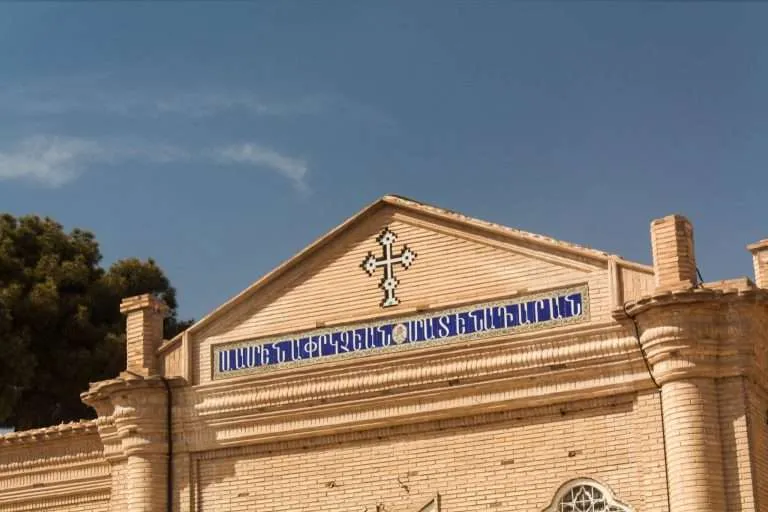
Photo: 66-186 Khyber Pass Pakistan 1966 - wilford peloquin
Pakistan 295-C blasphemy law has produced one of the most extreme legal regimes in the modern world. The provision makes "use of derogatory remarks etc., in respect of the Holy Prophet" punishable by death — and only by death following the 1991 Federal Shariat Court ruling. Furthermore, the practical reality is that accusation alone often means death. Hundreds of accused individuals have been killed by mobs before trial; lawyers defending them have been assassinated; judges who acquit have faced threats. As a result, even where the state never carries out a formal execution under Section 295-C, accusation produces a credible risk of death. This article maps how Section 295-C operates in practice and what it means for asylum cases.[1]
For wider context, see the article on blasphemy laws worldwide and the Pakistan country report.
The Pakistan Penal Code section
Mandatory penalty post-1991 ruling
Extrajudicial killings of blasphemy-accused since 1990
Documented blasphemy accusations since 1987
The Text of Section 295-C
Section 295-C was inserted into the Pakistan Penal Code by Ordinance I of 1986, during the Zia-ul-Haq Islamisation period. The provision states: "Whoever by words, either spoken or written, or by visible representation, or by any imputation, innuendo, or insinuation, directly or indirectly, defiles the sacred name of the Holy Prophet Muhammad (peace be upon him) shall be punished with death, or imprisonment for life, and shall also be liable to fine."[2]
The 1991 Federal Shariat Court ruling
In 1991, the Federal Shariat Court ruled that life imprisonment was unconstitutional under Section 295-C. Therefore, the death penalty became mandatory. The court reasoned that the provision allowed only the death penalty for blasphemy against the Prophet. Subsequently, no Pakistani court can impose a sentence other than death for a confirmed Section 295-C conviction.
Mandatory death penalty + low evidentiary threshold:
The combination of the mandatory death penalty and a permissive evidentiary regime produces extreme risk for the accused. Section 295-C requires no specific intent to insult; "imputation, innuendo, or insinuation" suffices. Furthermore, witness testimony alone can support conviction. As a result, false accusations are easily made and difficult to disprove.
How Section 295-C Cases Arise
Documented patterns of Section 295-C cases include several recurring fact patterns. First, personal disputes — over land, business, debt, or family — escalated by one side filing a blasphemy complaint. Second, disputes between Muslims and religious minorities (Christians, Hindus, Ahmadis) where the accusation is used to silence the minority. Third, accusations arising from social media posts or messages. Fourth, accusations against schoolchildren for actions in classroom contexts.[3]
The mob response
Once an accusation is made, mob violence frequently follows quickly. Documented incidents include the 2009 Gojra attacks (8 Christians killed); the 2014 Kot Radha Kishan incident (couple burned alive); the 2017 Mashal Khan lynching at Mardan University; the 2021 Sialkot lynching (Sri Lankan factory manager); and the 2023 Jaranwala attacks (multiple churches destroyed). Furthermore, the 2024 Sargodha and Madyan incidents demonstrated that the pattern continues.
Documented Cases
Several Section 295-C cases have international attention.[4]
- Asia Bibi (2010-2018): Christian woman convicted in 2010, acquitted by the Supreme Court in 2018, evacuated to Canada.
- Salmaan Taseer (2011): Punjab Governor assassinated by his own security guard for criticising Section 295-C.
- Shahbaz Bhatti (2011): Federal Minister for Minorities assassinated for the same reason.
- Mashal Khan (2017): University student lynched on campus following blasphemy accusation by classmates.
- Junaid Hafeez (2013-2019): Lecturer convicted in 2019; defence lawyer Rashid Rehman assassinated in 2014 for representing him.
The Legal Process
Section 295-C cases proceed through Pakistani courts but follow a distinct trajectory. Anti-Terrorism Courts (ATCs) often hear blasphemy cases, particularly where mob violence has occurred. Defence representation is hazardous; lawyers face threats and assassination. Furthermore, judges who acquit risk public backlash. As a result, many lower-court convictions are overturned on appeal — but only after the accused has spent years in prison.[5]
Section 295-C creates the conditions for catastrophic injustice. The mandatory death penalty, the low evidentiary threshold, and the surrounding mob violence produce a system in which an accusation alone can be lethal.
UN Special Rapporteur on Freedom of Religion or Belief, Country Report on Pakistan (2023)
Who Is Most Affected
| Group | Risk pattern |
|---|---|
| Christians | Disproportionate accusation rates relative to population share |
| Ahmadis | Section 295-C combined with anti-Ahmadi provisions; high prosecution rate |
| Hindus | Documented cases though fewer than Christians and Ahmadis |
| Muslims (sectarian) | Shia and other sectarian targets through TLP-aligned accusers |
| Liberal Muslims | Lawyers, academics, media figures who criticise the law |
| Social media users | Increasing prosecutions based on online posts |
Asylum Implications
Section 295-C accusations produce strong asylum claims. The Convention ground is religion. Furthermore, where the accused is from a religious minority, race or PSG grounds may also apply. The mandatory death penalty engages Article 3 ECHR and CAT protection in alternative.[6]
Evidence for Section 295-C asylum cases
- FIR (First Information Report): If a formal complaint exists.
- Court documents: Where a case has been registered.
- Media coverage: Local Pakistani press; international media reporting.
- Country expert report: Profile-matched analysis of the legal framework, mob dynamics, and the failure of state protection.
- Family/community statements: Documenting the accusation and ongoing risk.
- Mob violence documentation: Photos, videos, news reports of attacks.
Since an accusation alone can bring violence, a blasphemy-accused client needs specific risk evidence; see our Pakistan country expert witness reports.
Conclusion
Pakistan 295-C blasphemy law produces one of the most extreme legal-and-social risk regimes in modern asylum analysis. The mandatory death penalty, the low evidentiary threshold, and the surrounding mob violence mean that accusation alone often equals death. As a result, anyone facing a Section 295-C accusation has a strong asylum claim with established Convention grounds. To commission a Pakistan expert report, use the find expert witness service. For broader context, see the country reports section.
Footnotes
- Pakistan Penal Code Section 295-C; USCIRF, 'Annual Report 2024 — Pakistan' (2024)
- Pakistan Penal Code (Amendment) Ordinance, 1986; Federation of Pakistan v Gul Hasan Khan PLD 1989 SC 633
- HRW, 'Pakistan: Blasphemy Cases' (2024); CSW, 'Pakistan: Religious Persecution Reports' (2024)
- Asia Bibi v The State (Supreme Court of Pakistan, 2018); HRW documentation of Mashal Khan, Junaid Hafeez, Salmaan Taseer cases
- Anti-Terrorism Act 1997 (Pakistan); ICJ, 'On Trial: The Implementation of Pakistan's Blasphemy Laws' (2015, with subsequent updates)
- UNHCR, 'Guidelines on International Protection: Religion-Based Refugee Claims' (HCR/GIP/04/06, 2004); UK Home Office CPIN, 'Pakistan: Blasphemy' (2024)
Sources
- HRW, Pakistan Reports, 2024-2025
- Amnesty International, Pakistan, 2024-2025
- UK Home Office, Pakistan CPIN — Blasphemy, 2024
- ICJ, Pakistan Blasphemy Reports, 2024
- CSW, Pakistan Religious Persecution, 2024
Need an expert witness report for your case?
Our country experts provide independent reports for asylum and immigration cases in the UK, US, Canada, and EU.
Order an expert witness report |
Find a country expert witness |
About our expert team