Last updated:
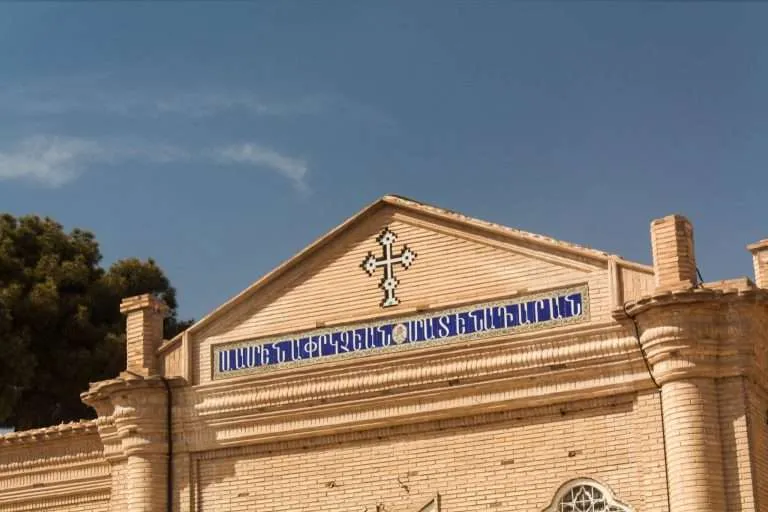
Photo: Inside the mosque - Francisco Anzola
Pakistan Ahmadiyya persecution is unique in the modern world. No other country has used its constitution to declare a religious community non-Muslim. Pakistan did this in 1974. Then, in 1984, Ordinance XX made it a crime for Ahmadis to call themselves Muslim, to greet others with "Salam," or to call their place of worship a "mosque." As a result, around four million Ahmadis live with daily fear.[1]
This article explains the legal framework, the daily life restrictions, the mob violence, and the recent escalation under TLP. It also explains why Ahmadiyya persecution leads to strong asylum claims under the Refugee Convention. For wider context, see our country reports and the broader human rights coverage.
Constitution declared Ahmadis non-Muslim
Ordinance XX criminalised Ahmadi practice
Ahmadis affected in Pakistan
Killed in 2010 Lahore mosque attacks
Who Are the Ahmadis?
The Ahmadiyya community was founded in 1889 in Qadian, India, by Mirza Ghulam Ahmad. He claimed to be the promised Messiah and Mahdi, sent to renew the faith. Ahmadis follow the five pillars of Islam, recite the Quran, and pray five times a day. However, mainstream Sunni and Shia Muslim scholars reject the Ahmadi claim that Mirza Ghulam Ahmad was a prophet. They say it goes against the doctrine of the "finality of prophethood" (khatm-e-nubuwwat) of the Prophet Muhammad.[2]
For the Ahmadis themselves, they are Muslims. They identify as Muslim, follow the Quran, and use Islamic terms for their religious life. This identity is at the heart of the conflict. The Pakistani state denies them this identity by law. Therefore, the persecution is unique because it is built into the constitution itself, not just into ordinary statutes. This is rare in modern legal history.
Ahmadis live across Pakistan, with strong centres in Rabwah (now called Chenab Nagar) in Punjab. They are well-known for their professional achievements: Pakistan's only Nobel laureate in physics, Dr Abdus Salam, was an Ahmadi. After the 1974 amendment, even his Nobel Prize was not enough to protect him. His tombstone in Rabwah was defaced because the word "Muslim" was crossed out by police order.[3]
The 1974 Constitutional Amendment
In 1974, under Prime Minister Zulfikar Ali Bhutto, Pakistan's National Assembly passed the Second Amendment to the Constitution. It changed Article 260 to state that a person who does not believe in the absolute and unqualified finality of the Prophet Muhammad is "not a Muslim for the purposes of the Constitution or law." This wording targeted Ahmadis directly, although it also affected the smaller Lahori Ahmadi group.[4]
The political background matters. Pakistan was rebuilding after the 1971 war and the loss of East Pakistan (now Bangladesh). Bhutto faced pressure from religious parties, and he agreed to the amendment to keep the political coalition together. The result was the first time in modern legal history that a state used its constitution to define who was and was not a Muslim. Therefore, the 1974 amendment opened the door to all later anti-Ahmadi laws.
The effect was immediate and severe. Ahmadis lost basic rights overnight. To vote on the main electoral roll, they must sign a declaration that Mirza Ghulam Ahmad was an "imposter" and that all his followers are non-Muslims. Most Ahmadis refuse, so they are placed on a separate non-Muslim electoral roll. As a result, they are effectively excluded from political life and cannot vote without renouncing their faith.[5]
Ordinance XX of 1984
The 1974 amendment was a constitutional declaration, but it did not create a criminal offence. That came in 1984, under the military rule of General Zia-ul-Haq. Ordinance XX added Sections 298-B and 298-C to the Pakistan Penal Code. These sections make it a criminal offence, punishable by up to three years in prison and a fine, for an Ahmadi to:
- Call themselves "Muslim" in public or in writing.
- Refer to their faith as "Islam."
- Call their place of worship a "mosque" (masjid).
- Call the call to prayer the "azaan."
- Use Islamic greetings such as "Assalam-u-Alaikum" in public.
- Recite the Quran or Islamic verses in a public way.
- Use any other Islamic terms or symbols, such as the Kalima (Islamic creed).
In addition, Section 295-C, the blasphemy law, carries a mandatory death sentence for "defiling the name of the Prophet." Ahmadis can be charged under this law simply for practising their faith openly, because their belief that Mirza Ghulam Ahmad was a prophet is treated as an insult to the finality of Muhammad. Therefore, an Ahmadi who recites the Kalima or builds a "mosque-like" building can face the death penalty.[6]
Anti-Ahmadi Incidents Over Time
The trend is clear. Anti-Ahmadi incidents have more than tripled in seven years. The sharpest rise has come since 2020, in line with the rise of the Tehreek-e-Labbaik Pakistan (TLP) movement. Therefore, an asylum claim from an Ahmadi today rests on a worsening, not a stable, country situation.
Anti-Ahmadi Laws and Penalties
| Law | Year | Effect | Penalty |
|---|---|---|---|
| Constitution, Second Amendment | 1974 | Declares Ahmadis non-Muslim under Pakistani law | Civil consequences (voting, ID) |
| Penal Code s 298-B | 1984 | Forbids Ahmadi use of Islamic titles, places, terms | Up to 3 years prison + fine |
| Penal Code s 298-C | 1984 | Forbids Ahmadis from calling themselves Muslim or "posing as Muslim" | Up to 3 years prison + fine |
| Penal Code s 295-A | 1927 (BR) | "Outraging religious feelings" | Up to 10 years prison |
| Penal Code s 295-B | 1982 | Defiling the Quran | Life imprisonment |
| Penal Code s 295-C | 1986 | Defiling the name of the Prophet Muhammad | Death sentence (mandatory) |
| Election Act provisions | 2017 | Separate electoral roll for non-Muslims (incl. Ahmadis) | Loss of voting rights unless faith renounced |
Daily Life Restrictions
Even outside criminal cases, Ahmadis face many restrictions. Pakistani national identity cards (CNIC) and passports require applicants to declare their religion. To register as Muslim, a person must sign a declaration that Mirza Ghulam Ahmad was an imposter. As a result, Ahmadis must register as non-Muslim on every official document. This affects employment, education, and access to government services.[7]
Ahmadi students face open discrimination in schools and universities. Teachers sometimes refuse to teach them, and classmates may refuse to sit next to them. In Punjab, Ahmadi children have been expelled from schools after parents complained. Ahmadi traders find their businesses boycotted after local clerics name them in Friday sermons. Therefore, daily life is shaped by exclusion at every step.
Religious practice is even harder. Ahmadis cannot publicly recite the Kalima, perform the call to prayer, or use the word "mosque." Their places of worship are often raided to remove any Quranic verses or domes that look "Islamic." Police and TLP activists work together in these raids. As a result, Ahmadis often have to disguise their faith or stop practising in public.[8]
Mob Violence Against Ahmadis
The 1984 ordinance and the wider blasphemy laws have given social licence to mob attacks on Ahmadis. The most deadly attack came on 28 May 2010, when gunmen from Tehreek-e-Taliban Pakistan attacked two Ahmadi mosques in Lahore during Friday prayers. They killed 94 worshippers and wounded over 120. The police took hours to respond. No serious sentences were imposed on most attackers.[9]
Smaller attacks happen often. In 2023 alone, the Jamaat Ahmadiyya Pakistan recorded 285 incidents, including dozens of mosque desecrations, grave attacks, and physical assaults. Ahmadi cemeteries are particular targets. Mobs and even local councils have removed gravestones that contain Quranic verses or the word "Muslim." In some districts, Ahmadi families cannot bury their dead in any public cemetery.[10]
The TLP, founded in 2015, has organised many of these attacks. It uses Friday prayer rallies and political pressure to demand the demolition of Ahmadi minarets and domes. Local administration officials often comply. As a result, the rule of law is regularly suspended in favour of mob demands.[11]
Ahmadi Muslims face systematic, state-sanctioned discrimination, including a constitutional bar on identifying as Muslim and the criminalisation of basic religious practice. The frequency and severity of attacks against Ahmadis have increased markedly in recent years.
USCIRF, 2024 Annual Report, Country Chapter on Pakistan
Recent Escalation: TLP and Demolitions
Since 2020, the situation has worsened sharply. TLP-led campaigns have led to the demolition of dozens of Ahmadi minarets and domes across Punjab. In several districts, the police and the local administration carried out the demolitions themselves to "prevent unrest." This has happened in Sialkot, Daska, Gujrat, and parts of Lahore. As a result, places of worship that have stood for decades are being destroyed.[12]
Furthermore, the misuse of cyber-crime laws has reached the Ahmadi community. Section 11 of the Prevention of Electronic Crimes Act (PECA) 2016 has been used to charge Ahmadis whose social media posts include Islamic verses or images of mosques. The Federal Investigation Agency (FIA) has set up a cybercrime unit that takes complaints from anti-Ahmadi groups directly. Therefore, Ahmadis abroad who post on social media can face charges if they ever return.[13]
The TLP also organises annual rallies on the date of the killing of Mumtaz Qadri, who shot Governor Salmaan Taseer in 2011 over his criticism of blasphemy laws. These rallies are openly violent in tone, and they regularly call for action against Ahmadis. The state has not banned them. Consequently, the climate for Ahmadis grows worse each year.
State Protection Failure
State protection for Ahmadis is largely absent. The constitutional amendment makes the state itself the lead persecutor in legal terms. Police often join mobs, refuse to register FIRs against attackers, or arrest the Ahmadis instead. Judges face threats from extremist lawyers, who have been known to surround courtrooms during hearings. As a result, Ahmadi defendants rarely get a fair trial.[14]
Even where individual judges try to apply the law fairly, the cost is high. The Supreme Court justice who acquitted Asia Bibi in 2018, Asif Saeed Khosa, faced threats and demands for his execution. The judge in the 2011 acquittal of an Ahmadi blasphemy accused was killed in a separate attack. Therefore, the legal system itself cannot give Ahmadis effective protection.
Critical: For Pakistan Ahmadiyya persecution cases, the absence of state protection is not just a practical gap. It is built into the constitution and the penal code. Therefore, the test under Horvath v Secretary of State [2001] UKHL 37 — whether the state offers a "willingness and ability" to protect — is clearly failed for openly practising Ahmadis. This is the strongest factor in many Ahmadi asylum claims.
Implications for Asylum Claims
Pakistan Ahmadiyya persecution gives rise to strong asylum claims under the 1951 Refugee Convention. The Convention ground is religion, but it can also include "membership of a particular social group" because Ahmadis form a recognisable community defined by their birth and faith. UK Country Guidance in MN and others (Ahmadis - country conditions - risk) Pakistan CG [2017] UKUT 389 (IAC) sets out the test clearly.[15]
The MN case held that an Ahmadi who openly practises their faith — for example, by preaching, building a "mosque-like" building, or refusing to deny their identity — faces a real risk of persecution. The Tribunal also held that internal relocation does not work for openly practising Ahmadis because the laws apply nationwide and TLP has chapters in every major city. Therefore, Ahmadi claimants who can show open practice or active community involvement should normally succeed.
In addition, Ahmadis with a high-profile family background — for example, descendants of community leaders, or those who have served Jamaat Ahmadiyya — face additional risk. So do Ahmadis who have been previously charged under Section 295-C or Sections 298-B/C. For a structured approach to building such cases, see the asylum guide. Expert witness reports from a South Asia specialist on the legal framework, the local context, and the individual profile are usually decisive.
Ahmadi claimants who practise their faith openly face legal and social risk, which our Pakistan country expert witness reports assess in individual cases.
Conclusion
Pakistan Ahmadiyya persecution is a case of state-built religious discrimination. The 1974 constitutional amendment declared the community non-Muslim. The 1984 Ordinance XX criminalised basic Islamic practice for Ahmadis. The blasphemy laws, especially Section 295-C, carry the death penalty. Mob violence is rising under TLP, and state protection is absent. As a result, openly practising Ahmadis face a real and well-evidenced risk of persecution.
For asylum decision-makers, the legal framework alone usually meets the Refugee Convention threshold for openly practising Ahmadis. The recent escalation in TLP-led demolitions, PECA prosecutions, and mob attacks adds further weight. Therefore, Ahmadi claims from Pakistan deserve careful and serious consideration, supported by recent country evidence and expert reports.
Footnotes
- Constitution of the Islamic Republic of Pakistan 1973, Second Amendment 1974; Anti-Islamic Activities of Quadiani Group, Lahori Group and Ahmadis (Prohibition and Punishment) Ordinance 1984 (Ordinance XX of 1984)
- Simon Ross Valentine, 'Islam and the Ahmadiyya Jamaat' (Hurst 2008); Iain Adamson, 'Mirza Ghulam Ahmad of Qadian' (Elite International 1989)
- 'Pakistan's Forgotten Nobel Laureate' BBC News (10 December 2019); Pervez Hoodbhoy, 'Pakistan's Loss: Abdus Salam' (Dawn, 2014)
- Constitution (Second Amendment) Act 1974 (Pakistan); Asma Jahangir and Hina Jilani, 'The Hudood Ordinances: A Divine Sanction?' (Rohtas 1990)
- Election Act 2017 (Pakistan); Council of Foreign Relations, 'Pakistan: Religious Freedom and Voting Rights' (2023)
- Pakistan Penal Code 1860, ss 298-B, 298-C, 295-A, 295-B, 295-C; Federal Shariat Court ruling on s 295-C (1990)
- National Database and Registration Authority (NADRA) Pakistan, 'Religion Field on CNIC and Passport Forms' (2024); Human Rights Watch, 'Pakistan: Identity Documents and Religion' (2023)
- Jamaat Ahmadiyya Pakistan, 'Persecution of Ahmadis: Annual Report 2024' (2024); HRCP, 'State of Human Rights in 2024' (2025)
- 'Lahore Mosque Attacks' BBC News (28 May 2010); Human Rights Watch, 'Pakistan: Massacre of Minority Ahmadis' (1 June 2010)
- Jamaat Ahmadiyya Pakistan, 'Annual Report on Persecution 2023 and 2024' (2024); USCIRF, 'Annual Report 2024: Pakistan' (2024)
- International Crisis Group, 'Pakistan: Tehreek-e-Labbaik Pakistan and the Politics of Khatm-e-Nubuwwat' (2022)
- USCIRF, 'Annual Report 2024: Pakistan' (USCIRF 2024); Human Rights Watch, 'Pakistan: Demolition of Ahmadi Minarets' (2023)
- Prevention of Electronic Crimes Act 2016 (Pakistan), s 11; Digital Rights Foundation, 'PECA and Religious Minorities' (2024)
- International Commission of Jurists, 'Authority Without Accountability: Pakistan's Blasphemy Laws and Religious Minorities' (2015, updated 2022)
- MN and others (Ahmadis - country conditions - risk) Pakistan CG [2017] UKUT 389 (IAC); Refugee Convention 1951, art 1A(2)
Sources
- Human Rights Watch, World Report 2024: Pakistan
- Freedom House, Pakistan: Freedom in the World 2024
- Jamaat Ahmadiyya Pakistan, Annual Reports on Persecution 2018-2024
- HRCP, State of Human Rights in 2024 (HRCP 2025)
- International Commission of Jurists, Pakistan: Blasphemy Laws and Religious Minorities (2022)
- UK Upper Tribunal Country Guidance, MN and others (Ahmadis) Pakistan [2017] UKUT 389 (IAC)
- UN Human Rights Council, Universal Periodic Review of Pakistan, 2023
- International Crisis Group, Pakistan: TLP and the Politics of Khatm-e-Nubuwwat (2022)
- Digital Rights Foundation Pakistan, PECA and Religious Minorities (2024)
Need an expert witness report for your case?
Our country experts provide independent reports for asylum and immigration cases in the UK, US, Canada, and EU.
Order an expert witness report |
Find a country expert witness |
About our expert team