Last updated:
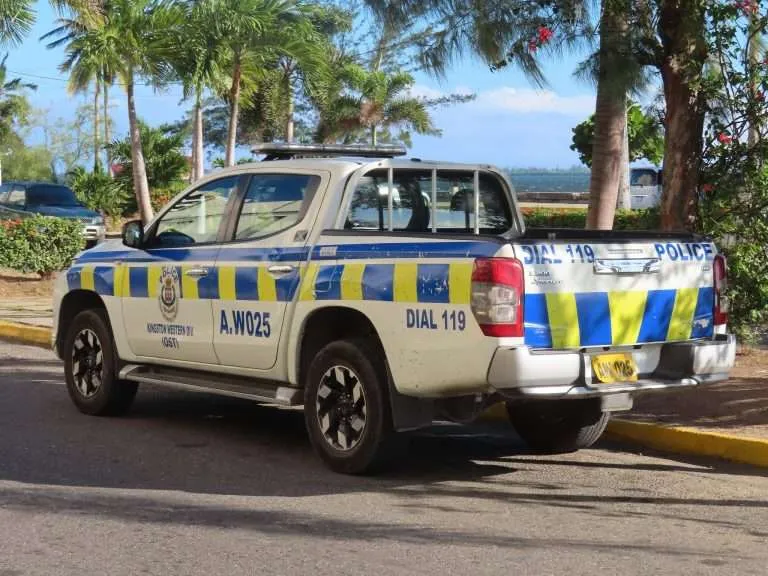
Photo: Let me tell you... - VV Nincic
Cobro de piso is the regular "rent" that Mexican cartels and local gangs charge small businesses for the right to keep working. Shop owners, tortilla makers, taxi drivers and farmers pay a weekly fee. Some pay a few pesos on every kilo they sell. Those who refuse risk arson, kidnapping or death. Mexico's official count of extortion victims reached 11,081 in 2025, the highest in a decade.[1] However, the national victimisation survey shows that 97.5% of extortions are never reported or investigated.[2]
This article is written for UK and US asylum lawyers with a client who refused, or stopped paying, cobro de piso. It covers how the schemes work, who runs them and how they escalate, then state protection, relocation and the legal tests. For the wider security picture, see our Mexico country conditions report.
Extortion victims recorded by SESNSP in 2025
Extortions unreported or not investigated, 2025 (INEGI ENVIPE 2026)
In-person extortions and cobro de piso against businesses, 2023 (INEGI ENVE)
Businesses closed by extortion in Cuautla, Morelos, Aug 2025 to Aug 2026
What is cobro de piso?
Cobro de piso, also called derecho de piso ("floor fee"), is a recurring payment that a criminal group demands from a business. In return, the group lets the business operate. The fee is usually weekly or monthly. In some regions, it is a charge per kilo sold, per vehicle or per square metre of land. Refusal is punished with violence.
In practice, it works like a tax: the group decides who pays, how much and when. INEGI's business survey treats it as in-person extortion. That separates it from telephone extortion, which is far more common but often ends without payment.[3]
Regular rent and one-off demands
Lawyers should separate two patterns. The first is a one-off demand: a single call or visit asking for a sum, often by a criminal who never returns. The second is a standing arrangement, where a collector visits every week and the amount rises over time. This pattern matters more for asylum, because it shows that the group knows the business and has people on the street.
Payments vary widely. In Cuautla, Morelos, business owners reported in 2026 that gangs asked for an "entry" payment of 50,000 pesos and then 10,000 pesos a month. A tortilla maker in the same state described a demand of 25,000 pesos.[4] For a family business, that can exceed monthly profit.
Telephone extortion and virtual kidnapping
Telephone extortion is the most common form. Coparmex reports that about six in ten extortion cases against its member firms in 2026 came by phone.[5] Many calls come from inside prisons. In March 2025, for example, police in Guerrero found a teenage victim of "virtual kidnapping" whose extortionist was calling from a prison in Matamoros, Tamaulipas.[6] In a virtual kidnapping, the caller falsely tells a family that a relative has been abducted. The caller then demands a ransom.
The two forms often overlap, as calls can be followed by a visit from armed men. Therefore, an expert should ask whether the caller showed local knowledge, such as the client's address or children's school. That detail separates a random scam from a group present in the area.
Gota a gota loans
"Gota a gota" ("drop by drop") lenders offer fast cash with no paperwork and collect daily instalments at very high interest. Debts can double within weeks. When borrowers fall behind, collectors use threats and violence. Morelos authorities detained 24 Colombian nationals for gota a gota extortion between October 2024 and July 2025, some linked to La Familia Michoacana and Los Mayas.[7] In April 2026, an operation in Estado de México led to 102 arrests in a single network.[7] Market vendors and street traders, who need daily working capital, are the main targets.
Control of prices and supply
In parts of central and southern Mexico, cartels now run the market itself. In January 2024, El Financiero reported that La Familia Michoacana charged chicken sellers in Zinacantepec, Estado de México, four pesos for every kilo of whole chicken. Whole chicken cost 75 pesos a kilo there, against 45 pesos in central Toluca.[8] In July 2025, state and federal forces ran "Operación Liberación" in 14 municipalities of southern Estado de México. They found that the same group forced merchants to buy chicken and beef at more than 20% above normal prices. It also raised the price of construction materials by up to 144%.[9]
In April 2026, Milenio reported that in Taxco, Guerrero, chain stores kept their beer fridges empty. Meanwhile, small shops sold only one brewer's products at inflated prices, under rules set by La Familia Michoacana.[10] In August 2025, El Universal reported that criminal groups set prices in ten states. The goods included tortillas, eggs, beer, gasoline and school supplies.[11]
Who is targeted
The typical target is a small, visible business with daily cash takings and a fixed location. According to INEGI's 2024 business survey, extortion was the most common crime against micro and small firms in 2023. It was also the most frequent crime against businesses in 18 of Mexico's 32 states.[3]
The table below sets out the main schemes, with a dated example for each.
| Sector | Typical scheme | Documented example | Group named |
|---|---|---|---|
| Tortillerías | Weekly fee or charge per kilo; mass closures after threats | More than 400 tortillerías closed for a day in Uruapan, Michoacán (Aug 2023) | Los Viagras |
| Chicken and meat sellers | Per-kilo fee plus forced purchase from cartel suppliers | 4 pesos per kilo in Zinacantepec, Edomex (Jan 2024); 52 premises shut in Operación Liberación (Jul 2025) | La Familia Michoacana |
| Beer and grocery shops | Cartel sets brand, supplier and price | Taxco, Guerrero (Apr 2026) | La Familia Michoacana |
| Building supplies and construction | Price uplift, forced supply | Prices up to 144% higher, southern Edomex (Jul 2025) | La Familia Michoacana |
| Taxis, buses and combis | Fee per vehicle or route; killings of drivers | Taxi driver Irma Hernández killed, Álamo, Veracruz (Jul 2025); bus driver shot, Cuautla (Jul 2026) | "Mafia Veracruzana"; local cells |
| Lime and avocado growers | Charge per kilo or per box | 2 pesos per kilo of avocado (Aug 2026); lime leader killed (Oct 2025) | CJNG, Cárteles Unidos, Los Viagras and others |
| Small farmers | Fee per square metre of cultivated land | Texcaltitlán, Edomex; 14 dead in clash (Dec 2023) | La Familia Michoacana |
| Shops and bazaars in the north | Written note, threat to burn premises | Mexicali, Baja California (May 2026) | CJNG (as stated in note) |
| Market vendors | Gota a gota loans with violent collection | Morelos and Edomex arrests (2025-2026) | Colombian-led networks, some linked to local cartels |
| Road freight | Illegal checkpoints and route charges | Demands of up to 40,000 pesos; national blockade (Nov 2025) | Various |
The group behind the demand matters as much as the sector. La Familia Michoacana dominates the reported cases in southern Estado de México, northern Guerrero and Morelos. In Michoacán, the CJNG, Cárteles Unidos and Los Viagras compete for the same farmers. In Tamaulipas, the Cártel del Noreste and Gulf Cartel factions control extortion in their towns, as our country report explains. Many demands also come from local cells using a cartel's name. In Morelos alone, Expansión identified 11 criminal groups in October 2026, from the CJNG to local gangs such as Los Linos.[12]
Mexico cobro de piso statistics, 2019-2026
The sources measure different things. SESNSP counts victims in prosecutors' files, while INEGI's surveys estimate all extortion, reported or not.
SESNSP recorded 11,081 extortion victims in 2025, up 2.02% on 2024. Estado de México had the most victims (2,257), followed by Mexico City (1,753), Guanajuato (1,457) and Nuevo León (991).[1] The trend continued in 2026. Coparmex's analysis of SESNSP data counted 6,562 victims from January to June 2026, a 9.17% rise on the same period of 2025.[13]
Sources disagree on earlier years. Some press reports give lower SESNSP totals for 2022 and 2023, about 10,200 and 10,840. SESNSP revises its monthly figures, so totals depend on the download date. We use the Grupo Animal series because it applies one method throughout. It also matches the 2025 claim of a ten-year high. Either way, official extortion has stayed near record levels since 2022.
The dark figure
Official totals are a small fraction of real cases. INEGI's ENVIPE 2026 victimisation survey, published on 10 September 2026, estimated an extortion rate of 6,831 per 100,000 adults in 2025, a statistically significant rise. Extortion was the second most common crime in Mexico, after fraud. Its "cifra oculta", the share of crimes not reported or not investigated, was 97.5%. Only kidnapping was higher, at 98.2%.[2]
Business data tell the same story. INEGI's ENVE 2024 business survey estimated 747,000 extortions against businesses in 2023. Of these, 113,000 were in-person extortion or cobro de piso. In 67% of cases, the victim handed over what was demanded.[3] Coparmex's 2026 member survey, carried out from March to June 2026, found that extortion and cobro de piso affected 18% of member firms. That made it the most common crime against them. In nearly 20% of extortion cases, the perpetrators were officials or people posing as officials.[5]
Key point for reports: SESNSP counts only prosecutors' files, which 97.5% of extortions never reach. A low official count for a client's town is weak evidence that extortion is rare there.
How extortion escalates
Escalation follows a common pattern in the cases we review. First, a collector or caller makes a demand, often naming a cartel. Second, after a refusal or missed payment, the group sends a warning: a note, a shot at the shutters or a beating. Third, it attacks the business, usually by arson. Finally, it kills or disappears the owner, a relative or an employee, often in public so that other businesses see it.
Documented cases, 2023-2026
On 8 December 2023, La Familia Michoacana members met farmers in Texcapilla, Texcaltitlán (Estado de México). They demanded a fee for each square metre of crops. When the farmers could not pay, the gunmen opened fire, and residents fought back with shotguns and machetes. Fourteen people died, ten of them alleged cartel members.[14]
In August 2023, more than 400 tortillerías in Uruapan, Michoacán, closed for a day after threats from Los Viagras.[15] Similarly, in Morelos, businesses in Cuautla now post "closed due to extortion" signs. About 800 businesses closed there between August 2025 and August 2026.[12] On 12 July 2026, a gunman shot dead a Route 85 bus driver in Cuautla, allegedly for refusing to pay. Morelos opened 381 extortion files in the first half of 2026, twice the 179 of the same period in 2025.[4]
Killings are often staged as messages. On 18 July 2025, gunmen abducted Irma Hernández Cruz, a 62-year-old retired teacher who drove a taxi in Álamo Temapache, Veracruz. A video showed her kneeling among armed men and telling other taxi drivers to pay their quota. Her body was found on 24 July.[16] On 20 October 2025, police found Bernardo Bravo Manríquez dead in his car with signs of torture. He led the Apatzingán Valley lime growers and had spoken out against cartel quotas on lime.[17]
Threats reach the north too. In May 2026, a shop owner in Mexicali received a gift box with a note signed in the name of the CJNG. It threatened to burn her businesses and kill her and her son, and it gave her street name. She pressed a police panic button three times without a response, and officers came only after her video spread online.[18] Meanwhile, truck drivers blocked roads in several states on 24 November 2025 over highway extortion and robbery.[19]
State response and why victims do not report
The federal government launched the National Strategy against Extortion on 6 July 2025. It promotes the anonymous 089 line, joint investigation units and action against phone lines. By 31 July 2026, the security ministry reported 1,847 people detained in 24 states.[20] In the first half of 2026, the 089 and 088 lines received over 227,000 calls. They led to 1,712 case files and 1,674 arrests. About 88% of the 089 calls involved attempts that did not succeed.[21]
These results do not show protection for a named victim. First, the official count kept rising. Second, the government has not published conviction figures. Third, critics say the strategy focuses on telephone fraud. Security specialist Yair Mendoza told Grupo Animal that it neglects direct, armed extortion linked to territorial control, the form that hits small firms hardest.[1] In addition, México Evalúa has put impunity for extortion at 98.2%.[22]
Why most victims stay silent
Victims give consistent reasons for not reporting. INEGI's business survey lists the main reasons linked to the authorities. They include wasted time, long procedures, distrust and fear of being extorted by officials.[3] Collusion is a real risk. Coparmex found that officials, or people posing as officials, took part in nearly one in five extortion cases against its members in 2026.[5] Our analysis of how Mexican police work for the cartels explains why a complaint can reach the extortionists within hours.
For this reason, a missing denuncia should not count against a client. The explanation needs to be specific, though. It should say who the client feared, what they saw or heard about local police, and whether neighbours who complained suffered for it. Our guide on claims with no police report from Mexico sets out how to present this.
Internal relocation for business owners
Decision-makers often say a shop owner can start again in another city. That argument has three weaknesses.
First, the business itself makes the person visible. A new tortillería or taxi needs premises, permits, suppliers and customers. Moreover, the same groups operate in several states. La Familia Michoacana, for example, works across Estado de México, Guerrero, Morelos and Michoacán.[12] Extortion is also high in Mexico City, the usual proposed destination, which recorded 1,753 victims in 2025.[1]
Second, the groups track people. Collectors often know a victim's home address, family and phone number, as the Mexicali note shows. Extortion networks share phone numbers and WhatsApp contacts, and some operate from prisons with national reach. Furthermore, by March 2025, security forces had removed more than 6,500 criminal surveillance cameras in 21 states.[23]
Third, relocation rarely ends the debt in the group's eyes. In Cuautla, one owner said the family left town after threats reached their home. They had already closed the business.[4] Therefore, the expert question is whether the group has the motive and the means to find this person. A client who refused openly, reported to police or helped organise other traders gives the group more motive. Our return risk assessment for Mexico covers the relocation test in more detail.
Watch our video on why people flee Mexico, with testimony on cartel violence and religious persecution. Watch it on our YouTube channel.
Cobro de piso in UK asylum claims
The Home Office has no Country Policy and Information Note on Mexico. We checked the CPIN collection on 7 October 2026.[24] Consequently, the expert evidence carries more weight.
The Nationality and Borders Act 2022 sets the tests. Under section 32, the claimant must prove on the balance of probabilities that they have the characteristic or belief behind the fear. Section 33(2) requires a particular social group (PSG) to meet both the "immutable characteristic" and "distinct identity" tests.[25] That is the main problem for business owners. Running a shop is a job that a person can change. So "small business owners" or "people who refuse to pay" will rarely meet the first test.
Political opinion is often the stronger route. Section 33(1)(d) covers an opinion "on a matter related to a potential actor of persecution and to its policies or methods". The person need not have acted on it.[25] A trader who refused openly, organised other vendors, spoke to the press or reported the group may hold such an opinion about the cartel's methods. Bravo's public stand against lime quotas is the clearest example. By contrast, a quiet refusal for purely economic reasons is harder to fit.
On protection, Horvath v SSHD [2001] 1 AC 489 asks whether the state provides a system of protection that works in practice. On relocation, Januzi v SSHD [2006] UKHL 5 and AH (Sudan) v SSHD [2007] UKHL 49 ask whether moving would be unduly harsh in the claimant's circumstances.[26] Where no Convention reason applies, the claim may still succeed under Article 3 ECHR, which needs no nexus. The evidence must then show a real risk to this person, not general insecurity.
With no CPIN on Mexico, case-specific evidence on extortion, cartel reach and relocation carries extra weight; see our Mexico country expert witness reports.
US asylum law on extortion claims
US law is harder for extortion victims. A claimant must show that a protected ground was "at least one central reason" for the harm. This is the test in INA section 208(b)(1)(B)(i) and Matter of J-B-N- & S-M-, 24 I&N Dec. 208 (BIA 2007).[27] Judges often find that the cartel simply wanted money, and in mixed-motive cases the protected ground must be more than incidental.
PSG claims face the tests in Matter of M-E-V-G-, 26 I&N Dec. 227 (BIA 2014) and Matter of W-G-R-, 26 I&N Dec. 208 (BIA 2014): immutability, particularity and social distinction. Courts have rejected business-owner groups repeatedly. In Munoz-De Zelaya v. Garland, No. 22-60505 (5th Cir. 12 September 2023), the Fifth Circuit held that "Salvadoran business owners" is not a cognizable group because business ownership is not immutable.[28]
The 2026 BIA precedents
The 2026 precedents, listed on the EOIR Volume 29 page, narrow the routes further. In Matter of D-G-E-A- & N-G-G-E-, 29 I&N Dec. 570 (BIA 2026), the Board held that opposition to criminal gangs alone is not a political opinion. The belief must concern a cause tied to a government, which can include a de facto government. However, the Board defined a de facto government narrowly, as a group in full and actual control of a territory and population large enough for a nation. A cartel that taxes one town will rarely meet that test. In Matter of H-L-S-M-, 29 I&N Dec. 767 (BIA 2026), the Board vacated a CAT grant in a Mexico and Guatemala case. The judge had relied on general country evidence and expert testimony about corruption. It also held that government action against cartels weighs against acquiescence.[29]
For CAT, 8 CFR 1208.18(a)(7) requires that a public official knew of the torture, or was willfully blind to it, and then failed to intervene.[30] After H-L-S-M-, expert evidence must connect collusion to the client's own town and persecutor. Police ignoring the client's own calls for help is far stronger than national corruption indices.
Material support bar: On 20 February 2025, the US designated the Sinaloa Cartel, the CJNG, the Cártel del Noreste, La Nueva Familia Michoacana, the Gulf Cartel and Cárteles Unidos as Foreign Terrorist Organizations.[31] Paying any of these groups after that date can count as material support. Matter of M-H-Z-, 26 I&N Dec. 757 (BIA 2016) holds that the bar has no implied duress exception, so the client depends on a discretionary exemption under INA section 212(d)(3)(B)(i). Check every payment date and which group received the money.
Evidence for an extortion claim
Lawyers should ask the client to collect the following, where it is safe to do so:
- Photos of written notes, messages left at the premises and damage from any attack.
- Screenshots of WhatsApp messages, call logs and phone numbers used by the extortionists, with dates.
- Records of payments: bank transfers, deposit slips, notes of cash handed over and the rising amounts.
- Proof of the business: permits, tax registration (RFC), lease, photos and evidence of closure or sale.
- Any denuncia, panic-button record or 089 call, or a clear written account of why the client did not report.
- Local news about attacks on similar businesses in the same municipality and the same months.
- Evidence of threats after the client left, such as messages to relatives or visits to the family home.
A country expert report adds what the client cannot. It identifies the group that controls the municipality, shows how that group treats people who refuse to pay, and tests the client's account against local reporting. It also answers the points decision-makers raise most. These include whether local police work with the group and whether the group operates in the proposed relocation city. For US cases, it should date any payment against 20 February 2025. If you need a Mexico expert, you can find a country expert witness here.
Frequently asked questions
Is cobro de piso the same as extortion?
Cobro de piso is one form of extortion. It is a recurring fee for the right to operate, usually collected in person. Telephone extortion, by contrast, is often a one-off demand. INEGI records cobro de piso together with extortion in the street or at the premises.
Can refusing cobro de piso support a refugee claim?
Yes, but usually not on economic grounds alone. In the UK, the strongest route is often political opinion under section 33(1)(d) of the 2022 Act, where the client opposed the group openly. Otherwise, Article 3 ECHR may apply. In the US, nexus and PSG rules make these claims difficult, and CAT needs specific evidence of official acquiescence.
Does paying cobro de piso harm a US asylum claim?
It can. Payments to one of the six designated cartels after 20 February 2025 may trigger the material support bar. Under Matter of M-H-Z-, that bar has no duress exception. The client would then need a discretionary exemption.
Why is the official extortion figure so low?
SESNSP counts only cases in prosecutors' files. INEGI estimates that 97.5% of extortions in 2025 were never reported or investigated, mainly because victims fear reprisals and distrust the police.
Conclusion
Cobro de piso has become a system of local taxation in large parts of Mexico. Official extortion reached a ten-year high in 2025 and kept rising in 2026. Cartels now set prices for chicken, beer and building materials, and they kill traders, drivers and farmers who refuse to pay. The federal strategy has produced arrests but not fewer victims.
UK claims depend on showing a political opinion or a real Article 3 risk, with no CPIN to rely on. US claims face strict nexus and PSG rules, the 2026 BIA precedents and the material support bar. In both systems, the strongest cases rest on dated, local evidence about the group that made the demand and what it has done to others who said no.
Footnotes
- Guadalupe Fuentes, 'En 2025 se reportaron 11,081 víctimas de extorsión, la cifra anual más alta en la última década' (Grupo Animal, 27 January 2026), using SESNSP data
- INEGI, 'Encuesta Nacional de Victimización y Percepción sobre Seguridad Pública (ENVIPE) 2026: Principales resultados' and Comunicado de prensa 50/26 (10 September 2026)
- INEGI, 'Encuesta Nacional de Victimización de Empresas (ENVE) 2024', Comunicado de prensa 780/24 (10 December 2024)
- TV Azteca, 'Se duplican denuncias por extorsión en Morelos en 2026; decenas de negocios cierran por amenazas y asesinatos' (23 July 2026)
- UnoTV, 'Cobro de piso encabeza delitos contra empresas: Coparmex' (27 August 2026), reporting the Data Coparmex survey of 4,021 members (31 March to 12 June 2026)
- El Imparcial, 'Localizan a menor víctima de "secuestro virtual" en Guerrero; extorsionador operaba desde prisión en Tamaulipas' (20 March 2025)
- Infobae, 'Suman 24 colombianos detenidos por extorsiones gota a gota en Morelos; algunos están ligados a La Familia Michoacana' (16 July 2025); Récord, 'Caen 102 por extorsión gota a gota en Edomex' (1 April 2026)
- El Financiero, 'Narco "despluma" precio del pollo en Edomex: Familia Michoacana extorsiona negocios' (15 January 2024)
- El Financiero, 'Frenan extorsión de La Familia Michoacana en Edomex: obligaban a comprar pollo y carne con sobreprecio' (23 July 2025); Expansión Política, 'La Familia subió hasta 144% precio de materiales para construcción en Edomex' (24 July 2025)
- Amílcar Salazar Méndez, 'Cerveza prohibida y refrigeradores vacíos: así dicta La Familia Michoacana la ley del mercado en Taxco' (Milenio, 20 April 2026)
- Vanguardia, 'Crimen controla precios en 10 estados de México; van desde tortillas hasta útiles escolares' (25 August 2025), citing El Universal
- Lidia Arista, 'Violencia en Morelos: CJNG, Unión Tepito y otros nueve grupos detrás de las extorsiones' (Expansión Política, 6 October 2026)
- 24 Horas, 'Extorsión crece 9.17% en primer semestre de 2026' (August 2026), citing the Coparmex Security Monitor
- Expansión Política, 'Texcaltitlán, el municipio agricultor que se enfrentó a un cártel' (9 December 2023); Expansión Política, 'Enfrentamiento en Texcaltitlán: lo que se sabe' (11 December 2023)
- El Universal, 'Reabren más de 400 tortillerías de Uruapan tras amenazas del crimen organizado' (3 August 2023)
- La Razón, 'Causa indignación asesinato de maestra en Veracruz por no pagar extorsión' (25 July 2025); Grupo Animal, 'Irma Hernández: por qué el homicidio de la maestra jubilada y taxista en Veracruz ha tenido tanto impacto' (July 2025)
- ADN40, 'Bernardo Bravo, líder limonero, asesinado en Apatzingán, Michoacán' (20 October 2025); Infobae, '2 pesos por kilo: cómo los cárteles convirtieron el aguacate de Michoacán en uno de sus negocios más rentables' (6 August 2026)
- Zeta Tijuana, 'Comerciante de Mexicali denuncia cobro de piso por parte del CJNG; teme por su vida' (2 May 2026)
- El Financiero, 'Mega bloqueo de transportistas: estos son los detalles del paro nacional del 24 de noviembre' (21 November 2025); ADN40, 'Paro nacional de transportistas: la razón detrás de los bloqueos' (24 November 2025)
- Tiempo, 'Detuvimos a mil 847 extorsionadores en un año: Harfuch' (11 August 2026)
- La Razón, 'Extorsión, desafío principal: 97% de cifra negra' (3 September 2026), citing the federal government's report on the National Strategy against Extortion
- México Evalúa, 'Sólo 3 de cada 100 homicidios dolosos se resuelven en el sistema de justicia penal' (5 October 2022), including impunity rates by crime
- Xataka México, 'El crimen organizado creció tanto en México que ahora usan cámaras de vigilancia: desmantelaron 6,500' (31 March 2025), citing El Universal
- UK Home Office, 'Country policy and information notes' collection (GOV.UK, accessed 7 October 2026)
- Nationality and Borders Act 2022, ss 32-35, in particular s 33(1)(d) and s 33(2)
- Horvath v Secretary of State for the Home Department [2001] 1 AC 489 (HL); Januzi v Secretary of State for the Home Department [2006] UKHL 5; AH (Sudan) v Secretary of State for the Home Department [2007] UKHL 49
- Immigration and Nationality Act s 208(b)(1)(B)(i), 8 USC 1158(b)(1)(B)(i); Matter of J-B-N- & S-M-, 24 I&N Dec. 208 (BIA 2007)
- Matter of M-E-V-G-, 26 I&N Dec. 227 (BIA 2014); Matter of W-G-R-, 26 I&N Dec. 208 (BIA 2014); Munoz-De Zelaya v. Garland, No. 22-60505 (5th Cir. 12 September 2023)
- Matter of D-G-E-A- & N-G-G-E-, 29 I&N Dec. 570 (BIA 2026); Matter of H-L-S-M-, 29 I&N Dec. 767 (BIA 2026); Executive Office for Immigration Review, 'Volume 29' precedent decisions (accessed 7 October 2026)
- 8 CFR 1208.18(a)(7)
- US Department of State, Foreign Terrorist Organization designations (Federal Register, 20 February 2025); Matter of M-H-Z-, 26 I&N Dec. 757 (BIA 2016); Immigration and Nationality Act s 212(d)(3)(B)(i)
Sources
- INEGI, ENVIPE 2026 press release, 10 September 2026
- INEGI, ENVE 2024 press release, 10 December 2024
- Executive Office for Immigration Review, Volume 29 precedent decisions, 2025-2026
- Grupo Animal, En 2025 se reportaron 11,081 víctimas de extorsión, 27 January 2026
- Grupo Animal, La extorsión tuvo un crecimiento histórico en el sexenio pasado, 24 February 2025
- UnoTV, Cobro de piso encabeza delitos contra empresas: Coparmex, 27 August 2026
- Expansión Política, Violencia en Morelos: CJNG, Unión Tepito y otros nueve grupos detrás de las extorsiones, 6 October 2026
- El Financiero, Frenan extorsión de La Familia Michoacana en Edomex, 23 July 2025
- Milenio, Cerveza prohibida y refrigeradores vacíos, 20 April 2026
- TV Azteca, Se duplican denuncias por extorsión en Morelos en 2026, 23 July 2026
- La Razón, Extorsión, desafío principal: 97% de cifra negra, 3 September 2026
- Zeta Tijuana, Comerciante de Mexicali denuncia cobro de piso por parte del CJNG, 2 May 2026
- US Court of Appeals for the Fifth Circuit, Munoz-De Zelaya v. Garland, No. 22-60505, 12 September 2023
- UK Home Office, Country policy and information notes, accessed 7 October 2026
- Legislation.gov.uk, Nationality and Borders Act 2022, section 33
Need an expert witness report for your case?
Our country experts provide independent reports for asylum and immigration cases in the UK, US, Canada, and EU.
Order an expert witness report |
Find a country expert witness |
About our expert team