Last updated:
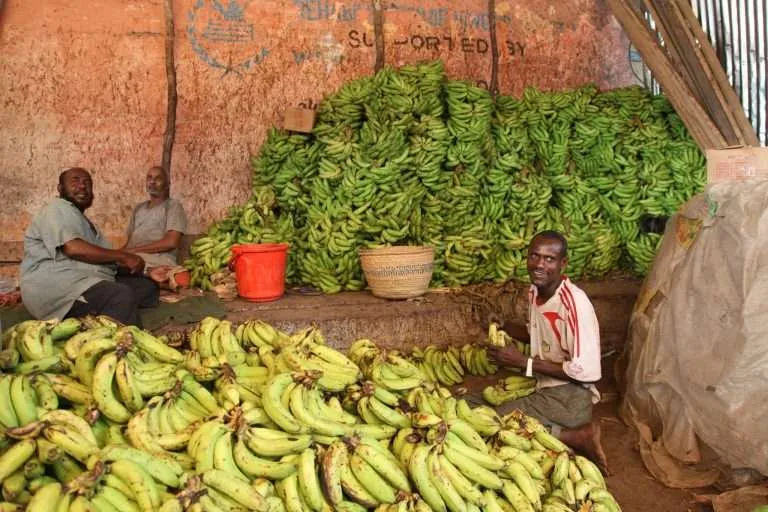
Photo: 238-SUDAN - anmede
The Sudan IDP crisis is the world's largest internal displacement emergency. Since the war's outbreak on 15 April 2023, more than 9 million people have been uprooted within Sudan's borders — unable to cross an international frontier, unable to access refugee protection, and unable to find safety inside their own country. Furthermore, the term "internally displaced" understates the gravity: Sudan's IDPs are caught in a country where warring parties control different territories, where the entire humanitarian system has collapsed, and where there is, in the most literal sense, nowhere left to go. As a result, many eventually flee abroad — generating asylum claims that flow from this underlying crisis. This article documents the IDP crisis and its asylum implications.[1]
For wider context, see the Sudan country report.
IDPs within Sudan — world's largest
Refugees in neighbouring countries
People in acute food insecurity
Safe areas for return (UNHCR position)
Scale of the IDP Crisis
As of early 2026, UNHCR and OCHA track over 9 million internally displaced people within Sudan — a figure that makes this the world's largest single IDP crisis, surpassing Syria. Furthermore, the number continues to rise as RSF offensives push into new regions. The IDP population is concentrated in: South Darfur (Nyala); White Nile State (host communities overwhelmed); Gedaref; Port Sudan (temporary SAF capital); and River Nile State. As a result, receiving communities that were themselves impoverished are now strained beyond capacity. Therefore, IDPs face hunger, disease, lack of shelter, and continued exposure to violence even after displacement.[2]
The "second displacement" pattern
A particularly alarming trend is second and third displacement. Civilians who initially fled Khartoum or Darfur to "safer" areas now face renewed RSF advances. The RSF capture of Wad Madani (Gezira State, December 2023) forced hundreds of thousands of already-displaced people to flee again. Furthermore, the RSF's 2025 offensives into White Nile State triggered further secondary displacement. As a result, IDPs have no stable location of safety. Therefore, repeated displacement compounds trauma and depletes survival resources.[3]
Conditions for IDPs: Hunger, Disease, Violence
IDPs inside Sudan face catastrophic conditions. First, food: the Integrated Food Security Phase Classification (IPC) places Sudan at Phase 4 (Emergency) or Phase 5 (Famine) across multiple regions, with 25 million people in acute food insecurity. Second, disease: cholera, malaria, dengue fever, and measles spread rapidly in overcrowded informal settlements with no sanitation or healthcare. Third, shelter: the majority of IDPs live in schools, mosques, host families, or open sites — not formal camps. Fourth, violence: IDPs remain at risk of attack, particularly women facing CRSV. Furthermore, humanitarian access to IDPs is severely limited by active fighting and bureaucratic obstruction. As a result, mortality from preventable causes is high.[4]
"The situation in Sudan represents one of the worst humanitarian crises in the world today. Millions of displaced people have nowhere safe to go, no food, no healthcare, and no protection."UN OCHA, Sudan Humanitarian Update, 2025
Geographic Patterns: Where IDPs Concentrate
IDP concentrations follow the contours of the war. In the early phase (April-June 2023), millions fled Khartoum and Omdurman. In the Darfur phase (April 2023 onwards), the entire non-Arab population of West Darfur fled or was killed. In the Gezira phase (December 2023), Wad Madani's population scattered. Furthermore, each new RSF advance (North Kordofan, Sennar, White Nile 2025) generates fresh displacement. As a result, no region of Sudan has been immune. The OCHA cluster system attempts to coordinate response, but without security or funding, clusters cannot reach the most vulnerable.[5]
| Region | Event Triggering Displacement | Estimated IDPs |
|---|---|---|
| Khartoum/Omdurman | April 2023 war outbreak | 3M+ |
| West Darfur | RSF ethnic cleansing (2023) | 800,000+ |
| South Darfur (Nyala) | RSF advance, 2023-2024 | 600,000+ |
| Gezira / Wad Madani | RSF capture, December 2023 | 700,000+ |
| White Nile State | RSF offensive, 2025 | 500,000+ |
| Other regions | Cascading displacement | 3M+ |
Humanitarian Response: Underfunded and Obstructed
The humanitarian response to Sudan's IDP crisis is severely inadequate. First, funding: the 2025 Sudan Humanitarian Response Plan is less than 30% funded. Second, access: both RSF and SAF obstruct humanitarian operations — blocking convoys, raiding aid warehouses, denying visas to workers. Third, security: aid workers have been killed and organisations have suspended or withdrawn operations. Furthermore, Port Sudan — the nominal humanitarian hub — has itself come under drone attacks (reportedly Sudanese government operations against RSF). As a result, IDPs in the hardest-hit areas (Darfur, North Kordofan) receive minimal or no assistance. Therefore, the gap between need and response is catastrophic.[6]
Legal Status of IDPs: The Guiding Principles
Unlike refugees, IDPs have no specific binding international legal instrument. However, the UN Guiding Principles on Internal Displacement (1998) provide a non-binding framework. Furthermore, Sudan's own domestic law and the African Union Convention for the Protection and Assistance of IDPs in Africa (Kampala Convention, 2009) — which Sudan has ratified — impose obligations on the Sudanese state. As a result, the government (SAF/Burhan) has legal obligations to protect IDPs. However, as the state is itself a party to the war and incapable of nationwide protection, domestic legal frameworks are effectively inoperative. Therefore, international protection is the only meaningful recourse.[7]
Asylum implication: IDPs who cross an international border and claim asylum abroad can rely on their IDP experience as evidence of persecution and displacement. Furthermore, the failure of internal protection inside Sudan — documented by UNHCR's position against return — directly refutes any internal relocation argument. Therefore, the IDP crisis background strengthens asylum claims significantly.
From IDP to Refugee: Asylum Implications
Many Sudanese asylum seekers abroad were IDPs before they fled the country. The IDP background is highly relevant to asylum claims. First, it demonstrates that internal relocation was attempted and failed — destroying any argument that the applicant should have moved within Sudan. Second, it demonstrates the severity and reach of the conflict. Third, it provides a consistent narrative of progressive persecution. Furthermore, the UNHCR position paper (April 2025) specifically notes that the internal displacement crisis makes internal protection alternatives unavailable for all Sudanese. As a result, decision-makers should not apply an internal relocation finding to Sudanese applicants whose IDP experience is documented.[8]
Displacement inside Sudan bears directly on internal relocation, and our Sudan country expert witness reports assess whether any area is reasonable for a particular client.
Conclusion: A World-Record Crisis Without Resolution
The Sudan IDP crisis is unprecedented in scale, with no safe haven inside the country and a collapsing humanitarian response. Furthermore, the second-displacement pattern shows that even temporary safety is elusive. As a result, IDPs who eventually flee to seek international protection do so after exhausting every internal option. Therefore, asylum systems should recognise the IDP experience as strong corroborating evidence of persecution and the unavailability of domestic protection.
Footnotes
- UN OCHA, Sudan Humanitarian Overview 2025; UNHCR Sudan Situation Update.
- IDMC (Internal Displacement Monitoring Centre), Sudan Country Profile 2025.
- OCHA Situation Report: Wad Madani (December 2023); White Nile State Update (2025).
- IPC Sudan Food Security Update 2025; WHO Sudan Health Cluster Report 2025.
- OCHA Sudan Displacement Tracking; Humanitarian Cluster Coordination Reports.
- Sudan 2025 Humanitarian Response Plan — Funding Status; OCHA Access Constraints Report.
- UN Guiding Principles on Internal Displacement (1998); African Union Kampala Convention (2009).
- UNHCR, "Position on Returns to Sudan," April 2025.
Sources
Need an expert witness report for your case?
Our country experts provide independent reports for asylum and immigration cases in the UK, US, Canada, and EU.
Order an expert witness report |
Find a country expert witness |
About our expert team