Last updated:
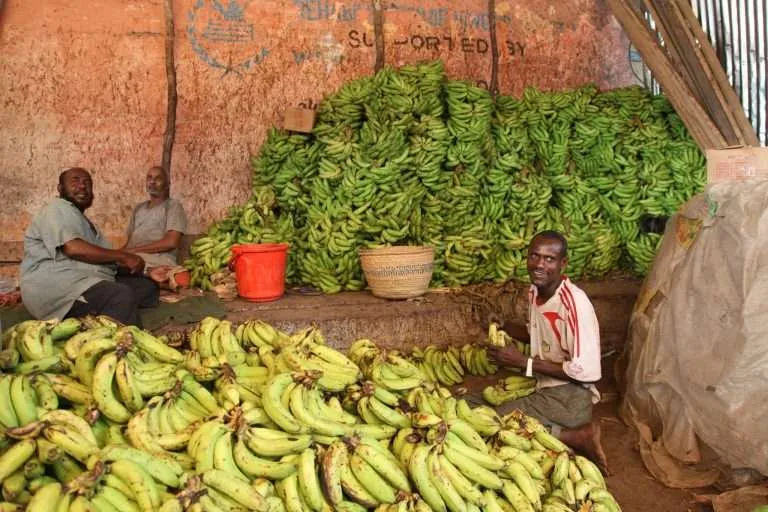
Photo: Giro Fiori - David Stanley
Eritrea press freedom does not exist. Since September 2001, there has been no independent media in Eritrea. The government shut down every private newspaper overnight and arrested their editors and journalists. More than 25 years later, most of those journalists are still in prison. Nobody knows for certain if all of them are still alive. Reporters Without Borders (RSF) has ranked Eritrea last or near last on its Press Freedom Index for over a decade. Eritrea is often called the "North Korea of Africa" because of its total control over information. This article examines how Eritrea press freedom was destroyed, what happened to the journalists, and what this means for asylum claims.
RSF Press Freedom Index ranking
Independent media outlets in Eritrea
Journalists in prison without trial
Journalists who died in detention
The September 18, 2001 Crackdown
On September 18, 2001, the Eritrean government shut down all private newspapers in the country. This happened without warning. Security forces closed the offices of eight newspapers: Setit, Meqaleh, Tsigenay, Zemen, Wintana, Admas, Keste Debena, and Mana. On the same day, authorities arrested their editors and senior journalists. The arrests also included members of the G-15, a group of government officials who had written an open letter calling for democratic reform.[1]
The official reason for the crackdown was "national security." The government claimed that the journalists and the G-15 members were threatening the country during a time of crisis, shortly after the border war with Ethiopia. However, the real reason was clear: the newspapers had published the G-15 open letter and were reporting on calls for democratic reform. President Isaias Afwerki saw this as a threat to his power.
Since that day, no private newspaper has been published in Eritrea. The government has never allowed any new independent media. Not a single arrested journalist has been brought to court. There have been no charges, no trials, and no sentences. The journalists simply disappeared into the prison system. The crackdown on Eritrea press freedom was total and permanent.[2]
Journalists Detained Since 2001
| Journalist | Newspaper | Arrested | Years Detained | Status |
|---|---|---|---|---|
| Dawit Isaak | Setit | Sept 2001 | 25+ | Unknown (believed alive) |
| Seyoum Tsehaye | Freelance / EriTV | Sept 2001 | 25+ | Unknown |
| Dawit Habtemichael | Meqaleh | Sept 2001 | 25+ | Unknown |
| Mattewos Habteab | Meqaleh | Feb 2002 | 24+ | Unknown |
| Temesgen Gebreyesus | Keste Debena | Sept 2001 | 25+ | Reported dead in custody (2007) |
| Fesshaye Yohannes | Setit (playwright) | Sept 2001 | — | Died in detention (2007) |
| Said Abdelkader | Admas | Sept 2001 | 25+ | Unknown |
| Amanuel Asrat | Zemen | Sept 2001 | — | Reported dead in custody (2012) |
Eritrea Press Freedom: Global Ranking
Dawit Isaak: Sweden's Longest Political Prisoner Case
The most internationally known case from the Eritrea press freedom crackdown is that of Dawit Isaak. He is a Swedish-Eritrean journalist who co-founded the newspaper Setit. He had Swedish citizenship when he was arrested on September 23, 2001. He was taken from his home and has been held without charge ever since. His case is the longest-running political prisoner case involving a Swedish citizen.[3]
The Swedish government has tried for years to secure his release. In 2011, Dawit Isaak was reportedly briefly released from prison but was re-arrested within two days. Since then, there has been almost no confirmed information about his condition. The Eritrean government refuses to confirm whether he is alive. It will not allow consular visits. Sweden has raised his case at the United Nations, the European Union, and the African Union.
In 2017, the African Commission on Human and Peoples' Rights ruled that Eritrea must release Dawit Isaak immediately. Eritrea ignored the ruling. In 2021, Dawit Isaak was awarded the UNESCO/Guillermo Cano World Press Freedom Prize. He could not collect it because he remains in prison. His case has become a symbol of Eritrea press freedom, or rather, its complete absence.[4]
No Internet Freedom
Eritrea has one of the lowest internet penetration rates in the world. Only about 2% of the population has access to the internet. The country has a single internet service provider, EriTel, which is owned and operated by the state. All internet traffic passes through government servers. This means every email, every website visit, and every message can be monitored by the security services.[5]
There are no independent websites based inside Eritrea. Eritrean diaspora communities run news websites from abroad, such as Asmarino.com and Awate.com. The government cannot block these completely, but very few people inside Eritrea can access them due to the extremely low internet availability. Mobile internet is slow and unreliable. Social media use is minimal compared to other African countries. The digital space, like the physical media space, is almost entirely controlled by the state.
State Media: The Only Voice
All media inside Eritrea is controlled by the government. The main outlets are Eri-TV (the state television channel), Dimtsi Hafash (Voice of the Masses, the state radio), and Hadas Eritrea (the state newspaper). These outlets serve as propaganda tools for the government. They do not report on human rights abuses, political prisoners, or any criticism of the president or the ruling party, the People's Front for Democracy and Justice (PFDJ).[6]
Eritrean state media presents a picture of a stable, developing country. It covers government development projects, national celebrations, and military events. It does not mention the thousands of people who flee the country every month. It does not report on conditions in prisons or military camps. For most Eritreans inside the country, state media is the only source of information. This makes it very difficult for citizens to know the true situation in their own country.
Eritrea is a black hole for information. No independent journalist has been able to work inside the country for more than two decades. The fate of imprisoned journalists remains unknown. Eritrea is, quite simply, the worst place in the world to be a journalist.
Reporters Without Borders (RSF), Eritrea Country Profile 2025
Penalties for Journalism in Eritrea
Anyone who tries to practise independent journalism in Eritrea faces severe punishment. There is no formal media law that specifies penalties. Instead, the government uses its unlimited power to detain anyone without charge. Journalists are treated as political threats. They are held in military-run prisons alongside political prisoners and religious detainees.
At least five journalists have died in detention since 2001. Fesshaye Yohannes, known as "Joshua," was a playwright and journalist for Setit. He reportedly died in Eiraeiro prison in 2007. Amanuel Asrat, editor of Zemen, reportedly died in prison in 2012. The circumstances of their deaths are unknown because the government provides no information. There have been no investigations and no accountability.[7]
Warning: The Eritrean government considers any form of independent reporting to be a threat to national security. This includes citizen journalism, sharing information with foreign media, blogging, or even sharing news on social media. Eritreans who communicate with foreign journalists or diaspora media outlets risk arrest and imprisonment.
Torture is widely reported in Eritrean prisons. Journalists and other detainees describe being tied in painful positions for extended periods (known as the "helicopter" or "Jesus Christ" positions), beaten, held in solitary confinement, and denied medical care. The UN Commission of Inquiry on Human Rights in Eritrea found that torture was "systematic and widespread" in the country's detention facilities.[8]
Comparison with North Korea
Eritrea and North Korea regularly compete for the last position on the RSF Press Freedom Index. The two countries share several characteristics. Both have a single ruling party. Both have a president who has ruled for decades. Both have no independent media at all. Both imprison journalists without trial. Both have extremely limited internet access. However, there is one important difference: Eritrea is less isolated than North Korea, which means the international community has more evidence about conditions there, largely thanks to the large Eritrean diaspora.
The comparison with North Korea is significant for country report purposes. It shows that Eritrea's media environment is not just "bad" — it is among the worst in the world by any objective measure. Decision-makers should understand that there is literally no independent information coming from inside the country. All evidence about conditions in Eritrea comes from refugees, diaspora communities, and the few international organisations that have limited access.
Implications for Asylum Claims
The destruction of Eritrea press freedom has direct implications for asylum claims. Any Eritrean journalist, blogger, or citizen journalist is at extreme risk if returned to Eritrea. This includes people who have written for diaspora media, shared information with foreign journalists, or expressed political opinions online. The Eritrean government monitors diaspora activities closely. It uses its embassies and informant networks to track the activities of Eritreans abroad.[9]
Asylum claims based on journalism or political expression should be assessed against this background. An expert witness familiar with Eritrea can confirm that the government treats any independent information-sharing as a criminal act. The risk is not limited to professional journalists. Anyone who has been publicly critical of the Eritrean government — even on social media — may face persecution upon return.[10]
Key point for asylum decision-makers: The absence of free media in Eritrea since 2001 means that there is very limited independent evidence about current conditions. This does not mean conditions have improved. The burden of proof should reflect the fact that the government deliberately prevents information from leaving the country. UNHCR guidance confirms that Eritreans at risk of persecution should be recognised as refugees. See the asylum guide for more practical information.
Journalists, writers and anyone linked to independent media can obtain case-specific evidence on detention and return risk from our Eritrea country expert witness reports.
Conclusion
Eritrea press freedom has been completely eliminated since September 2001. The government destroyed all independent media in a single day and has maintained that blackout for over 25 years. Journalists remain in prison without charge. At least five have died in custody. Eritrea consistently ranks last in the world for press freedom. There is no internet freedom, no independent news source, and no prospect of change under the current government. For any Eritrean linked to journalism, media work, or public criticism of the government, the risk upon return is extreme. The evidence supports strong protection claims in any asylum system.
Footnotes
- Committee to Protect Journalists, 'Attacks on the Press 2001: Eritrea' (2002); Reporters Without Borders, 'Eritrea: The Black Hole of Information' (September 2021)
- Human Rights Watch, 'Eritrea: 10 Years After Media Crackdown' (September 2011); Amnesty International, 'Eritrea: 20 Years of Independence, But Still No Freedom' (2013)
- PEN International, 'The Case of Dawit Isaak' (updated 2025); Swedish Ministry for Foreign Affairs, Statements on Dawit Isaak (2020-2025)
- African Commission on Human and Peoples' Rights, Communication 428/12 Dawit Isaak v Eritrea (2017); UNESCO, 'Dawit Isaak Awarded UNESCO/Guillermo Cano Press Freedom Prize' (May 2021)
- Freedom House, 'Freedom on the Net 2024: Eritrea' (2024); International Telecommunication Union, 'ICT Statistics: Eritrea' (2024)
- BBC Media Action, 'Eritrea Media Landscape' (2023); US Department of State, 'Country Reports on Human Rights Practices: Eritrea' (2024)
- Reporters Without Borders, 'Eritrea: Journalists Died in Detention' (updated 2024); Committee to Protect Journalists, 'Eritrea Prison Census' (2025)
- UN Human Rights Council, 'Report of the Commission of Inquiry on Human Rights in Eritrea' (2015) A/HRC/29/42, paras 380-420; UN Human Rights Council, 'Detailed Findings of the Commission of Inquiry on Human Rights in Eritrea' (2016) A/HRC/32/CRP.1
- UN Commission of Inquiry (n 8) paras 690-720; Human Rights Watch, 'Eritrea: Repression Through Taxation and Surveillance Abroad' (2018)
- UNHCR, 'Eligibility Guidelines for Assessing the International Protection Needs of Asylum-Seekers from Eritrea' (2011); UK Home Office, 'Country Policy and Information Note: Eritrea — Political Opposition' (2024)
Sources
- Reporters Without Borders, Eritrea: Country Profile and Press Freedom Index, 2025
- Committee to Protect Journalists, Eritrea: Imprisoned Journalists and Press Freedom Reports, 2025
- UN Human Rights Council, Report of the Commission of Inquiry on Human Rights in Eritrea, 2015
- PEN International, The Case of Dawit Isaak, 2025
- Freedom House, Freedom on the Net 2024: Eritrea, 2026
- Human Rights Watch, Eritrea Country Page, 2024
- Amnesty International, Eritrea: Country Reports, 2023-2025
- US Department of State, Country Reports on Human Rights Practices: Eritrea, 2024
- UK Home Office, Country Policy and Information Note: Eritrea — Political Opposition, 2024
- UNHCR, Eligibility Guidelines for Assessing the International Protection Needs of Asylum-Seekers from Eritrea, 2011
Need an expert witness report for your case?
Our country experts provide independent reports for asylum and immigration cases in the UK, US, Canada, and EU.
Order an expert witness report |
Find a country expert witness |
About our expert team