Last updated:
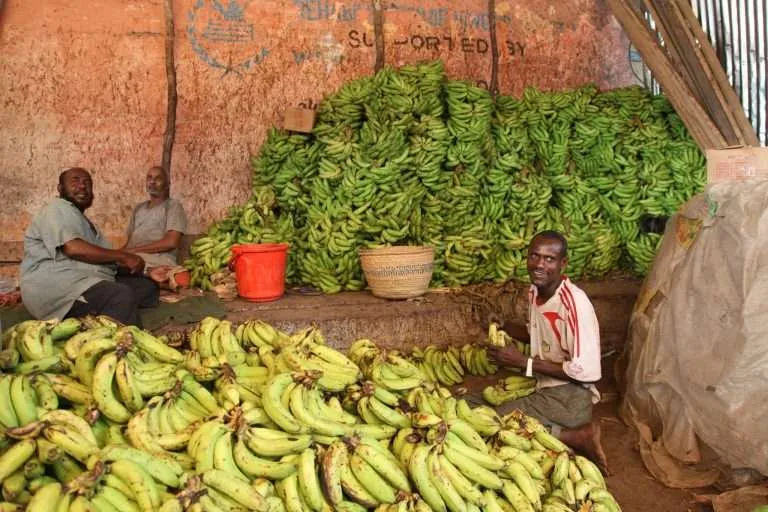
Photo: Mendefera Market - David Stanley
Documented cases show that Eritrea deportation consequences are severe and consistent. People deported or forcibly returned to Eritrea face arrest on arrival. They are taken to military detention centres. They are tortured during interrogation. They are forced back into national service under harsh conditions. This article examines the evidence from multiple countries, the documented consequences for returnees, and why any forced return to Eritrea violates international law.[1]
The principle of non-refoulement means that no country should send a person back to a place where they face serious harm. For Eritrea, this principle is clear. Every major human rights organisation and UNHCR agree that returning people to Eritrea puts them at risk of persecution, torture, and inhuman treatment. Despite this, forced returns have happened, and the results are exactly what experts predict.
Returnees detained on arrival
Documented in all known return cases
Primary military detention facility
Detention without charge or trial
Documented Forced Returns to Eritrea
Several countries have been involved in the forced return of Eritrean nationals, either directly or indirectly. Each case provides evidence of what happens when people are sent back. Understanding these patterns is essential for asylum cases and for challenging any government's attempt to deport Eritreans.
Israel: The "Voluntary Return" Programme
Between 2013 and 2018, Israel operated a programme that pressured Eritrean and Sudanese asylum seekers to leave. The government called it "voluntary departure." In reality, asylum seekers were given a choice: leave to a "safe third country" (usually Rwanda or Uganda) or face indefinite detention at the Holot facility. Thousands left under this pressure. They were sent to Rwanda or Uganda, but with no legal status or protection in those countries. Many ended up being trafficked, detained, or forced onward. Some ultimately returned to Eritrea, either voluntarily out of desperation or through deportation chains through Sudan.[2]
Reports from those who reached Eritrea confirm the pattern: arrest at the border or airport, interrogation by military intelligence, and detention. Israel's programme was widely criticised by UNHCR and human rights organisations as a violation of international refugee law.
Egypt: Direct Deportations
Egypt has deported Eritrean nationals directly to Eritrea on multiple occasions. Egyptian authorities have arrested Eritreans crossing the Sinai Peninsula or living without documentation in Egyptian cities. In some cases, deportees were handed over to Eritrean authorities at the border or at Asmara airport. UNHCR documented cases where Eritreans deported from Egypt were immediately detained on arrival in Eritrea. These deportations occurred despite Egypt being a signatory to the 1951 Refugee Convention.[3]
Sudan: Forced Returns and Extraditions
Sudan has a long and documented history of returning Eritrean nationals to Eritrea. The Sudanese and Eritrean security services have cooperated to intercept Eritreans in eastern Sudan, particularly near the border town of Kassala. In some cases, Eritrean security agents operated inside Sudan to identify and capture nationals who had fled. Returned individuals were transferred directly to Eritrean military custody. This cooperation continued even during periods when Sudan was supposed to be protecting Eritrean refugees under UNHCR mandate.[4]
Europe: Limited but Attempted
European countries have generally not carried out direct deportations to Eritrea. However, some governments have explored the possibility. In 2019, Denmark's immigration service published a controversial report suggesting that conditions in Eritrea had improved, which was widely rejected by experts and later withdrawn. Switzerland deported a small number of Eritreans in earlier years, though its Federal Administrative Tribunal subsequently ruled that returns were not safe. The European Court of Human Rights has issued rulings that effectively prevent direct removal of Eritreans from European countries to Eritrea.[5]
What Happens on Arrival
The evidence from multiple sources paints a consistent picture of what happens when Eritreans are returned. The pattern does not change depending on how or why the person returns. Whether someone was deported, returned under pressure, or came back on their own, the consequences are the same.
Airport and border screening. All arrivals at Asmara International Airport or land border crossings are screened by security personnel. Military intelligence officers check the identity and travel history of every arriving Eritrean. Those identified as having left illegally, evaded national service, or sought asylum abroad are immediately separated and taken into custody.
Immediate detention. Returnees are taken to military detention facilities. The most commonly reported facility is Adi Abeto, a military prison near Asmara. Other known detention sites include Adi Quala, Dahlak Kebir island prison, and various military camps across the country. There is no formal charge. There is no court hearing. There is no access to a lawyer. Detention is indefinite.[6]
Interrogation. Detainees are interrogated, often under torture. The questions focus on how they left the country, who helped them, who they know abroad, whether they applied for asylum, and what they told foreign governments about Eritrea. The interrogators want to identify smuggling networks and anyone who may have spoken against the government. Information obtained under torture is used to arrest family members and associates.
Documented Consequences for Returnees
| Consequence | Details | Evidence Level |
|---|---|---|
| Arrest on arrival | Immediate detention at airport or border by military intelligence | Confirmed — multiple sources |
| Military detention | Held at Adi Abeto, Dahlak Kebir, or military camps — indefinite, no charge | Confirmed — UN, HRW, AI |
| Torture and ill-treatment | Beatings, tying in stress positions ("helicopter"), solitary confinement, exposure | Confirmed — UN CoI |
| Interrogation | Questions about escape route, contacts abroad, asylum claims, anti-government activity | Confirmed — multiple testimonies |
| Punishment of family | Family members questioned, detained, fined (50,000 ERN penalty for illegal exit) | Confirmed — UN CoI, HRW |
| Forced re-conscription | Returned to national service under harsher conditions, assigned to hard labour units | Confirmed — multiple sources |
| Disappearance | Some returnees not heard from again — feared held in secret detention | Reported — difficult to verify |
Detention Conditions
Eritrean detention facilities are among the worst documented anywhere in the world. The UN Commission of Inquiry on Human Rights in Eritrea described conditions that amount to crimes against humanity. Detainees are held in underground cells, shipping containers, and overcrowded rooms. Many facilities have no natural light. Sanitation is minimal or absent. Food and water are limited. Medical care is not provided.[7]
Torture methods are well documented. They include tying detainees in a position called the "helicopter," where the wrists and ankles are bound together behind the back. Detainees are beaten with sticks, cables, and rifle butts. Some are held in solitary confinement for months. Sexual violence against women in detention is widely reported. Deaths in custody occur regularly but are not officially acknowledged.
The families of returnees also suffer. Under Eritrean law, the family of anyone who leaves the country illegally can be fined 50,000 Eritrean Nakfa (a huge sum in a country where average wages are extremely low). Family members may also be detained and questioned about the whereabouts and activities of their relative abroad. This collective punishment is used as a tool of control.
Re-conscription: Return to Service Under Punishment
After a period of detention and interrogation, many returnees are forced back into national service. However, they do not return to their previous assignment. Instead, they are placed in punishment units. These units perform hard labour under strict military discipline. The conditions are harsher than regular service. Returnees are considered deserters, and their escape is seen as a betrayal of the state. The punishment is meant as an example to others.[8]
There is no age limit for re-conscription. Even those who have been abroad for many years and are well past typical military age are returned to service. The purpose is not military readiness but punishment and control. For more on Eritrea's national service system, see our country conditions updates.
UNHCR advises against all forced returns to Eritrea. Eritrean asylum seekers who have exited the country illegally are at risk of persecution, including detention without charge, torture, and forced conscription upon return.
UNHCR, Eligibility Guidelines for Assessing the International Protection Needs of Asylum-Seekers from Eritrea, 2024
Case Patterns: What Happened to "Daniel"
To protect identities, I will call him Daniel. Daniel left Eritrea in 2014 at the age of 22. He had been in national service for four years. He crossed the border to Sudan at night and eventually made his way to Israel, where he lived and worked for three years. In 2017, Israeli authorities pressured him to leave under the "voluntary departure" programme. He was told he would go to Rwanda with a visa and money to start a new life.
Daniel arrived in Rwanda. He received $3,500 and a tourist visa. Within days, his documents were taken by people who met him at the airport. He had no legal status, no work permit, and no protection. He was told he could be smuggled to Uganda, then to South Sudan, then to Europe. Instead, the smuggling network collapsed. Daniel was stranded in Uganda without money or documents. After months of desperation, he attempted to return to Sudan, hoping to find work.[9]
In eastern Sudan, Daniel was intercepted by Eritrean security agents working with local contacts. He was transferred across the border. At the Eritrean military checkpoint, he was arrested immediately. He was taken to a military facility near Tesseney and then transferred to Adi Abeto. He was interrogated for weeks. He was tortured. After several months in detention, he was assigned to a military unit in western Eritrea under punishment conditions. His family was fined. His brother, suspected of helping him leave, was also detained.
Daniel's case is not unique. It follows the exact pattern documented by the UN, UNHCR, and human rights organisations. Every element — the pressure to leave Israel, the lack of protection in Rwanda, the capture in Sudan, the detention and torture in Eritrea — is consistent with hundreds of other testimonies.
Why Refoulement to Eritrea Is Never Acceptable
International law is clear on this point. The 1951 Refugee Convention, Article 33, prohibits the return of any person to a country where their life or freedom would be threatened. The Convention Against Torture, Article 3, prohibits return to a country where there are substantial grounds for believing a person would be subjected to torture. The European Convention on Human Rights, Article 3, provides absolute protection against torture and inhuman treatment.[10]
For Eritrea, the evidence shows that every returnee faces these risks. It does not matter whether the person was a high-profile political opponent or an ordinary citizen who simply left without permission. The act of leaving illegally is itself treated as a crime by the Eritrean government. Seeking asylum abroad is viewed as a political act of disloyalty. Therefore, the risk is not theoretical — it is documented, consistent, and ongoing.
Any removal to Eritrea violates non-refoulement. No government should deport, remove, or pressure Eritrean nationals to return to Eritrea. If you or someone you know faces deportation to Eritrea, seek legal help immediately. An expert witness report documenting the consequences of return can be decisive in preventing removal.
Implications for Asylum Claims
The documented consequences of return to Eritrea have direct implications for every asylum case involving an Eritrean national. First, the evidence of what happens to returnees supports the argument that removal to Eritrea would violate non-refoulement. Second, the pattern of detention, torture, and re-conscription establishes that the risk is real and applies to all Eritreans who left illegally. Third, the evidence from multiple countries and multiple time periods shows that this is not an isolated problem but a systematic practice.[11]
For asylum seekers, this evidence should be included in every claim. Country reports, human rights documentation, and expert witness reports that address the consequences of return are essential components of a strong case. For legal representatives, the documented pattern of return consequences provides a solid foundation for arguing against removal in any jurisdiction. Review our asylum guide for additional practical advice on building a strong case.
Documented treatment of deportees, from arrest on arrival to military detention, can be applied to a specific claimant in our Eritrea country expert witness reports.
Conclusion
The evidence is clear and consistent. Eritreans who are deported or forcibly returned face arrest, military detention, torture, interrogation, and forced re-conscription. Their families face punishment. These consequences apply regardless of the person's profile — anyone who left Eritrea illegally is at risk. The documented cases from Israel, Egypt, Sudan, and elsewhere all confirm the same pattern. No country should return anyone to Eritrea. For asylum seekers, this evidence is a powerful part of your case. Make sure your legal team has access to current country reports and expert witness assessments that address these documented consequences.
Footnotes
- Convention Relating to the Status of Refugees (1951), Art 33 (non-refoulement); Convention Against Torture (1984), Art 3; UNHCR, 'Eligibility Guidelines for Assessing the International Protection Needs of Asylum-Seekers from Eritrea' (2024)
- Human Rights Watch, 'Make it Quick: Israel's Deportation of Asylum Seekers to Africa' (2014); Hotline for Refugees and Migrants (Israel), 'Where There Is No Free Will: Israel's "Voluntary Return" Procedure' (2018)
- UNHCR, 'UNHCR Concerned Over Deportations from Egypt to Eritrea' (2016); Human Rights Watch, 'Egypt: Don't Deport Eritreans to Danger' (2018)
- UN Human Rights Council, 'Report of the Commission of Inquiry on Human Rights in Eritrea' (2015) A/HRC/29/42, paras 350-365; Human Rights Watch, 'Service for Life: State Repression and Indefinite Conscription in Eritrea' (2019), pp 65-72
- European Court of Human Rights, M.O. v Switzerland (App No 41282/16) [2017]; Danish Immigration Service, 'Eritrea: National Service, Exit and Entry' (2019) — subsequently withdrawn
- UN Human Rights Council, 'Detailed Findings of the Commission of Inquiry on Human Rights in Eritrea' (2016) A/HRC/32/CRP.1, paras 720-755; Amnesty International, 'Eritrea: 20 Years of Independence, but Still No Freedom' (2013)
- UN Commission of Inquiry on Human Rights in Eritrea, 'Report' (2016) A/HRC/32/47, paras 45-90 (finding crimes against humanity including enslavement, imprisonment, torture, persecution, and enforced disappearance)
- Human Rights Watch, 'Service for Life: State Repression and Indefinite Conscription in Eritrea' (2019), pp 40-52; UN Special Rapporteur on the Situation of Human Rights in Eritrea, Report (2025)
- Account based on patterns documented in: UNHCR, 'Report on Monitoring of Eritrean and Sudanese Nationals Relocated from Israel to Rwanda and Uganda' (2018); Hotline for Refugees and Migrants, 'The Dead End: Testimonies of People Deported from Israel to Rwanda and Uganda' (2018)
- Convention Relating to the Status of Refugees (1951), Art 33; Convention Against Torture (1984), Art 3; European Convention on Human Rights (1950), Art 3; INA s 241(b)(3) (US withholding of removal)
- UNHCR, 'Eligibility Guidelines for Assessing the International Protection Needs of Asylum-Seekers from Eritrea' (2024), paras 9-22; UK Upper Tribunal, MST and Others (national service — risk categories) Eritrea [2016] UKUT 443 (IAC)
Sources
- UN Human Rights Council, Report of the Commission of Inquiry on Human Rights in Eritrea, 2016
- Amnesty International, Eritrea Country Page and Annual Reports, 2025
- Hotline for Refugees and Migrants, The Dead End: Testimonies of People Deported from Israel to Rwanda and Uganda, 2018
- UK Home Office, Country Policy and Information Note: Eritrea — National Service and Illegal Exit, 2025
- European Court of Human Rights, M.O. v Switzerland (App No 41282/16) [2017]
Need an expert witness report for your case?
Our country experts provide independent reports for asylum and immigration cases in the UK, US, Canada, and EU.
Order an expert witness report |
Find a country expert witness |
About our expert team