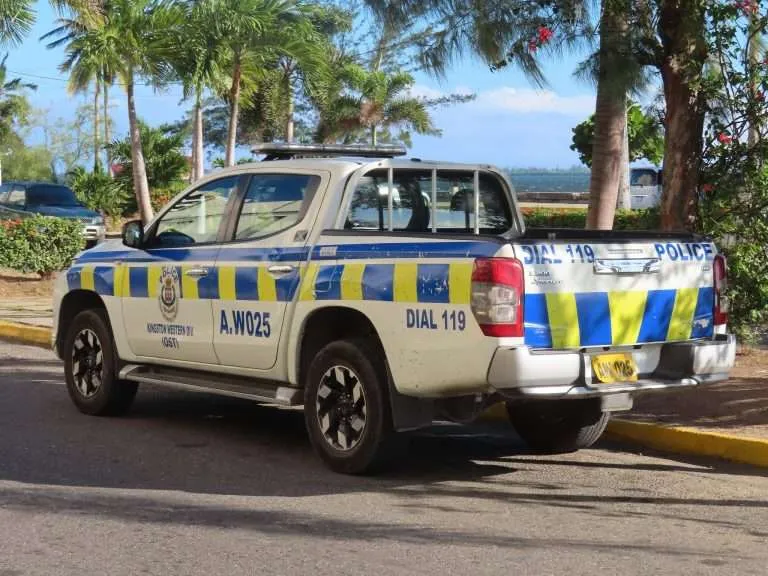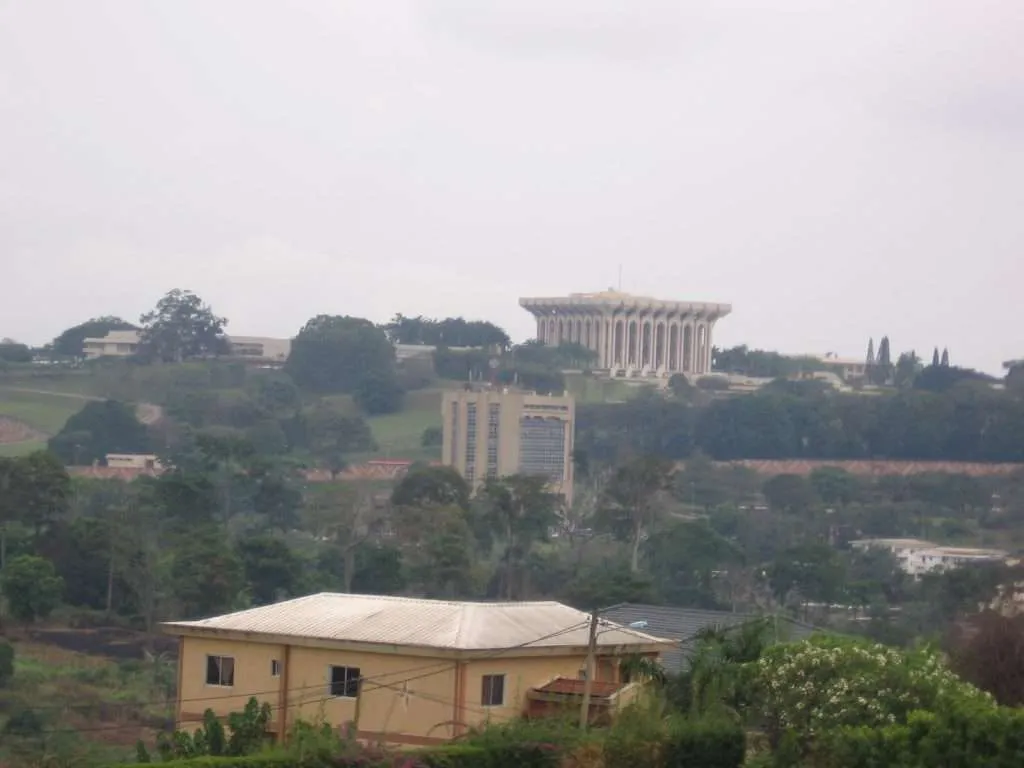
Photo: Presidential palace - Dorine Ruter
Cameroon country conditions have worsened since President Paul Biya won an eighth term in October 2025. Security forces killed at least 48 people in the protests that followed, according to UN sources, and arrested hundreds more.[1] An opposition leader died in military detention, and the main challenger now lives in exile. At the same time, the armed conflict in the two English-speaking regions is in its ninth year, and Boko Haram and the Islamic State West Africa Province (ISWAP) still attack villages in the Far North. In addition, the state jails journalists and prosecutes gay people under the Penal Code.
This country report is for UK and US lawyers who act for Cameroonian asylum seekers. It covers the political context, the main conflicts, the treatment of specific groups, the legal framework, internal relocation and return risk. It also explains the official position in the UK, the US and Canada. For a detailed risk assessment of the Anglophone conflict alone, see our separate guide to the Cameroon Anglophone crisis.
Killed in post-election protests, October 2025 (UN sources)
Internally displaced in the Far North (IOM, via UNHCR, 2026)
Freedom House score, 2026 (Not Free)
RSF World Press Freedom Index, 2026
Cameroon country conditions: summary for asylum cases
Short answer: Cameroon country conditions combine an authoritarian state with three separate crises, and each one creates its own risk groups. Freedom House rates the country "Not Free", with a score of 15 out of 100 in 2026. It says due process safeguards are routinely violated.[2] The UN Human Rights Committee reviewed Cameroon on 22 and 23 October 2026. According to the UN Geneva summary, its experts said they were "very concerned" that military courts try civilians, and they criticised the very broad definition of terrorism in national law.[3]
In our experience, most claims fall into one of these risk profiles:
- opposition members, protesters and people who backed Issa Tchiroma Bakary in the 2025 election;
- Anglophones suspected of supporting separatists, and civilians who face reprisals from armed groups;
- people in the Far North who face Boko Haram or ISWAP, including members of vigilance committees;
- journalists, human rights defenders and lawyers;
- lesbian, gay, bisexual and transgender (LGBT) people;
- failed asylum seekers and diaspora activists returned from abroad.
Official guidance is also missing. In the UK, the Home Office withdrew all its Cameroon country policy notes in August 2024 and did not replace them.[4] Moreover, the US ended Temporary Protected Status (TPS) for Cameroon in August 2025.[5] As a result, decision makers in both countries often rely on general sources, and a well-sourced expert report can carry real weight.
| Indicator | Latest figure | Source and date |
|---|---|---|
| Freedom in the World score | 15/100 (Not Free) | Freedom House, 2026 |
| World Press Freedom Index | 133rd of 180 (score 40.88) | RSF, 2026 |
| Journalists in prison | 5 | CPJ prison census, cited July 2025 |
| Reported conflict deaths, January to June 2025 | 326 in 547 events | ACLED, compiled by ACCORD, August 2025 |
| Forcibly displaced people in Cameroon | 2,213,721 | UNHCR data portal, 2026 |
| Refugees hosted in Cameroon | 415,251 | UNHCR data portal, 2026 |
| People in need of humanitarian aid | 2.9 million | Humanitarian Response Plan 2026, via Sida |
| People on death row | About 100 | UN Human Rights Committee, October 2026 |
Political context: Biya's eighth term and the succession question
Any assessment of Cameroon country conditions starts with the presidency. Paul Biya has held power since 1982 and is now 93 years old. His party, the Cameroon People's Democratic Movement (CPDM), controls parliament and the state. In practice, the courts, the electoral body and the security forces do not act as independent checks on the presidency.[2]
The October 2025 election
The main opposition leader could not stand. In July 2025, the electoral body ELECAM rejected the candidacy of Maurice Kamto, who came second in 2018. On 5 August 2025, the Constitutional Council dismissed his appeal, and he did not take part in the race.[6] Before the vote, the government banned several opposition gatherings. In August, police also arrested more than 50 people, including Kamto supporters, outside the Constitutional Council in Yaoundé.[1]
The vote took place on 12 October 2025. The Constitutional Council gave Biya 53.66% and Issa Tchiroma Bakary, a former government minister, 35.19%. However, Tchiroma said that he had won.[7] Protests then spread to Douala and several other cities. According to Amnesty International, security forces used "excessive and unnecessary force".[1]
The post-election crackdown
Sources disagree on the death toll. UN sources cited by Reuters put it at 48 or more, while opposition sources told Human Rights Watch (HRW) that 55 people died. In contrast, the government admits 16 deaths.[8] We prefer the UN figure, because it is independent and it is the one the UN Human Rights Committee used in October 2026.[3]
The number of arrests is also disputed. A Committee expert, citing the UN, said more than 2,500 people were arrested during and after the election. However, the government delegation told the Committee that police arrested 985 people and that courts convicted 66 of them in October 2026.[3] The gap between these figures is large. Therefore, an expert should give both and explain the source of each.
Anicet Ekane, the 74-year-old leader of the MANIDEM party, supported Tchiroma. Police arrested him in Douala on 24 October 2025, and the authorities moved him to the Secretariat of State for Defence (SED) in Yaoundé. He died there on 1 December 2025. The government said he died "following an illness". In contrast, his lawyers said guards took his oxygen machine at the time of arrest and that he never saw a judge.[8] The EU delegation expressed "deep sadness" and called again for the release of everyone "arbitrarily detained" since the election.[9]
Tchiroma fled to Nigeria and then to Gambia, where he has stayed since 7 November 2025. The Gambian government confirmed that it was hosting him on humanitarian grounds.[10] As a result, the official runner-up, who still claims he won, lives in exile, while his supporters inside Cameroon remain exposed.
The opposition after 2025
Pressure on Kamto's party, the Cameroon Renaissance Movement (MRC), did not end with the election. For example, the party spent months in a dispute with the Ministry of Territorial Administration over its December 2025 convention. Kamto and his first vice-president both resigned in September 2026. On 17 October 2026, the party then elected Tiriane Noah as its new president.[11] In addition, Amnesty reports that 11 of the 500 MRC supporters arrested at peaceful protests in 2020 were still in detention in 2025.[1]
The succession question
Biya's age makes succession a live issue for any risk assessment. In April 2026, parliament restored the post of vice president, which Cameroon abolished in 1972. Under Law No 2026/002 of 14 April 2026, the president appoints and dismisses the vice president, who would take over and finish the term if the presidency became vacant. However, the post was still empty in mid-October 2026. Biya also spent about 10 weeks abroad in mid-2026, and Cameroon had no new government by October.[12]
For asylum cases, this means a sudden transfer of power is possible, but nobody can predict who would hold it. Consequently, an expert should not assume that a change of leader would make opposition members safe. The same security services would remain in place.
The Anglophone crisis nine years on: what has changed
The conflict in the North-West and South-West regions began with peaceful protests by lawyers and teachers in 2016. It turned into an armed conflict after separatists declared a state called "Ambazonia" on 1 October 2017. Nine years later, the fighting continues at a lower level, but it has not ended, and it still shapes Cameroon country conditions in the two regions. This section only summarises the main changes. Our Anglophone risk assessment covers the actors, abuses and risk profiles in detail.
| Issue | 2016 to 2018 | 2025 to 2026 |
|---|---|---|
| Nature of the conflict | Protests, then armed groups after October 2017 | Fragmented armed groups, kidnapping and extortion |
| Deaths | At least 17 killed on 1 October 2017 alone (Amnesty) | Over 7,000 in total (Crisis Group, April 2026) |
| Displaced in the two regions | Displacement started in 2017 and peaked at about 1 million | 493,402 IDPs (OCHA estimate, 2026) |
| Schools | Separatist school boycott from 2017 | About 45% of schools not functioning (OCHA, early 2026) |
| Accountability | No trials of soldiers | Ngarbuh verdict (February 2026); separatist leaders arrested in Norway, Belgium and the US |
Three changes matter most for casework. First, the armed groups have split into many local units. Today they look more like criminal networks, which kidnap civilians for ransom and impose "taxes".[17] For example, UNFPA reported the abduction of almost 60 civilians in Noni (North-West) and Kurume (South-West) in May 2026.[18]
Second, displacement figures vary between sources. In February 2025, ACAPS reported more than 334,000 internally displaced people (IDPs) in the two regions.[19] However, the OCHA estimate on the UNHCR data portal in 2026 is 493,402.[15] We prefer the more recent OCHA figure, but both show that hundreds of thousands of people still cannot go home.
Third, accountability has started, but mostly for separatists abroad. Norway, Belgium and the US now prosecute diaspora leaders.[20] We covered this in our piece on the Belgian arrests of separatist leaders. In contrast, a military court gave only three soldiers and a militia member five to 10 years for the 2020 Ngarbuh massacre. No senior officer faced charges.[16] Meanwhile, International Crisis Group puts the total death toll at more than 7,000.[14]
Far North: Boko Haram, ISWAP and vigilance committees
The Far North is the second conflict zone in Cameroon country conditions reporting. It borders Nigeria and Chad, and it is the poorest part of the country. Boko Haram and its rival ISWAP have attacked the region since about 2014. They raid villages, kidnap civilians, lay improvised explosive devices on roads and attack army posts.[17] According to the UNHCR data portal, an IOM estimate puts the number of IDPs in the Far North at 510,855. That is more than in the two Anglophone regions combined.[15]
Attacks on civilians in 2025 and 2026
The attacks continue. In February 2025, suspected Boko Haram members attacked communities in Kolofata district, abducted residents including children and killed at least three people. In September 2025, Boko Haram claimed an attack in Mayo-Moskota that killed five people.[1] Furthermore, in late April 2026, armed groups attacked Tagawa village in Mayo-Sava. They kidnapped residents, committed sexual violence and looted food and livestock, and 543 people fled.[18]
On 17 September 2026, attackers killed 14 people around Medouga near Makary, in Logone-et-Chari. As a result, thousands of residents from more than 10 villages fled to Waza and Maroua.[21] Other reports give a death toll of 15. Because the figures are close, we use the lower Africanews figure.
Vigilance committees and the state
Vigilance committees are local self-defence groups that work with the army. Boko Haram treats their members as enemies, so they face a high risk of targeted killing. At the same time, the US State Department reports that vigilance committees, like Boko Haram itself, used and recruited children in their operations.[22] For this reason, a claimant who refused to join a committee, or who left one, may fear both the armed group and the local authorities.
The conflict data also show the scale of violence across the country. ACLED, a conflict monitoring project, recorded 326 deaths in 547 events in Cameroon from January to June 2025. Violence against civilians made up 233 of those events.[23] However, ACLED later added hundreds of events from a new Far North source. Therefore, these figures are a minimum and not a full count.
Refugees from the Central African Republic in the East
Cameroon also hosts 415,251 refugees, according to the UNHCR data portal.[15] Most come from the Central African Republic (CAR) and live in the East, Adamawa and North regions. Others are Nigerians who fled Boko Haram into the Far North. According to Sida, refugees and host communities in the East and Adamawa face overstretched services, few jobs and problems with documents and shelter.[17]
This matters for two kinds of cases. First, some claimants in the UK or US are CAR nationals who lived in Cameroon for years. Decision makers may argue that they can return to Cameroon, so an expert should check their legal status there. The US State Department notes that local officials did not always recognise refugee documents.[22] Second, the East shows how weak state services are outside the big cities, which is relevant to internal relocation.
Freedom of expression: journalists, critics and civil society
Press freedom is one of the weakest areas of Cameroon country conditions. The country ranks 133rd of 180 in the 2026 World Press Freedom Index of Reporters Without Borders (RSF). Its score fell from 42.75 in 2025 to 40.88.[24] The Committee to Protect Journalists (CPJ) says Cameroon is consistently among Africa's worst jailers of journalists. Its prison census counted five journalists behind bars, namely Amadou Vamoulké, Mancho Bibixy, Thomas Awah Junior, Tsi Conrad and Kingsley Fomunyuy Njoka.[25]
Amadou Vamoulké
Amadou Vamoulké ran the state broadcaster CRTV from 2005 to 2016. Police arrested him on 29 July 2016 on embezzlement charges. A Special Criminal Court sentenced him to 12 years in December 2022 and to a further 20 years in August 2024. As of early 2026, he was 76, in poor health and held in Kondengui prison in Yaoundé. No date had been set for his appeals.[26] He is the longest-held journalist in Cameroon, and in 2025 the European Parliament called for his release.[27]
The murder of Martinez Zogo
Martinez Zogo hosted "Embouteillage", a daily current affairs show on Amplitude FM, and he often spoke about corruption. Men abducted him near Yaoundé on 17 January 2023, and his body was found on 22 January. Investigators then arrested Léopold Maxime Eko Eko, the head of the General Directorate of External Intelligence (DGRE), and Justin Danwe, its director of operations. Prosecutors charged them and other DGRE agents with offences including complicity in torture.[28]
The trial of 17 defendants opened before the Yaoundé military court in March 2024. CPJ counted at least 15 postponements.[28] According to Amnesty, the trial resumed in September 2025 and was still running at the end of that year.[1] Notably, the government told the UN Human Rights Committee that the case went to a military court because security personnel took part alongside civilians.[3] For asylum cases, the case shows that the state's own intelligence service is accused of torturing and killing a journalist. It also shows that the process is slow and still under the control of military justice.
Other critics and civil society
The pressure goes beyond the media. In September 2024, a military court sentenced the Anglophone journalist Kingsley Njoka to 10 years on secession-related charges.[22] In April 2025, a court sentenced peace activist Abdu Karim Ali to life in prison after he denounced torture by a pro-government militia leader. Moreover, the authorities suspended the rights group REDHAC in December 2024. They later charged its board president, the lawyer Alice Nkom, and its director Maximilienne Ngo Mbe with "financing terrorism" and other offences.[1]
UN experts said in October 2026 that journalists, rights defenders, lawyers and academics face arrest, intimidation, torture and even killing.[3] Consequently, a claimant with a public profile as a journalist, blogger or activist may face real risk, especially if their work touches the army, corruption or the president.
LGBT people: criminalisation and arrests
Section 347-1 of the Penal Code (Law No 2016/007 of 12 July 2016) punishes sexual relations between people of the same sex. The penalty is six months to five years in prison and a fine of CFAF 20,000 to 200,000. The law applies to both men and women.[29] Furthermore, UN experts asked Cameroon in 2026 to revise a 2010 law that punishes sexual advances to a person of the same sex by electronic means. The government said it had no plans to ban discrimination based on sexual orientation or gender identity.[3]
Police enforce the law, and LGBT claims are among the clearest in Cameroon country conditions evidence. In February 2021, they arrested two transgender women, Shakiro and Patricia, in a restaurant. A court sentenced them to five years in May 2021, and a mob attacked them after their release pending appeal. In May 2023, the court of appeal upheld their convictions.[29]
Arrests continued in 2024, 2025 and 2026. According to the Human Dignity Trust:[29]
- on 30 September 2024, police raided the group Alternatives-Cameroun and arrested 13 people, and detainees were reportedly forced to undergo anal examinations;
- in April 2025, a court gave counsellor Denis Watonwa the maximum five-year sentence, and the government shut the organisation down;
- in October 2025, police arrested five men in an apparent entrapment operation, and a court sentenced them to four months without evidence of sexual activity;
- in August 2026, police arrested more than 60 people perceived as LGBT in Douala, and most were released only after paying informal "bail".
For asylum cases, the risk comes from the police, the courts and society at the same time. Therefore, internal relocation and "discretion" arguments do not answer the claim. In the UK, the Supreme Court rejected the discretion test in HJ (Iran) in 2010, and our guide to why discretion reasoning fails sets out the case law.
Torture and detention: SED, DGRE and police cells
Torture is a constant feature of Cameroon country conditions, and it is not limited to the conflict zones. The SED in Yaoundé is the best-known site. HRW documented 26 cases of incommunicado detention and enforced disappearance there in 2018 and 2019, including 14 cases of torture.[30] The same facility held Anicet Ekane until his death in December 2025.[8] In addition, the DGRE, the foreign intelligence service, is at the centre of the Martinez Zogo murder case.[28]
Ordinary detention is also harsh. In 2026, UN experts raised unsanitary police cells, no access to medical care and reports of malnutrition.[3] The US State Department reports that about 75% of pretrial detainees, roughly 14,300 people, faced only misdemeanour charges. The law allows up to 18 months of pretrial detention, but many people waited years for trial.[22] HRW also reported that a 36-year-old man died in police custody in Ngaoundéré in January 2025 after reported mistreatment during questioning.[8]
The government points to some progress. It told the UN that the national mechanism for the prevention of torture has made more than 2,000 visits since 2024. It also said that it sanctioned 15 gendarmes for human rights violations in 2025.[3] However, these numbers are small compared with the scale of arrests. In our view, they do not show effective state protection for a person whom the state itself suspects.
Legal framework: the anti-terrorism law and military courts
Law No 2014/028 of 23 December 2014 on the suppression of acts of terrorism is central to many political prosecutions. It defines terrorism in broad terms, and it carries the death penalty. It also gives military courts power over terrorism cases, including cases against civilians.[31] In 2026, UN experts said military courts have exclusive jurisdiction over terrorism offences even when civilians are charged. They also said about 100 people were on death row in May 2026, around half of them for a vaguely defined terrorism offence.[3]
The government says the 2014 law is general and is not used to silence critics.[3] However, the evidence points the other way. For example, a military court sentenced the Anglophone separatist leaders to life in 2019.[32] In 2024, the government critic Steve Akam also appeared before the Yaoundé military court on terrorism charges.[22] Cameroon has not carried out an execution in more than 30 years, according to its own delegation.[3] Nevertheless, the death penalty remains on the books.
Other laws matter for specific profiles:
- Penal Code section 347-1: same-sex sexual relations, six months to five years;[29]
- Penal Code section 277-1: genital mutilation, 10 to 20 years;[33]
- Charges of "rebellion", "insurrection" and "hostility against the homeland": used against post-election detainees and opposition supporters.[8]
For casework, the key point is simple. Prosecution itself can amount to persecution when the state uses vague terrorism or rebellion charges against a political opponent. In particular, a trial in a military court with no fair hearing adds to the risk.
Women and girls
Women in the conflict zones face sexual violence from armed groups and, in some cases, from security forces. In May 2026, UNFPA reported a "severe surge" in physical violence in the Anglophone regions and the Far North. It also recorded extortion, armed robbery and sexual assaults, including an attack on an eight-year-old girl in Mamfe.[18] In the Far North, survivors have little access to medical, psychological or legal help.[18]
Female genital mutilation (FGM) is rare at national level but not absent. The 2004 Demographic and Health Survey found that 1.4% of women aged 15 to 49 had undergone FGM, and the Far North had the highest rate at 5.4%. Section 277-1 of the Penal Code has punished genital mutilation since 2016. Yet researchers found no evidence of any prosecution.[33] Because these data are old, an expert should treat them with care and add field evidence where possible.
Child marriage is more common. According to UNICEF data from 2018, 31% of women aged 20 to 24 married before 18, and 11% before 15. The legal minimum age is 18, but the authorities enforce it poorly.[22] Displaced Anglophone women in Douala and Yaoundé also face sexual exploitation in housing and survival sex, as IRB Canada reports.[14]
Internal relocation
Decision makers often argue that a claimant can move to another part of Cameroon. However, Cameroon country conditions evidence rarely supports this for people the state itself targets. The answer depends on who the persecutor is. If the risk comes from the state, relocation will rarely work. The police, gendarmerie, SED and DGRE operate nationwide, and the main detention sites are in Yaoundé. The same applies to opposition supporters and LGBT people, who face the police in every city.
If the risk comes from a non-state actor, the picture is mixed. On the one hand, some experts told IRB Canada that many Anglophones live successfully in Douala and Yaoundé and are physically safer there. On the other hand, landlords often refuse to rent to displaced Anglophones or raise rents, and French dominates police stations, courts and hospitals.[14] The state has no specific programme for internally displaced people, and the UN calls its support "insufficient".[14]
Relocation from the Far North raises other issues. Many people displaced by attacks stay within the region, for example in Waza or Maroua, where aid is scarce.[21] In the UK, the test is whether relocation is reasonable under paragraph 339O of the Immigration Rules. In the US, 8 CFR 1208.13(b)(3)(ii) presumes that relocation is not reasonable when the persecutor is the government.[34]
Return risk for deportees and failed asylum seekers
The strongest evidence on return comes from HRW's 2022 report "How Can You Throw Us Back?". HRW interviewed 41 Cameroonians deported from the US between 2019 and January 2021, most of them Anglophones. It found that the authorities detained or imprisoned at least 39 returnees and that state agents raped three women in custody. Officials also accused returnees of supporting separatists and of "telling lies" about the government by claiming asylum.[35]
That report had a direct legal effect. In 2024, the US approved the return of 27 of the Cameroonians it had deported in 2020. It did so partly because ICE had let Cameroonian authorities find their confidential asylum papers. DHS then gave them humanitarian parole so that they could apply for asylum again.[36]
The risk has not gone away. In January and February 2026, the US deported 17 non-Cameroonian nationals to Cameroon under a secret agreement, and Cameroonian authorities detained them in Yaoundé without legal basis.[37] In October 2026, HRW published a further report on US removals to third countries in Africa. It said some people sent to Cameroon were then returned to their countries of origin, in possible breach of the rule against refoulement.[38]
These reports concern returns from the US. However, Cameroon country conditions on arrival do not depend on the removing state, because the same airport and the same security services receive returnees from the UK. Therefore, an expert should address the airport checks, the risk of questioning at the SED or by the DGRE, and whether the authorities could learn about the asylum claim. A person with an online profile abroad faces greater risk, especially after the 2025 crackdown on Tchiroma supporters.
Evidence point: ask the Home Office or DHS how it will protect the claimant's asylum file on removal. HRW documented a case in which Cameroonian officials found confidential asylum documents, and the US later allowed 27 deportees to return because of it.
UK, US and Canada: official positions
United Kingdom
The Home Office withdrew its Cameroon country policy and information notes (CPINs) on 14 August 2024. According to the withdrawal notice, they "are no longer relevant and are not being updated or replaced".[4] The set covered background information, actors of protection, internal relocation and the North-West/South-West crisis, all dated December 2020. We found no Upper Tribunal country guidance case on Cameroon. As a result, there is no official view on Cameroon country conditions, and judges must weigh the evidence in each case.
The Home Office has, however, singled out Cameroon on migration grounds. In March 2026, it imposed an "emergency brake" on sponsored study visas for nationals of Cameroon, Afghanistan, Myanmar and Sudan. It said asylum claims by Cameroonian and Sudanese students in the year to September 2025 rose to more than 330% of the 2021 level.[39] This policy does not change the legal test for protection. Still, it may make caseworkers more sceptical of claims from former students, so the evidence on the individual profile becomes even more important.
United States
DHS designated Cameroon for TPS in 2022 and ended the designation on 4 August 2025. It said the conflicts mainly affected three of Cameroon's ten regions. About 5,200 people held Cameroon TPS at that time.[5] In CASA, Inc v Noem, the Fourth Circuit refused on 21 July 2025 to postpone the termination. Nevertheless, it noted that TPS holders may still apply for asylum, withholding of removal and protection under the Convention Against Torture.[40] Many former TPS holders now need country evidence for those claims.
Canada
The Immigration and Refugee Board of Canada (IRB) still publishes research on Cameroon. Its June 2026 response CMR202580.E covers the treatment of Anglophones, including women and those living in Douala and Yaoundé, from 2024 to May 2026.[14] UK and US lawyers can use IRB responses as independent background evidence, because they collect views from named experts and NGOs.
What an expert report on Cameroon should cover
A good expert report on Cameroon country conditions should place the claimant in the right conflict, region and period. For an opposition supporter, it should deal with the 2025 crackdown, the charges used against detainees and the treatment of MANIDEM, MRC and Tchiroma supporters. A claimant from the Far North needs a report that names the armed group, the division and the role of vigilance committees. For a journalist, activist or LGBT claimant, it should link the profile to recent documented cases.
The report should also cover sufficiency of protection, internal relocation and the risks on return. Where the sources disagree, as on the post-election death toll or displacement figures, it should say so and explain which figure it prefers. To instruct a specialist, see our Cameroon expert witness page or find an expert witness for your case.
Conclusion
Cameroon country conditions have become harsher for political opponents since the October 2025 election. Security forces killed protesters, held hundreds of people, and an opposition leader died in state custody. Meanwhile, the Anglophone conflict continues in its ninth year, and attacks in the Far North still displace thousands of people at a time.
For asylum cases, four points stand out. First, the security services that detain and torture suspects operate across the whole country. Second, the anti-terrorism law and the military courts turn political activity into a terrorism case. Third, LGBT people face arrest and prison under section 347-1 of the Penal Code. Finally, neither the UK nor the US has current official guidance on Cameroon. Consequently, up-to-date expert evidence on the claimant's profile is often what decides the case.
Footnotes
- Amnesty International, 'The State of the World's Human Rights: Cameroon 2025' (21 April 2026)
- Freedom House, 'Freedom in the World 2026: Cameroon' (2026)
- UN Geneva, 'Examen du Cameroun au Comité des droits de l'homme' (meeting summary, Human Rights Committee review of Cameroon's sixth periodic report, 23 October 2026)
- Home Office, '[Withdrawn] Cameroon: country policy and information notes' (gov.uk, withdrawn 14 August 2024)
- Department of Homeland Security, 'Termination of the Designation of Cameroon for Temporary Protected Status' 90 Fed Reg No 106 (4 June 2025), FR Doc 2025-10236
- Arab News (AFP), 'Cameroon court rejects opposition leader's presidential candidacy: lawyer' (5 August 2025)
- Al Jazeera, 'Biya declared victor of Cameroon election: Why deadly protests broke out' (27 October 2025)
- Human Rights Watch, 'Cameroon: Prominent Opposition Leader Dies in Custody' (3 December 2025)
- Al Jazeera, 'Cameroon's opposition leader Anicet Ekane dies in military detention' (1 December 2025)
- Journal du Cameroun, 'Le gouvernement gambien confirme la présence d'Issa Tchiroma Bakary en Gambie' (24 November 2025)
- Benin Web TV, 'Cameroun: Tiriane Noah élue à la tête du MRC pour un mandat de cinq ans' (19 October 2026)
- Al Jazeera, 'Cameroonians await government reshuffle after Biya's return' (17 October 2026)
- Al Jazeera, 'Death toll rises in Cameroon's Anglophone region unrest' (3 October 2017), citing Amnesty International
- Immigration and Refugee Board of Canada, 'Cameroon: The situation and treatment of Anglophones by society and the authorities, including state protection (2024-May 2026)' (Query Response CMR202580.E, 4 June 2026), citing International Crisis Group, 'Pope's Visit Raises Hopes for Peace in Cameroon' (16 April 2026), OCHA, UNHCR, OHCHR and US Department of State
- UNHCR, 'Cameroon' Operational Data Portal (figures citing IOM, OCHA and the government, accessed 30 October 2026)
- Human Rights Watch, 'Cameroon: Massacre Trial Short on Justice' (24 February 2026)
- Sida, 'Humanitarian Crisis Analysis 2026: Cameroon' (March 2026)
- UNFPA, 'Cameroon Humanitarian Situation Report' (May 2026)
- ACAPS, 'Cameroon' country analysis (figures as of February 2025, citing OCHA and UNHCR)
- Human Rights Watch, 'Cameroonian Separatist Leaders Arrested in Belgium' (6 March 2026)
- Africanews, 'Thousands of residents arrive in Waza after Medouga massacres in Makary' (21 September 2026)
- US Department of State, '2024 Country Reports on Human Rights Practices: Cameroon' (12 August 2025)
- ACCORD, 'Cameroon, First Quarter 2025' and 'Cameroon, Second Quarter 2025: Update on incidents according to ACLED' (7 August 2025)
- Reporters Without Borders, 'Cameroon' (World Press Freedom Index 2026 country page)
- Committee to Protect Journalists, 'CPJ, Freedom House urge US government to maintain Cameroon's ineligibility for trade benefits' (17 July 2025)
- Committee to Protect Journalists, 'Amadou Vamoulké' (imprisoned journalist profile, updated 2026)
- European Parliament, 'Resolution of 3 April 2025 on the prosecution of journalists in Cameroon, notably the cases of Amadou Vamoulké, Kingsley Fomunyuy Njoka, Mancho Bibixy, Thomas Awah Junior, Tsi Conrad' (P10_TA(2025)0061)
- Committee to Protect Journalists, 'Martinez Zogo' (killed journalist profile)
- Human Dignity Trust, 'Cameroon' country profile (updated 18 September 2026)
- Human Rights Watch, 'Cameroon: Routine Torture, Incommunicado Detention' (6 May 2019)
- Amnesty International, 'Amnesty International urges Cameroon ensure accountability for human rights violations and abuses committed by government forces and armed groups' (AFR 17/9134/2018, 20 September 2018)
- Human Rights Watch, 'Cameroon: Separatist Leaders Appeal Conviction' (3 September 2019)
- 28 Too Many, 'FGM in Cameroon: Short Report' (November 2019)
- 8 CFR 1208.13(b)(3) (eCFR, current as of October 2026)
- Human Rights Watch, 'How Can You Throw Us Back? Asylum Seekers Abused in the US and Deported to Harm in Cameroon' (10 February 2022)
- Human Rights Watch, 'Deported Cameroonian Asylum Seekers Returned to US' (18 July 2024)
- Human Rights Watch, 'Abuses in Cameroon After US Deports Third-Country Nationals' (20 February 2026)
- The Namibian (AFP), 'US deportations to African countries unlawful and exploit suffering: rights group' (9 October 2026), reporting Human Rights Watch, 'To Scare People' (8 October 2026)
- Home Office, 'Visa brake imposed on 4 countries after widespread visa abuse' (gov.uk, 26 March 2026)
- CASA, Inc v Noem, No 25-1792 (4th Cir, 21 July 2025) (order denying emergency motion for postponement of agency action)
Sources
- Amnesty International, The State of the World's Human Rights: Cameroon 2025, 21 April 2026
- Freedom House, Freedom in the World 2026: Cameroon, 2026
- UN Geneva, Examen du Cameroun au Comité des droits de l'homme (meeting summary), 23 October 2026
- Home Office, [Withdrawn] Cameroon: country policy and information notes, withdrawn 14 August 2024
- Federal Register, Termination of the Designation of Cameroon for Temporary Protected Status (FR Doc 2025-10236), 4 June 2025
- Arab News, Cameroon court rejects opposition leader's presidential candidacy: lawyer, 5 August 2025
- Al Jazeera, Biya declared victor of Cameroon election: Why deadly protests broke out, 27 October 2025
- Human Rights Watch, Cameroon: Prominent Opposition Leader Dies in Custody, 3 December 2025
- Al Jazeera, Cameroon's opposition leader Anicet Ekane dies in military detention, 1 December 2025
- Journal du Cameroun, Le gouvernement gambien confirme la présence d'Issa Tchiroma Bakary en Gambie, 24 November 2025
- Benin Web TV, Cameroun: Tiriane Noah à la tête du MRC, 19 October 2026
- Al Jazeera, Cameroonians await government reshuffle after Biya's return, 17 October 2026
- Al Jazeera, Death toll rises in Cameroon's Anglophone region unrest, 3 October 2017
- Immigration and Refugee Board of Canada, Cameroon: The situation and treatment of Anglophones (2024-May 2026), CMR202580.E, 4 June 2026
- UNHCR, Operational Data Portal: Cameroon, accessed 30 October 2026
- Human Rights Watch, Cameroon: Massacre Trial Short on Justice, 24 February 2026
- Sida, Humanitarian Crisis Analysis 2026: Cameroon, March 2026
- UNFPA, Cameroon Humanitarian Situation Report (May 2026), May 2026
- ACAPS, Cameroon: country analysis, figures as of February 2025
- Human Rights Watch, Cameroonian Separatist Leaders Arrested in Belgium, 6 March 2026
- Africanews, Thousands of residents arrive in Waza after Medouga massacres in Makary, 21 September 2026
- US Department of State, 2024 Country Reports on Human Rights Practices: Cameroon, 12 August 2025
- ACCORD, Cameroon, Second Quarter 2025: Update on incidents according to ACLED, 7 August 2025
- Reporters Without Borders, Cameroon: World Press Freedom Index 2026, 2026
- Committee to Protect Journalists, CPJ, Freedom House urge US to maintain Cameroon's ineligibility for trade benefits, 17 July 2025
- Committee to Protect Journalists, Amadou Vamoulké, 2026
- European Parliament, Prosecution of journalists in Cameroon (resolution P10_TA(2025)0061), 3 April 2025
- Committee to Protect Journalists, Martinez Zogo, accessed October 2026
- Human Dignity Trust, Cameroon country profile, 18 September 2026
- Human Rights Watch, Cameroon: Routine Torture, Incommunicado Detention, 6 May 2019
- Amnesty International, Cameroon: urges accountability for violations by government forces and armed groups (AFR 17/9134/2018), 20 September 2018
- Human Rights Watch, Cameroon: Separatist Leaders Appeal Conviction, 3 September 2019
- 28 Too Many, FGM in Cameroon: Short Report, November 2019
- eCFR, 8 CFR 1208.13: Establishing asylum eligibility, accessed October 2026
- Human Rights Watch, How Can You Throw Us Back? Asylum Seekers Abused in the US and Deported to Harm in Cameroon, 10 February 2022
- Human Rights Watch, Deported Cameroonian Asylum Seekers Returned to US, 18 July 2024
- Human Rights Watch, Abuses in Cameroon After US Deports Third-Country Nationals, 20 February 2026
- The Namibian, US deportations to African countries unlawful and exploit suffering: rights group, 9 October 2026
- Home Office, Visa brake imposed on 4 countries after widespread visa abuse, 26 March 2026
- US Court of Appeals for the Fourth Circuit, CASA, Inc. v. Noem, No. 25-1792, order denying emergency motion, 21 July 2025
Need an expert witness report for your case?
Our country experts provide independent reports for asylum and immigration cases in the UK, US, Canada, and EU.
Order an expert witness report |
Find a country expert witness |
About our expert team