Last updated:
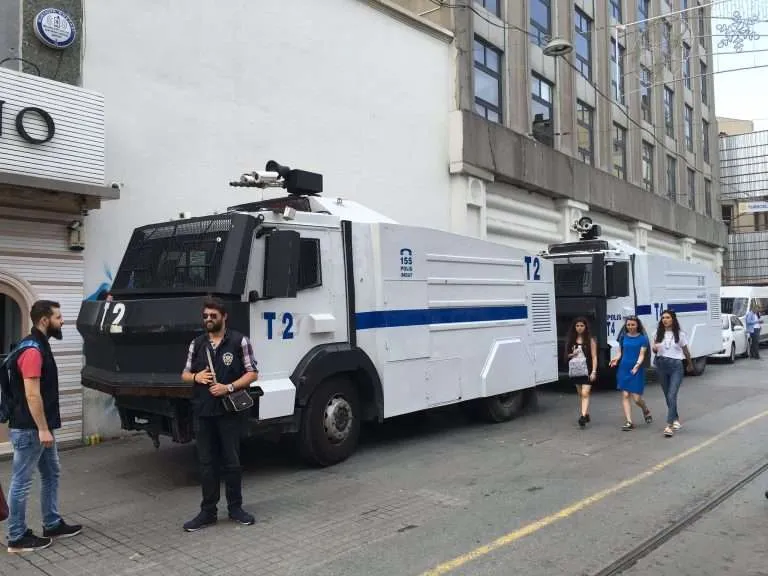
Photo: Azerbaijan Police - Lucy Ray
Azerbaijan police raids LGBTQ people through a systematic pattern of targeting that has continued for years. Police raid homes, use dating apps to entrap gay men, and detain them in abusive conditions. Despite decriminalising homosexuality in 2000, Azerbaijan offers no real protection to LGBTQ+ people. The police themselves are the main threat. This article documents the pattern of persecution and explains what it means for asylum claims.
The evidence comes from Human Rights Watch, Amnesty International, the Council of Europe, and Azerbaijani civil society organisations. The pattern is clear and well documented. Azerbaijan police raids LGBTQ people with impunity, and the state does nothing to stop it.
Detained in 2017 crackdown alone
Anti-discrimination protections
Officers prosecuted for LGBTQ abuse
Dating app entrapment operations
Legal Status: Decriminalised but Unprotected
Azerbaijan decriminalised consensual same-sex sexual acts in 2000 when it revised its Criminal Code after joining the Council of Europe.[1] On paper, this means being gay is not a crime. In practice, this legal change has meant almost nothing for LGBTQ+ Azerbaijanis.
There is no law against discrimination based on sexual orientation or gender identity. There is no recognition of same-sex relationships. There is no hate crime legislation that covers LGBTQ+ people. LGBTQ+ organisations cannot register officially. And most importantly, police act with complete impunity when they target gay men and transgender people.[2]
The gap between the law on paper and the reality on the ground is enormous. Decriminalisation removed one specific criminal offence. It did not change the attitudes of police, the government, or society. The absence of any protection means that LGBTQ+ people have no legal tools to defend themselves. When police abuse them, there is nowhere to complain. This makes Azerbaijan a particularly dangerous case for human rights assessment.
The 2017 Crackdown: Mass Arrests and Torture
In September 2017, Azerbaijani police launched a large-scale crackdown on LGBTQ+ people in Baku. Human Rights Watch documented that police detained more than 100 people in a matter of weeks.[3] The targets were mainly gay and bisexual men and transgender women.
Police carried out the operation in several ways. They raided homes and gathering places. They arrested people on the street based on their appearance. They used dating apps and social media to identify and locate targets. Once detained, the victims faced severe abuse.
In detention, people were subjected to forced medical examinations. Police forced some detainees to undergo HIV and STI testing without consent. Some detainees reported being beaten and tortured. Police demanded the names and contact details of other LGBTQ+ people. Many were photographed and fingerprinted. The purpose was clear: to create a database of LGBTQ+ individuals for future targeting.[4]
The 2017 crackdown was not a single event. It was a coordinated police operation that lasted several weeks. No official explanation was given. No one was charged with a crime, because homosexuality is not illegal. Instead, police used administrative charges like "hooliganism" or "disobeying police orders" to justify the detentions. Most people were held for 15 to 30 days.
Key point: The 2017 crackdown showed that decriminalisation does not equal safety. Police used vague administrative offences to detain people. The real reason was their sexual orientation. No police officer faced any consequences for the abuse.
The Pattern Continues: Dating App Entrapment
Since 2017, Azerbaijan police raids LGBTQ people through ongoing operations. The method has become more sophisticated. Police now primarily use dating apps like Grindr and Hornet to find and entrap gay men.[5]
The pattern is consistent. A plainclothes police officer creates a fake profile on a dating app. He arranges to meet a gay man. When the man arrives at the meeting place, police detain him. Sometimes they go to the man's home instead. The detainee is then taken to a police station. There, police threaten to tell his family he is gay. They may demand money. They may demand the names of other gay men. They may simply beat him and release him.
This is not rare. It happens regularly. LGBTQ+ Azerbaijanis have shared warnings about specific profiles and locations. But the police adapt their methods. They use different apps, different profiles, and different meeting locations. The threat is constant and unpredictable.
Figure 1: Documented incidents likely undercount the true number, as many victims do not report abuse. Source: Human Rights Watch, Amnesty International, local LGBTQ+ organisations, 2017-2025.
Forms of Police Targeting
The methods used by Azerbaijani police to target LGBTQ+ people follow clear patterns. Understanding these methods is important for asylum cases because they show the systematic nature of the persecution.
| Method | How it works | Consequences for victim |
|---|---|---|
| Dating app entrapment | Police create fake profiles, arrange meetings, detain person on arrival | Detention, beating, extortion, outing to family |
| Home raids | Police raid homes based on informant tips or app data | Arrest, forced medical exams, confiscation of phones |
| Street targeting | Police detain people based on appearance (especially transgender women) | Beating, administrative detention (15-30 days), public humiliation |
| Social media monitoring | Police monitor social media for signs of LGBTQ+ identity or activism | Summoning to police station, threats, surveillance |
| Informant networks | Police pressure detained LGBTQ+ people to name others | Expanding list of known LGBTQ+ individuals for future targeting |
Blackmail and Extortion by Police
One of the most common outcomes of Azerbaijan police raids LGBTQ people is blackmail. Police use the threat of "outing" — revealing the person's sexual orientation to their family — as a weapon. In Azerbaijani society, being identified as gay brings extreme shame on the family. Many families react with violence, expulsion, or worse.[6]
Police know this and use it strategically. After detaining a gay man, they may say: "We will call your father and tell him what you are." The person then has two choices. Pay a bribe, or face the consequences. Some men pay thousands of manats (the Azerbaijani currency) to keep police silent. Others cannot pay and are outed.
The extortion does not always end after one payment. Police may come back for more money. They may keep the person's phone data and threaten to release private photos. The victim has no way to stop this cycle. Going to the police to report the extortion would mean exposing themselves again. There is no safe option.
Azerbaijani police use a brutal combination of physical violence and blackmail against gay men and transgender women. They beat detainees, subject them to degrading treatment, and then threaten to expose them to their families unless they pay bribes.
Human Rights Watch, 'In the Crosshairs: Targeting of LGBT People in Azerbaijan,' 2017
Social Hostility and Family Violence
Police are not the only threat. LGBTQ+ Azerbaijanis also face severe hostility from society and their own families. Azerbaijan is a conservative society where traditional family honour plays a central role. Being gay is widely seen as a source of shame. This creates a dangerous environment even outside police operations.
Family violence. When families discover a relative is LGBTQ+, the response is often violent. Physical beatings, forced marriage (for women), and expulsion from the family home are common. In some cases, family members have committed so-called "honour" attacks against their own relatives.[7]
Employment discrimination. There is no legal protection against workplace discrimination. LGBTQ+ people who are identified risk losing their jobs. In a country where personal connections matter greatly for employment, being outed can destroy a person's career permanently.
No legal recourse. Because there is no anti-discrimination law, LGBTQ+ people cannot take legal action when they face discrimination or violence. The courts offer no remedy. Civil society organisations that try to help LGBTQ+ people cannot operate openly. The only LGBTQ+ groups work underground or from outside the country.[8]
No State Protection: Police as Persecutors
The central problem in Azerbaijan is that the police are the persecutors. This is the key fact for asylum claims. In most persecution cases, the question is whether the state can protect the person. In Azerbaijan, the state — through its police forces — is the one carrying out the abuse.
There is no independent complaint mechanism where LGBTQ+ people can report police abuse. The Internal Security Department of the Ministry of Internal Affairs is supposed to investigate police misconduct. In practice, no investigation has ever been opened into the abuse of LGBTQ+ people by police.[9]
LGBTQ+ organisations cannot operate openly in Azerbaijan. Several activists have been threatened, detained, or forced to leave the country. The government does not acknowledge that LGBTQ+ persecution exists. Officials have publicly expressed anti-LGBTQ+ views. This sends a clear message: the state will not protect LGBTQ+ people.
The Council of Europe and the European Court of Human Rights have criticised Azerbaijan's treatment of LGBTQ+ people. However, Azerbaijan has not implemented any of the recommended changes. The situation remains as it was.[10]
For asylum decision-makers: The fact that homosexuality is technically legal in Azerbaijan does not mean LGBTQ+ people are safe. The absence of criminalisation must be assessed alongside the well-documented pattern of police targeting, the lack of anti-discrimination protection, and the impossibility of obtaining state protection. Decriminalisation alone does not create safety.
Implications for Asylum Claims
LGBTQ+ asylum seekers from Azerbaijan face a specific challenge. Because homosexuality is not criminalised, some decision-makers may assume there is no persecution. This is wrong. The evidence clearly shows that Azerbaijan police raids LGBTQ people systematically, and the state offers no protection.
The UK Supreme Court's decision in HJ (Iran) [2010] UKSC 31 is directly relevant. LGBTQ+ Azerbaijanis cannot be told to "be discreet" to avoid police targeting. The persecution comes from the state itself. Being discreet does not protect against entrapment operations, home raids, or informant networks.[11]
An expert witness can provide crucial evidence in these cases. They can explain the gap between the legal framework and the reality on the ground. They can describe the specific methods police use to target LGBTQ+ people. They can also explain why the 2017 crackdown was not a one-off event but part of a continuing pattern.
Our expert database includes specialists who understand the specific conditions in Azerbaijan and the broader Caucasus region. For more country reports, visit our database.
Gay men facing police raids, dating-app entrapment and abusive detention can obtain case-specific evidence on return risk from our Azerbaijan country expert witness reports.
Conclusion
Azerbaijan presents a clear case of state-sponsored persecution against LGBTQ+ people. The police conduct raids, use dating apps for entrapment, and subject detainees to beatings, forced medical examinations, and extortion. The 2017 mass crackdown was the most visible incident, but the pattern of targeting has continued since then. Despite decriminalising homosexuality in 2000, Azerbaijan offers zero protection to LGBTQ+ people.
For LGBTQ+ Azerbaijanis seeking asylum, the evidence is strong. The state is the persecutor. There is no complaint mechanism. There is no anti-discrimination law. LGBTQ+ organisations cannot operate. The gap between legal decriminalisation and lived reality must be understood by asylum decision-makers. Expert evidence is essential in bridging this gap and ensuring that claims from Azerbaijan receive the serious attention they deserve.
Footnotes
- Criminal Code of the Republic of Azerbaijan (2000), replacing the Soviet-era Criminal Code that criminalised male homosexuality under Article 121
- ILGA-Europe, 'Annual Review of the Human Rights Situation of Lesbian, Gay, Bisexual, Trans and Intersex People: Azerbaijan' (2024)
- Human Rights Watch, 'Azerbaijan: Anti-Gay Crackdown' (October 2017)
- Human Rights Watch, 'Azerbaijan: Anti-Gay Crackdown' (2017); Amnesty International, 'Azerbaijan: Authorities Must End Horrifying Crackdown on LGBTI People in Baku' (2017)
- Human Rights Watch, 'Azerbaijan: Entrapment, Extortion of Gay Men Continue' (2019); Minority Azerbaijan, 'Report on Police Targeting of LGBTQ+ People Through Dating Apps' (2023)
- Human Rights Watch, 'In the Crosshairs: Targeting of LGBT People in Azerbaijan' (2017); OSCE ODIHR, 'Hate Crime Reporting: Azerbaijan' (2024)
- Amnesty International, 'Azerbaijan: LGBTI People Left Unprotected' (2020); Council of Europe Commissioner for Human Rights, 'Report Following Visit to Azerbaijan' (2019)
- Freedom House, 'Freedom in the World 2025: Azerbaijan' (2025); ILGA-Europe, 'Rainbow Europe: Azerbaijan Country Report' (2024)
- Council of Europe, European Commission against Racism and Intolerance (ECRI), 'Report on Azerbaijan' (2023)
- Council of Europe Commissioner for Human Rights, 'Report Following Visit to Azerbaijan' (2019); European Court of Human Rights, various judgments on Azerbaijan
- HJ (Iran) and HT (Cameroon) v Secretary of State for the Home Department [2010] UKSC 31
Sources
- Human Rights Watch, Azerbaijan: Anti-Gay Crackdown, October 2017
- ILGA-Europe, Annual Review 2024: Azerbaijan, 2024
- Council of Europe Commissioner for Human Rights, Report Following Visit to Azerbaijan, 2019
- Freedom House, Freedom in the World 2025: Azerbaijan, 2025
- ECRI (Council of Europe), Report on Azerbaijan, 2023
- UK Supreme Court, HJ (Iran) and HT (Cameroon) v SSHD [2010] UKSC 31, 2010
- OSCE ODIHR, Hate Crime Reporting: Azerbaijan, 2024
Need an expert witness report for your case?
Our country experts provide independent reports for asylum and immigration cases in the UK, US, Canada, and EU.
Order an expert witness report |
Find a country expert witness |
About our expert team